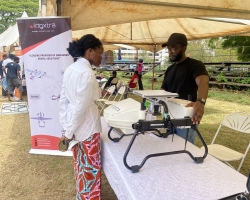
An alumnus of the Kwame Nkrumah University of Science and Technology, Kumasi (KNUST), Mr. Ebenezer Sasu, has launched an innovative hybrid drone-ground delivery platform aimed at improving logistics and on-demand delivery services across Ghana.
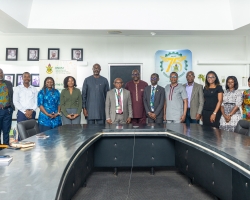
The Mastercard Foundation has reaffirmed its commitment to deepening its longstanding partnership with the Kwame Nkrumah University of Science and Technology, Kumasi (KNUST), as a delegation led by the Senior Director of the Mastercard Foundation Scholars Program and Country Director for Uganda, Mr.
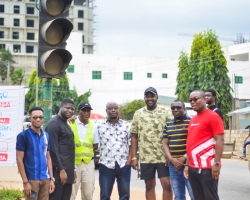
A team from the DIPPER Lab at the College of Engineering and the Department of Physics at the College of Science of the Kwame Nkrumah University of Science and Technology, Kumasi (KNUST) has conducted a preliminary assessment of traffic conditions in the Ayawaso West Wuogon Constituency as part of efforts to develop a locally manufactured intelligent traffic-light system.
The Kwame Nkrumah University of Science and Technology, Kumasi (KNUST) has delivered another strong performance at the Grand Finale of the Graphic Business Tertiary Business Sense Challenge (TBSC) Version 8.0, finishing third with 24.5 points after a campaign marked by consistency and closely contested victories.
Dr. Andy Osei Okrah, who served as President of the Kwame Nkrumah University of Science and Technology, Kumasi (KNUST) Student Representative Council (SRC) in 2000, is best known for initiating the University's SRC Hostel project, a student-led development that has become one of KNUST's most enduring infrastructure initiatives.
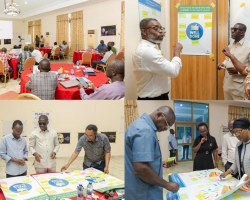
The Vice-Chancellor of the Kwame Nkrumah University of Science and Technology (KNUST), Professor Christian Agyare, has organised a three-day innovation and mindset transformation workshop for selected stakeholders drawn from the University's colleges, administrative units, labour unions, student leadership and Executive Committee to driv
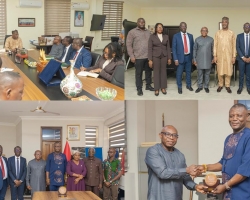
The Kwame Nkrumah University of Science and Technology, Kumasi (KNUST) is pursuing stronger collaboration with the Ministries of the Interior and Sports and Recreation to strengthen campus security, expand technology-driven solutions and position sports as a platform for talent development, research and economic growth.
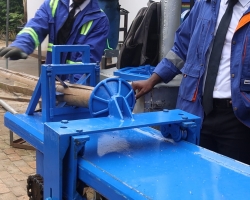
A team of final-year BSc Mechanical Engineering students at the Kwame Nkrumah University of Science and Technology, Kumasi (KNUST) has developed a bamboo splitting machine designed to reduce the labour and time required to process bamboo for industrial and artisanal use.
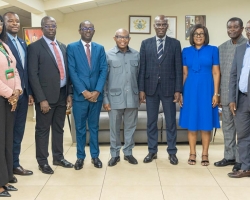
The Minister for Education, Mr. Haruna Iddrisu, has assured the Kwame Nkrumah University of Science and Technology, Kumasi (KNUST) that funding from the Ghana Education Trust Fund (GETFund) has been secured for the completion of the University's Teaching Hospital, with the facility expected to be ready by the end of 2026.
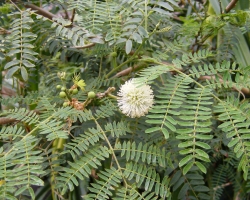
Researchers at the Kwame Nkrumah University of Science and Technology, Kumasi (KNUST) have identified beneficial soil microbes that help a common tropical tree remove toxic heavy metals from abandoned gold mine waste.
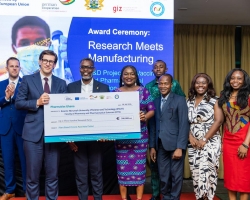
A consortium led by the Faculty of Pharmacy and Pharmaceutical Sciences of the Kwame Nkrumah University of Science and Technology, Kumasi (KNUST) has secured a €300,000 grant under the PharmaVax Ghana Programme to develop a scalable, locally manufactured herbal pain relief medicine, marking another milestone in the University's commitment to translating research into impactful healthcare innova
Dr. Maame Efua Addadzi-Koom, Vice Dean of the Faculty of Law at the Kwame Nkrumah University of Science and Technology (KNUST) and an expert in international human rights law, has published a new book, Adjudicating African Women's Rights: The Jurisprudence of the ECOWAS Court.
Nearly two decades after serving as President of the Students’ Representative Council (SRC) of the Kwame Nkrumah University of Science and Technology, Kumasi (KNUST), David Boateng Asante looks back on a tenure marked by the completion of the first phase of the SRC Hostel, expansion of student financial support and improvements to campus transportation.
The Chairman of the Governing Council of the Kwame Nkrumah University of Science and Technology, Kumasi (KNUST), Akyamfour Asafo Boakye Agyemang-Bonsu, has urged the University's Vice-Chancellor, Professor Christian Agyare, to position KNUST as a strategic partner in national development by translating government policies into practical,
Nearly four out of five adults in farming households in Ghana have signs of poor blood health, even though they eat a variety of foods, according to a new study by researchers at the Kwame Nkrumah University of Science and Technology, Kumasi (KNUST).