
Drawing ability is a strong predictor of creative performance among visual arts students, according to a study at the Kwame Nkrumah University of Science and Technology, Kumasi (KNUST), which also highlights the need to address drawing anxiety and support students’ motivation.
The research, involving 245 students from three Ghanaian senior high schools, found that drawing anxiety was negatively associated with drawing ability and motivation, suggesting an indirect relationship with creative performance.
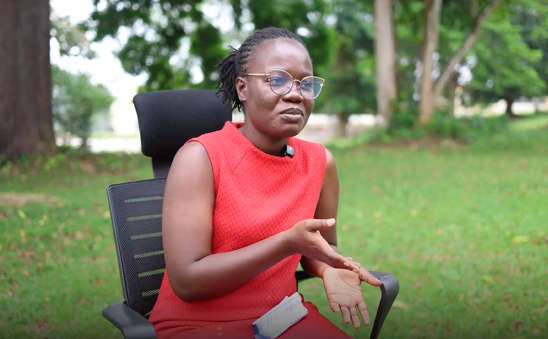
Dr. Ama Amponsah Dwamena conducted the research for a PhD in Art Education in KNUST’s Department of Educational Innovation in Science and Technology.
In an interview about her research, Dr. Dwamena said her classroom experience prompted her to investigate why students with creative potential struggled to demonstrate it.
“I've been a teacher for eight years now,” she said, explaining that the difficulties she observed among her students encouraged her to examine factors affecting creative performance beyond practical skills alone.
She wanted to investigate emotional and motivational factors that she believed had received limited attention in research on visual arts education at the senior high school level in Ghana.
The study examined students from T.I. Ahmadiyya, Anglican and KNUST senior high schools, exploring the relationships between drawing ability, drawing anxiety, drawing motivation, creative self and creative performance.
Drawing motivation showed a moderate positive association with both creative self and creative performance. Together, the variables examined explained 72.8% of the variation in creative performance within the study sample.
Questionnaires assessed students’ drawing anxiety, motivation and creative self, while practical drawing tasks measured drawing ability. Creative performance was assessed using cumulative scores obtained through a standardised marking rubric.
The study used a cross-sectional design, assessing students at one point in time. Its findings therefore identify relationships between the variables rather than establish that one caused changes in another.
Dr. Dwamena said the findings pointed to the need for teaching strategies that recognise and respond to students’ emotional experiences, including anxiety associated with drawing.
She recommended that educators develop ways to support learners experiencing such difficulties while continuing to build their technical and creative skills.
Peer review and peer support could form part of that approach, she said, allowing students to learn from one another and receive explanations they might find easier to understand.
“I believe in the power of peer influence, be it negative or positive,” she said.
“I, the teacher, might not translate that information well, but a peer might be able to.”
Her recommendations place emphasis on the classroom environment alongside individual ability, encouraging educators to consider how emotional support, motivation and interaction among students can complement practical instruction.
Professor Harry Barton Essel supervised the research, with Dr. Akosua Tachie-Menson as co-supervisor.
Story: Emmanuel Kwasi Debrah


