
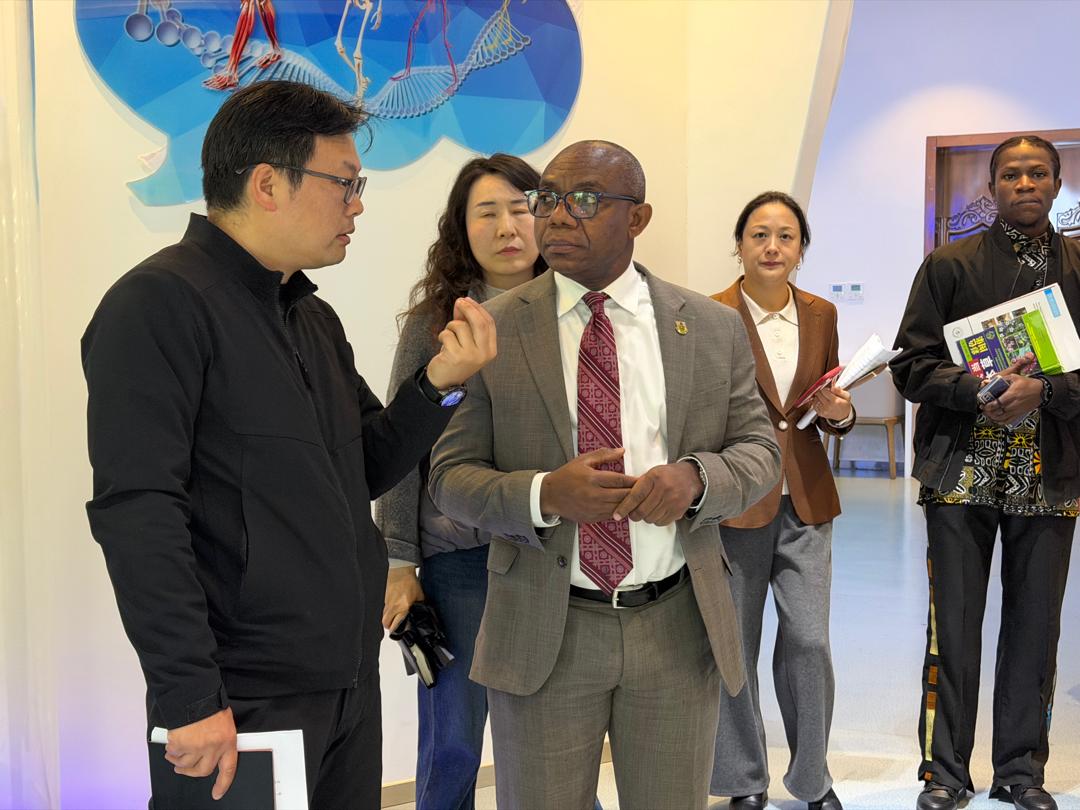
The Kwame Nkrumah University of Science and Technology, Kumasi (KNUST) plans to introduce a Bachelor of Arts in Chinese that combines language studies with minors in business, logistics, automotive technology and other fields to strengthen graduates’ employment prospects.
The programme forms part of a partnership agreed with the Hubei University of Automotive Technology (HUAT) and Hanjiang Normal University (HNU) during separate meetings in Shiyan, China, on November 16, 2026.
The Vice-Chancellor of KNUST, Professor Christian Agyare, said the proposed degree would equip students with Chinese language proficiency alongside practical knowledge relevant to industry.
"This means our graduates will not just speak Chinese – they will speak Chinese and do business, manage supply chains, market products, and work in EV factories. This is exactly what Chinese enterprises in Ghana are asking for," he said.
Under the proposed structure, each student would take a minor in an area such as international business and trade, marketing and e-commerce, supply chain and logistics, automotive and green energy technology, or tourism, hospitality and translation.
The KNUST School of Business would support the business component, while HUAT would help develop the automotive and green energy option. Professor Agyare said the ambition was to make the programme the most employable Chinese degree in West Africa.
To support its introduction, he requested two faculty members from HNU with PhDs in Chinese Language or Teaching Chinese to Speakers of Other Languages for an initial five-year period.
They would teach Chinese language, linguistics, translation and culture, mentor Ghanaian lecturers, and support curriculum development, assessment and alignment with HSK requirements. They would also contribute to teaching and research at the Confucius Institute at KNUST.
Professor Agyare said KNUST would provide accommodation, local support and an appropriate academic environment for the visiting faculty.
The collaboration brings together the three universities’ strengths in language, teacher education, technology and industry. KNUST also has a separate bilateral agreement with HNU.
"Most Confucius Institutes work with one partner university. We are building a tripartite ecosystem," Professor Agyare said.
Under the model, HUAT would contribute expertise in science, technology, new energy vehicles and engineering. HNU would support language, teacher education and culture, while KNUST would contribute its strengths in science, technology, business and health in Ghana and West Africa.
The proposed cooperation also includes HUAT’s support for the China-Ghana Joint Lab for New Energy Vehicles and internship opportunities for KNUST students in Shiyan. Both Chinese institutions would support 3+1 study pathways, summer schools, virtual exchanges and joint research in language education, the digital economy and energy transition.
KNUST committed to supporting the programme through its Confucius Institute and College of Humanities and Social Sciences, securing accreditation and providing the required resources.
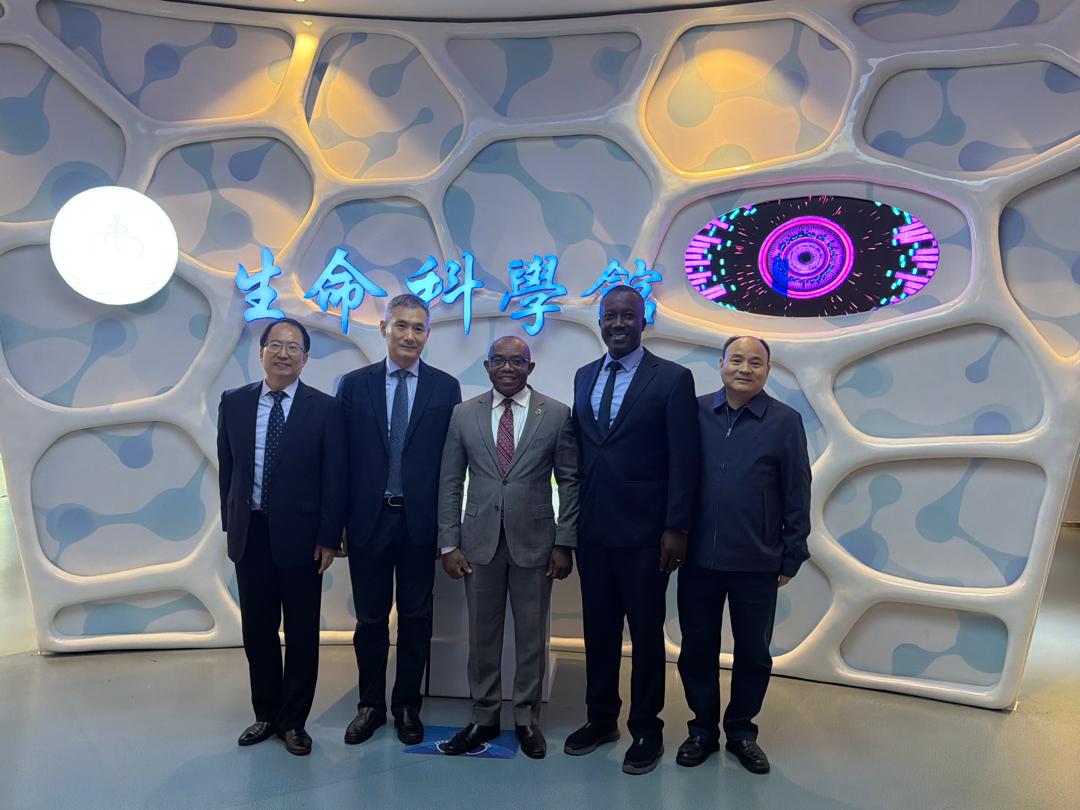
The University also plans to develop pathways into Chinese enterprises for graduates, coordinated by the Confucius Institute and the China-Africa Business Council, and to hold annual meetings to review progress.
"With this signature today, we are not just launching a degree. We are launching careers for Ghanaian youth, building a talent pipeline for Chinese enterprises in Africa, and creating a new bridge between Hubei and Kumasi, so let us build it together," Professor Agyare said.
He was accompanied by Professor Daniel Y. A. Duah and Professor Ke Ningli, the Ghanaian and Chinese Directors, respectively, of the Confucius Institute at KNUST.
The HNU meeting was hosted by Ms. Chen Mei, Director of the Office of International Exchange and Cooperation. Other HNU officials present included Mr. Fu Yongchang, Party Secretary; Professor Hao Wenhua, Dean of the School of Literature and Media; and Mr. Ou Xiulong, Director of the Academic Affairs Office.
Also present were Ms. Ma Lu, Deputy Director; Ms. Chang Shanshan, Section Chief; Mr. Meng Tianze, Section Chief; and Mr. Fang Peng, Deputy Director of HUAT’s International Cooperation and Exchange Office.


