
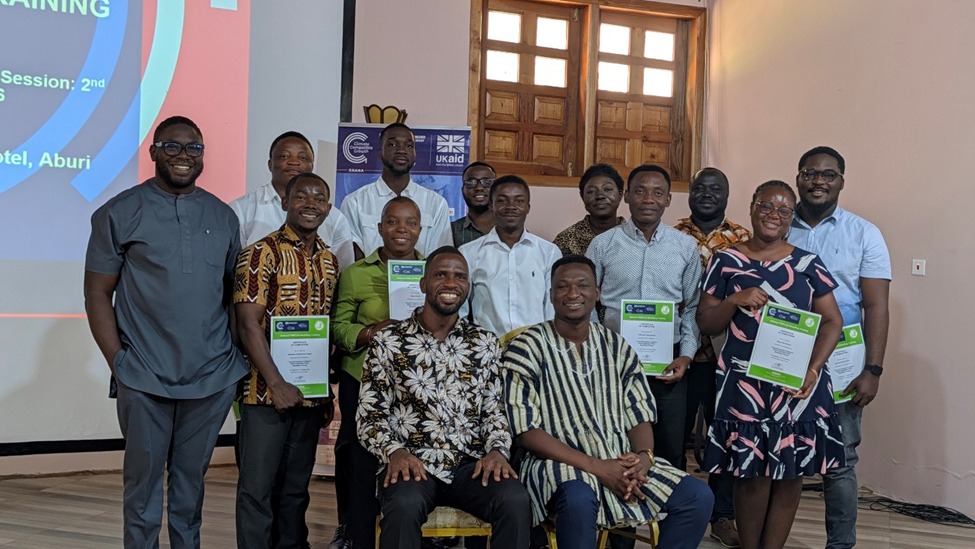
The Brew-Hammond Energy Centre (TBHEC) at the Kwame Nkrumah University of Science and Technology, Kumasi (KNUST) and the Climate Compatible Growth (CCG) Ghana Network have held a two-week national training programme to strengthen skills in integrated resource planning and the financial assessment of energy infrastructure.
The programme brought together participants from government, regulatory institutions, academia, research organisations, civil society and the energy sector for technical instruction, practical modelling and case-study analysis.
Training covered Climate, Land, Energy and Water Systems (CLEWs) modelling and Financial Planning of Energy Infrastructure (FINPLAN), combining scenario analysis with the development and presentation of modelling projects.
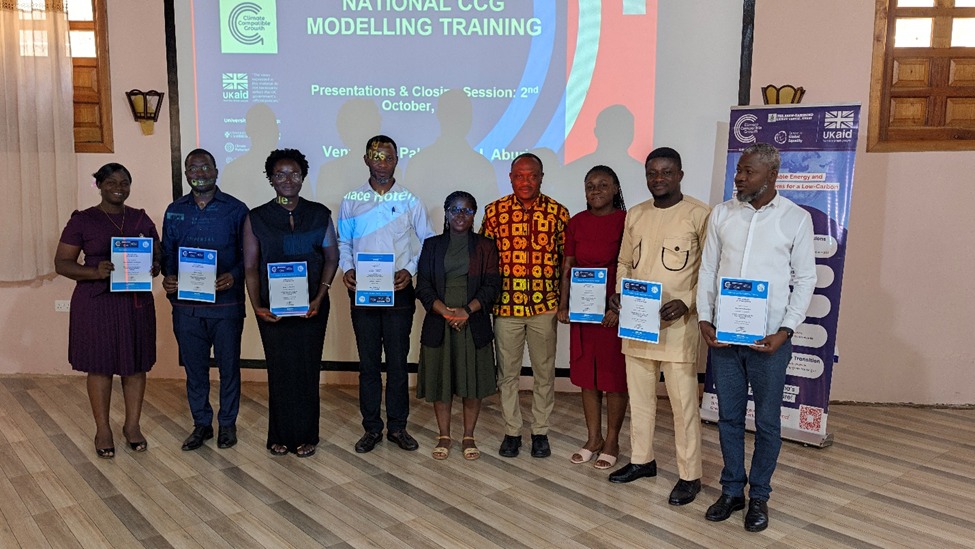
The CLEWs component examined how climate, land, energy and water systems interact. Sessions covered the water–energy–food nexus, energy systems modelling, land and agricultural systems, water representation, cross-sectoral linkages and the interpretation of model outputs.
The FINPLAN component focused on assessing the financial viability of energy infrastructure projects. Participants explored basic financial concepts, case-study design, data requirements, financial statements, the evaluation and balancing of FINPLAN cases, and risk and sensitivity analysis under different scenarios.
Participants applied their knowledge to four Ghana-focused case studies: the country’s low-emission pathway to 2063; the land and water implications of its net-zero transition; sustainable irrigation agriculture; and biomass and electric cooking pathways.
The exercises demonstrated how integrated modelling can help assess development choices whose effects extend across multiple sectors. Participants developed modelling cases, analysed results and summarised their findings in presentations and training reports.
The programme ended with four presentations from CLEWs participants and individual financial analysis projects from FINPLAN participants. The final session allowed participants to explain their methods, present findings and receive technical feedback from facilitators and peers.


