
The Kwame Nkrumah University of Science and Technology, Kumasi (KNUST) is one of three finalists competing for a $1 million award to establish a national Energy Research Hub, with the winner expected to be announced in November.
The proposed hub would support inclusive energy research, policy development and capacity building in energy modelling, including training the next generation of energy system modellers.
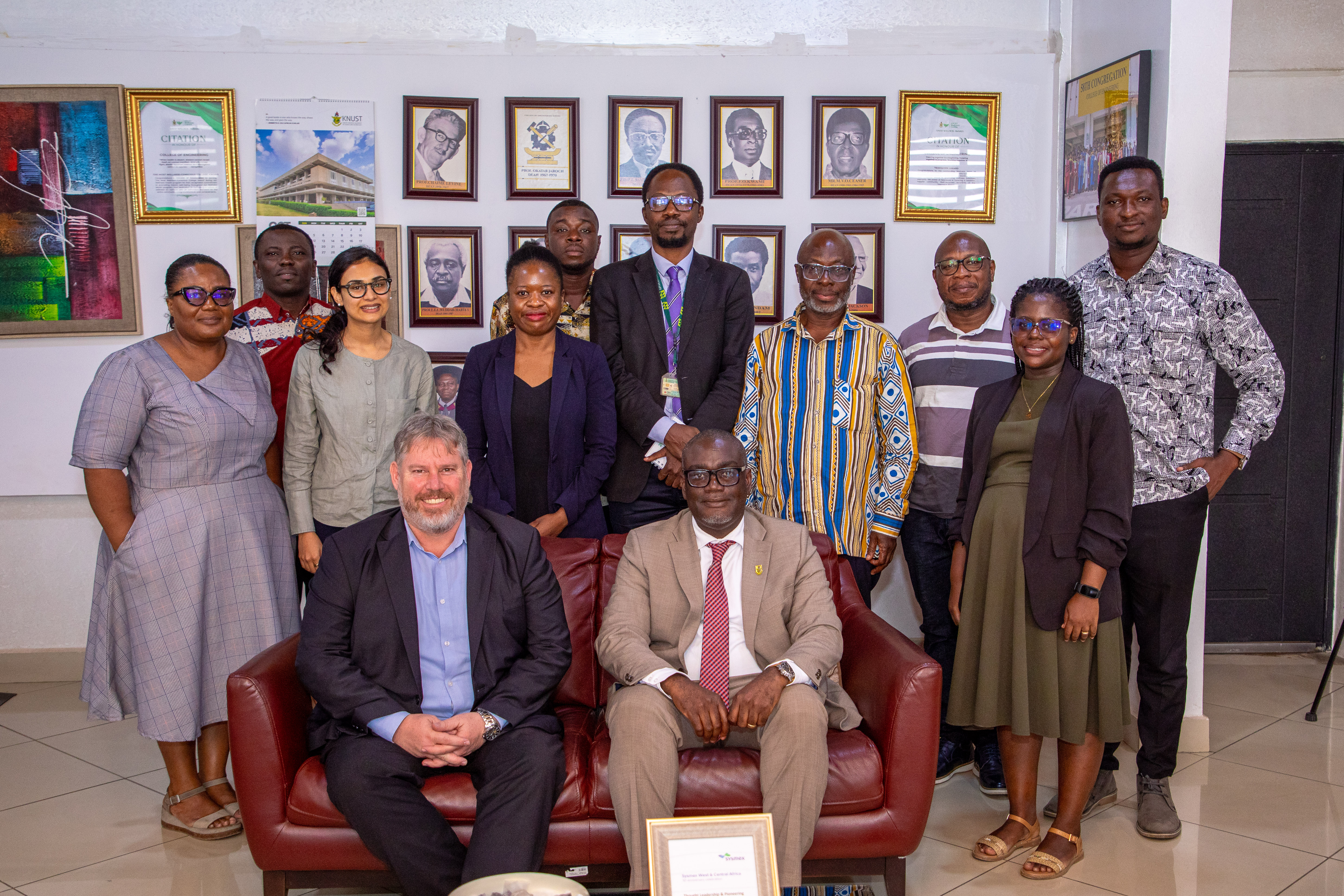
As part of the selection process, The Brew-Hammond Energy Centre (TBHEC) at KNUST hosted a delegation from South Africa-based African Energy Futures (AEF) and the Rockefeller Foundation to assess the university’s readiness to host the hub.
According to AEF, more than 180 applications were received for its first call for national Energy Research Hubs. These were initially shortlisted to 10 before three finalists were selected.
AEF Director Steve Nicholls said the visit formed part of the due diligence process to assess the university’s administrative capacity, infrastructure and ability to manage funds responsibly.

The Director of The Brew-Hammond Energy Centre, A/Prof. David Ato Quansah, welcomed KNUST’s selection as a finalist and outlined the Centre’s experience during the assessment process.
“I believe decision to include KNUST as apart of the finalist is an indication that something good is going on here. The assessment process would provide valuable feedback to strengthen the Centre’s operations,” he said.
Welcoming the delegation, the Provost of the College of Engineering, Professor Kwabena Britiwum Nyarko, highlighted KNUST’s partnerships with government institutions, industry and development organisations.
He said the College and the Centre worked with the Ministry of Energy, the Energy Commission, the Public Utilities Regulatory Commission and non-governmental organisations in the energy sector to address local and national priorities.
He also outlined the university’s systems for financial accountability and its commitment to research that informs policy.
“The College has managed a number of projects from government, multilateral agencies, private foundations and also have robust systems in place so that any funds we receive we account extensively to the foundation and to the government. Some of the funds the college has managed includes Gate Foundation, Welcome trust, The World Bank, African Development Bank and other major projects hence we can be trusted with funds for the project,” he said.
AEF aims to strengthen the role of African institutions in shaping the continent’s energy transitions through investment in local research hubs, long-term partnerships and regional collaboration.
The delegation toured facilities including the Renewable Energy and Artificial Intelligence Labs, the Central Laboratory and classrooms. It also met fellows of The Brew-Hammond Energy Centre, representatives of the Office of Grants and Research, and university management.


