
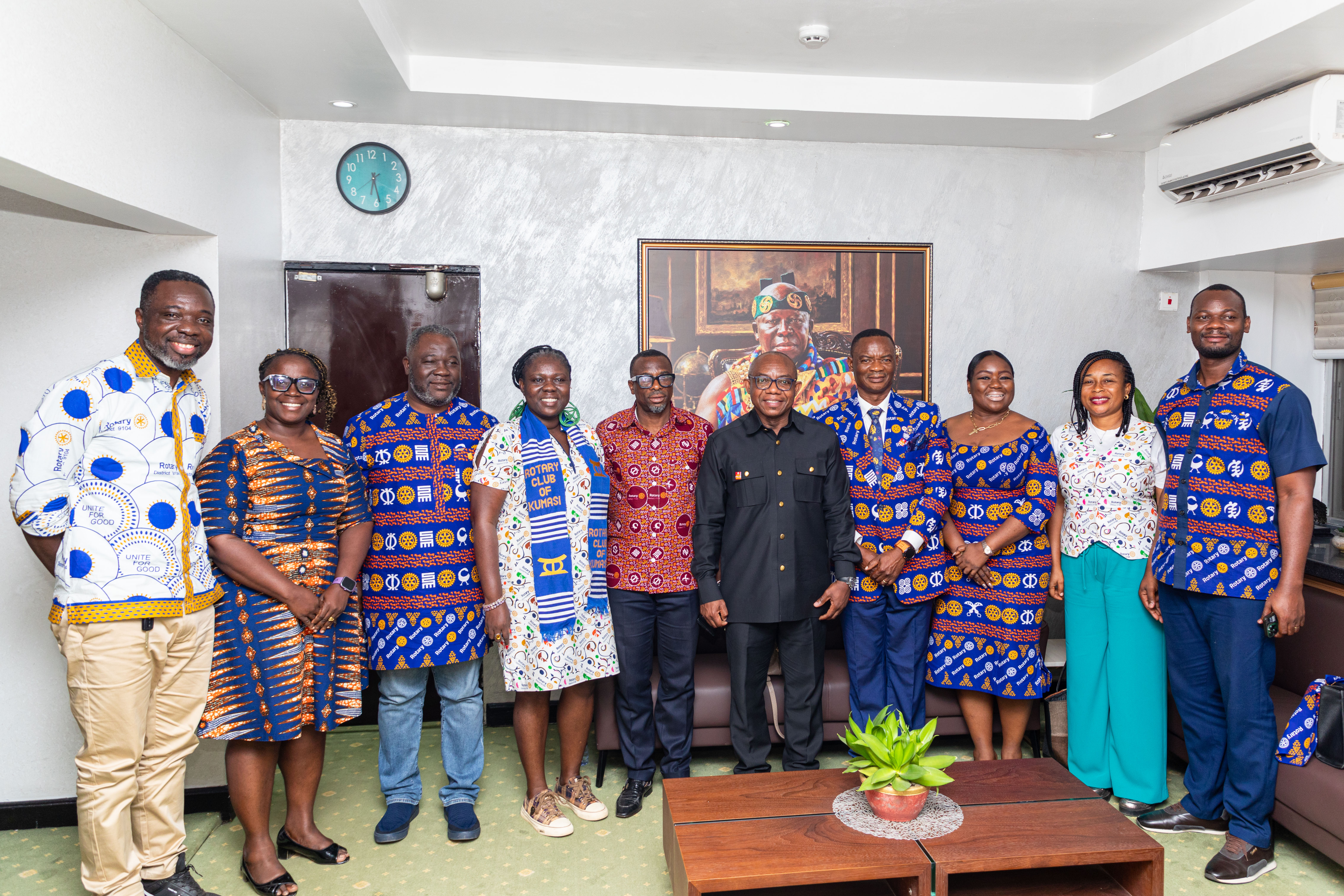
Kwame Nkrumah University of Science and Technology, Kumasi (KNUST) and Rotary have discussed a potential partnership to support students, promote research and advance community development.
The discussions took place during a courtesy call on the Vice-Chancellor, Professor Christian Agyare, by a delegation led by Dr Jack Andrews Dotsey, Governor of Rotary International District 9104.
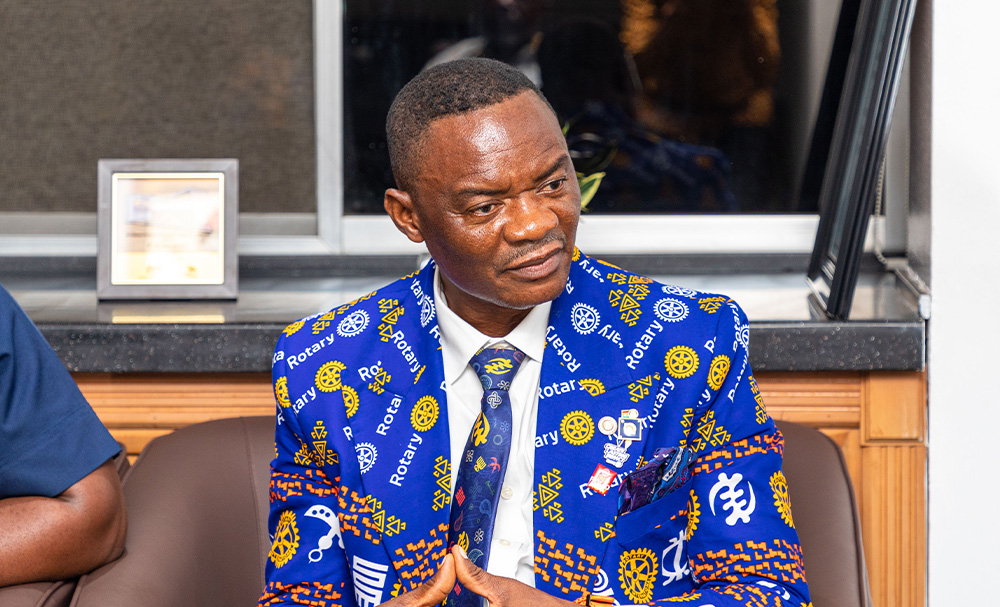
Prof. Agyare welcomed the proposal and encouraged Rotary to undertake practical initiatives that would directly benefit students and the university community.
“I think the activities you have outlined are opportunities we can take advantage of. If you can do something visible for our students, they will appreciate the relevance of Rotary and be encouraged to contribute to society when they complete their studies,” he said.
He proposed support for students in financial need through initiatives such as laptop donations, saying access to digital devices was important to their academic progress.
He also encouraged Rotary to strengthen student participation in its activities and create opportunities for young people to engage in community service.
Prof. Agyare said the university was willing to consider arrangements for collaboration, including a formal agreement where necessary. He also suggested engagement with relevant university officials on the use of appropriate facilities for Rotary’s activities.
Dr Dotsey said a stronger relationship with KNUST could create opportunities for research collaboration, academic exchanges and access to Rotary Foundation grants.
He said an active Rotary club at the university could strengthen KNUST’s international connections through the organisation’s network of approximately 45,000 clubs.
He recalled helping to facilitate the donation of a 40-foot container of books to the KNUST Library in 2009–2010 through an initiative that benefited five public universities in Ghana.
A partnership could also support research into environmental challenges, including land degradation associated with illegal small-scale mining, while connecting KNUST researchers with institutions and professionals worldwide, he said.
Dr Dotsey highlighted Rotary’s work in global health, education and community development, particularly its contribution to polio eradication.
According to Rotary, the organisation has contributed more than US$3 billion to polio eradication and, alongside its partners, helped reduce cases by 99.9%. Its first polio vaccination project began in the Philippines in 1979.
Dr Dotsey said Rotary had supported Ghana’s polio eradication programme through the construction of a vaccine storage facility and assistance to the Ghana Health Service.
“As we mark World Polio Day on October 24, we continue to advocate for polio eradication and encourage influential individuals and institutions to support the vaccination of children against the disease,” he said.
Story: Ama Pokuaa Mensah


