
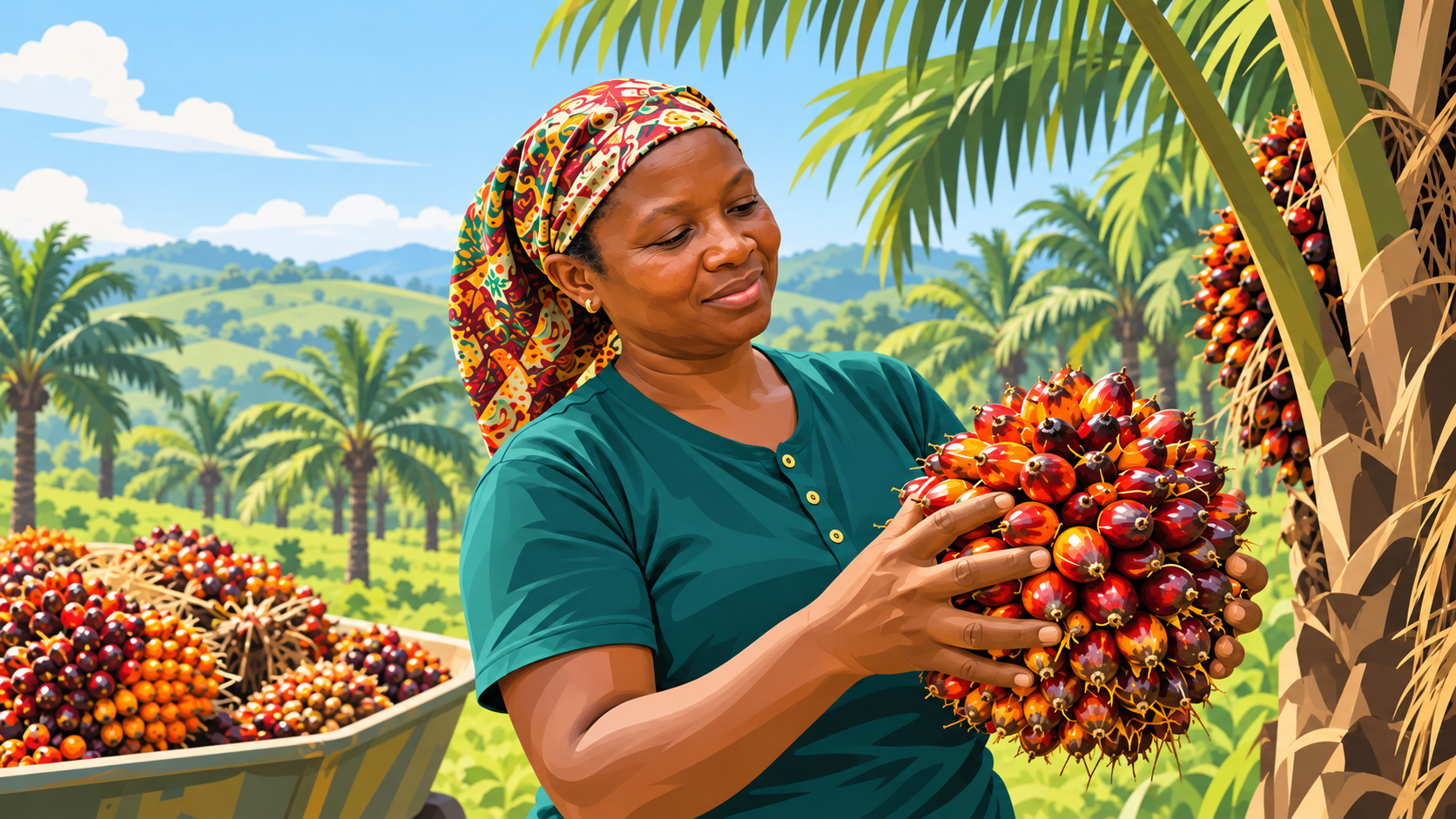
Oil palm farming is associated with poorer access to food among households in Juaben Municipality in the Ashanti Region, despite helping them consume more varied diets, a study by the Kwame Nkrumah University of Science and Technology, Kumasi (KNUST) has found.
The findings contrasted with those in Upper Denkyira East Municipality in the Central Region, where oil palm production improved both food access and dietary diversity.
About 27% of oil palm-producing households surveyed in Juaben were classified as severely food insecure, compared with about 14% in Upper Denkyira East.
Led by Dr Seth Etuah, the study examined how smallholder oil palm cultivation affects household food security and food crop production. Researchers surveyed 416 farm households, including 201 oil palm producers and 215 non-producers, and conducted interviews and focus group discussions.
The findings showed that oil palm-producing households consumed a wider variety of food groups in both municipalities. However, greater dietary diversity did not consistently translate into better access to sufficient food.
In Juaben, oil palm production was associated with a reduction of about 1.5 acres in land allocated to food crops. Interviews indicated that many oil palm producers could not grow enough food to sustain their households throughout the year and relied on market purchases during some periods.
The researchers linked the more favourable outcomes in Upper Denkyira East to differences in plantation age, plantation size, intercropping practices and support from processing companies.
Farmers there had younger plantations that allowed them to grow food crops between oil palm trees, a practice less common in Juaben’s older plantations. Their oil palm plantations were also larger on average.
They received inputs, including fertilisers and herbicides, from processing companies in exchange for supplying their harvests. The researchers said this support likely helped reduce production costs and improve yields, income and food access.
Education, household size, access to credit, income from activities outside farming, land tenure security and membership of farmer-based organisations also influenced food security and production decisions. Their effects varied between the two municipalities.
“Overall, the results demonstrate that the welfare effects of oil palm production are not uniform but depend on local conditions, institutional support, and production systems,” the researchers wrote.
They recommended that future research track households over time to assess the long-term effects of oil palm cultivation on food security and household welfare.


