
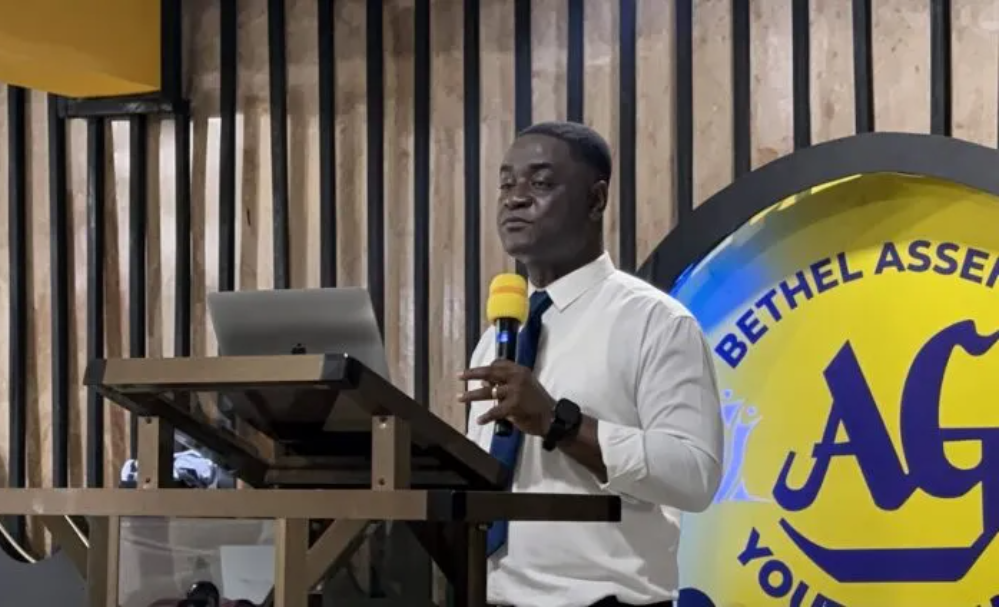
Prof. Eric Appau Asante, Artificial Intelligence Coordinator at the Kwame Nkrumah University of Science and Technology, Kumasi (KNUST), has urged churches and Christians to strengthen digital verification as artificial intelligence makes it increasingly difficult to distinguish authentic content from manipulated material.
He said advances in AI have made it possible to generate realistic photographs, clone voices, replace faces and create videos portraying people saying or doing things that never occurred, making verification an essential part of responsible technology use.
“A photograph can be generated. A face can be replaced. A voice can be cloned. A video can be manufactured. A sermon can be generated. A person can be made to appear to have said or done something that never happened,” he said.
“We can no longer treat ‘I saw the video’ or ‘I heard the voice’ as automatic proof. Verification has become part of digital maturity.”
Professor Asante was speaking during the Christian Home Week organised by the KNUST Local Council of Churches at the Assemblies of God International, Ayigya, on the theme, “The Christian and Emerging Technologies: Their Responsible Uses.”
He urged churches to embrace emerging technologies while ensuring that their use remains grounded in truth, privacy, human dignity and Christian values.
According to him, AI and other digital technologies offer opportunities for churches to expand their reach, improve administration, support theological education and complement ministerial activities.
He said technology could help churches engage emerging generations and reach people who increasingly live and interact in digital spaces.
Professor Asante, however, cautioned that technological convenience should not come at the expense of human dignity, privacy, truth and responsible human judgement.
He said AI tools could support sermon preparation, organise ideas and enhance learning, but should complement rather than replace prayer, discernment and human responsibility.
Professor Asante identified data analytics, digital dashboards, cloud systems, digital meeting platforms, speech-to-text tools, electronic voting and digital signatures as technologies that could improve church planning, administration, elections and institutional accountability.
In preaching, Bible teaching and theological education, he said digital Bible software, theological databases, electronic libraries, virtual classrooms and AI tools could assist pastors and students in comparing Bible translations, researching biblical geography and organising ideas.
He also identified social media, podcasts, translation systems, mobile applications, chatbots, digital advertising and geospatial technologies as tools churches could use to extend evangelism and missionary activities beyond geographical boundaries.
Professor Asante said the responsible use of these technologies could enable churches to reach people who might otherwise remain outside traditional forms of ministry.
He also urged churches to exercise caution when recording and publishing events involving people in emotionally vulnerable situations.
He cited funerals, weddings, altar calls, counselling sessions and moments of prayer as examples of sensitive personal experiences that should not automatically become online content.
He stressed that the ability to record an event did not necessarily constitute permission to publish it.
“Privacy is pastoral care. Data is not merely an object; behind the data is a person,” he said.
Professor Asante urged church media teams to consider whether consent had been obtained, whether a family had publicly disclosed particular information and whether publishing an image or video served a legitimate purpose.
He said churches should adopt emerging technologies in ways that extend ministry without replacing humanity, communicate truth without manufacturing reality, expand access without deepening exclusion and improve stewardship without removing human responsibility.
He urged Christians to ensure that their use of emerging technologies remains anchored in truth, wisdom, love, responsibility and the glory of God.


