
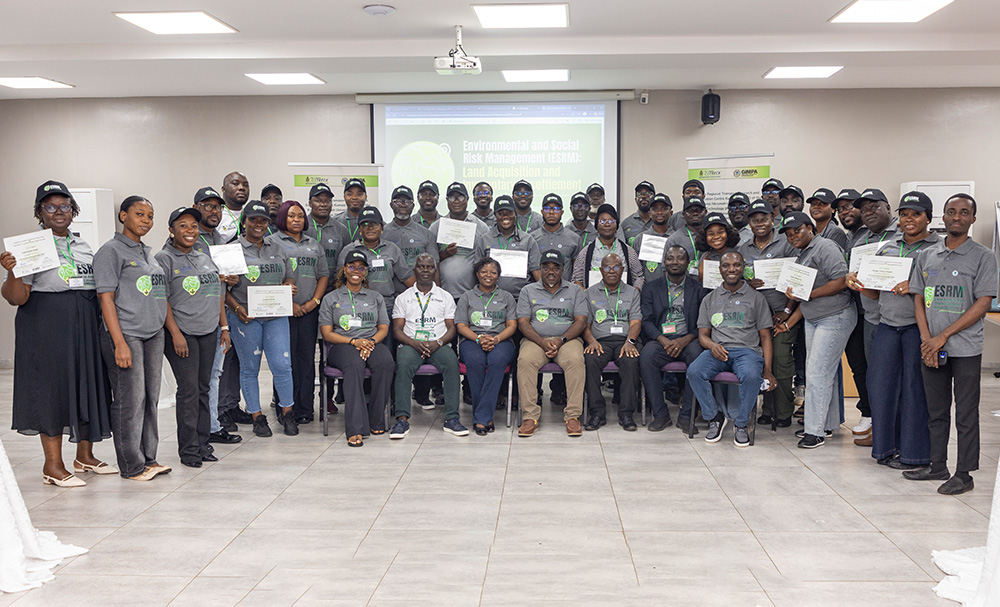
Participants in the Professional Certificate Course on Environmental and Social Risks Management (ESRM): Land Acquisition and Involuntary Resettlement have pledged to apply the knowledge and skills gained from the training in their respective workplaces.
The training was organised by the Regional Transport Research and Education Centre Kumasi (TRECK) of the Kwame Nkrumah University of Science and Technology (KNUST), in partnership with the Ghana Institute of Management and Public Administration (GIMPA) and the World Bank. It brought together professionals from Ghana, Liberia and Sierra Leone.
The course sought to strengthen participants’ capacity to manage environmental and social risks associated with land acquisition and involuntary resettlement. Sessions covered land acquisition for development projects, legal and institutional frameworks, valuation and compensation, livelihood restoration, stakeholder engagement and resettlement planning.
Reflecting on the training, Liberian participant Lovette Sie said participants would apply the knowledge gained in their workplaces.
“As mentors and active career workers, we are happy because what we learn here will assure you that we're going to go back home and apply it, not only apply it, but apply it effectively,” she said.
Another Liberian participant, Albert G. Zorgbe, thanked the facilitators for equipping participants with relevant skills and knowledge.
He said the training had deepened their understanding of resettlement, particularly its implications for people and the environment, and pledged to apply the lessons learned when they returned to their workplaces.
Ghanaian participant Abena Ankomah said the training had helped bridge practical work experience and academic knowledge. She described the sessions as excellent and commended the facilitators and course materials for providing useful insights for practitioners.
Another participant, George Amoah, said the programme had broadened his understanding of land acquisition and resettlement.
“We thought we knew, but this has added much to what we have,” he said, expressing appreciation to the facilitators.
A participant from Sierra Leone also described the training as an enriching experience that had broadened their perspective and would help them improve their work upon returning home.
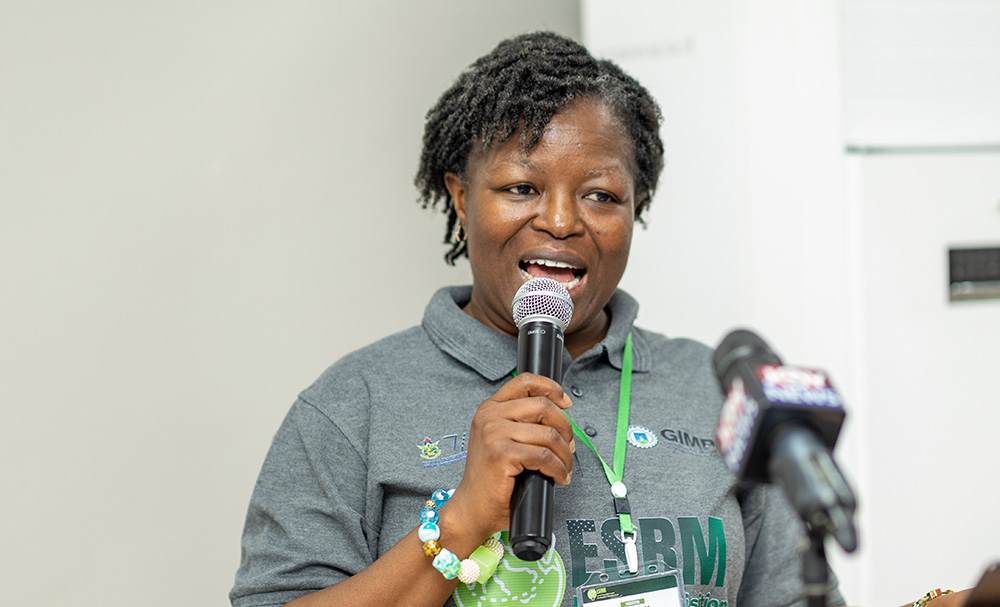
The Director of TRECK, Professor Helen M. K. Essandoh, urged participants to take the lessons beyond the classroom and apply them in their professional work.
She said practical exercises, case studies, discussions and field learning had allowed participants to connect professional practice with peer learning. She encouraged them to use the knowledge gained to improve project planning, strengthen engagement with affected communities and contribute to better development outcomes.
Prof. Essandoh said the diversity of participants, including professionals from government institutions, project implementation, consultancy, regulatory bodies and research, was important to effective environmental and social risk management.
She also encouraged participants to maintain the professional networks developed during the course and continue sharing knowledge and learning from one another beyond the programme.
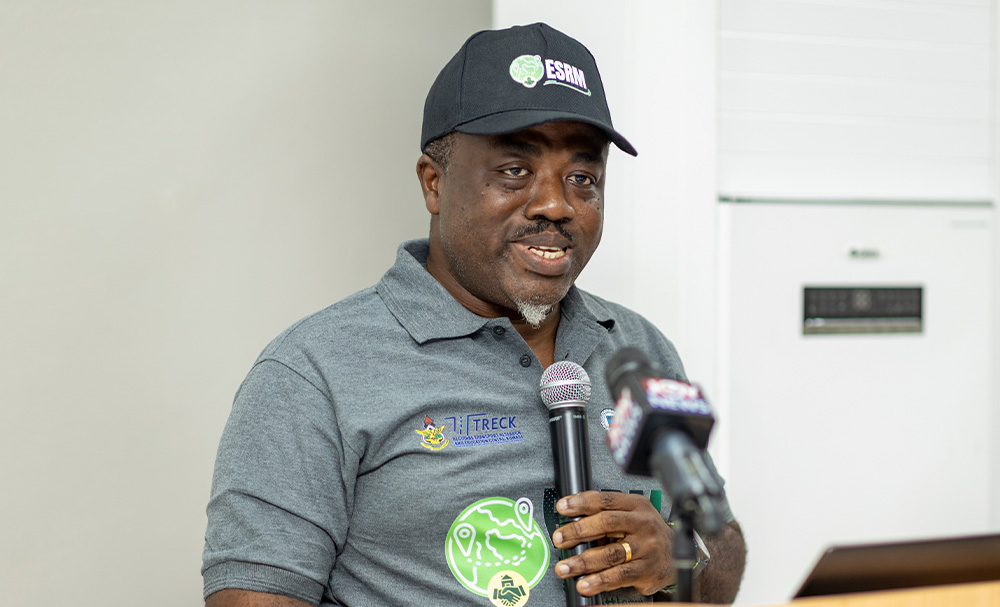
Representing GIMPA, Dr Paul Danquah urged participants to become agents of change in their institutions by sharing the knowledge acquired with colleagues who did not have the opportunity to participate in the programme.
He said the objective of the training went beyond obtaining certificates and emphasised the need for participants to use the knowledge gained to improve land acquisition and resettlement practices.
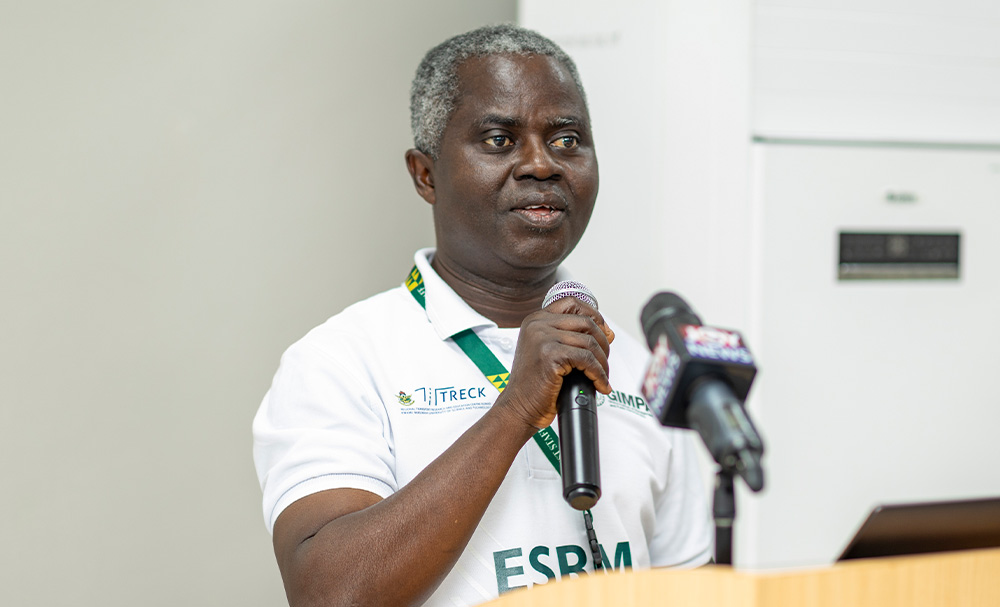
Speaking on behalf of the World Bank, Dr Jonathan Zinzi Ayitey expressed satisfaction with the outcome of the programme and called for similar capacity-building opportunities to reach more professionals working in the field.
Story: Eunice Asare Photos: Michael Kwawu


