
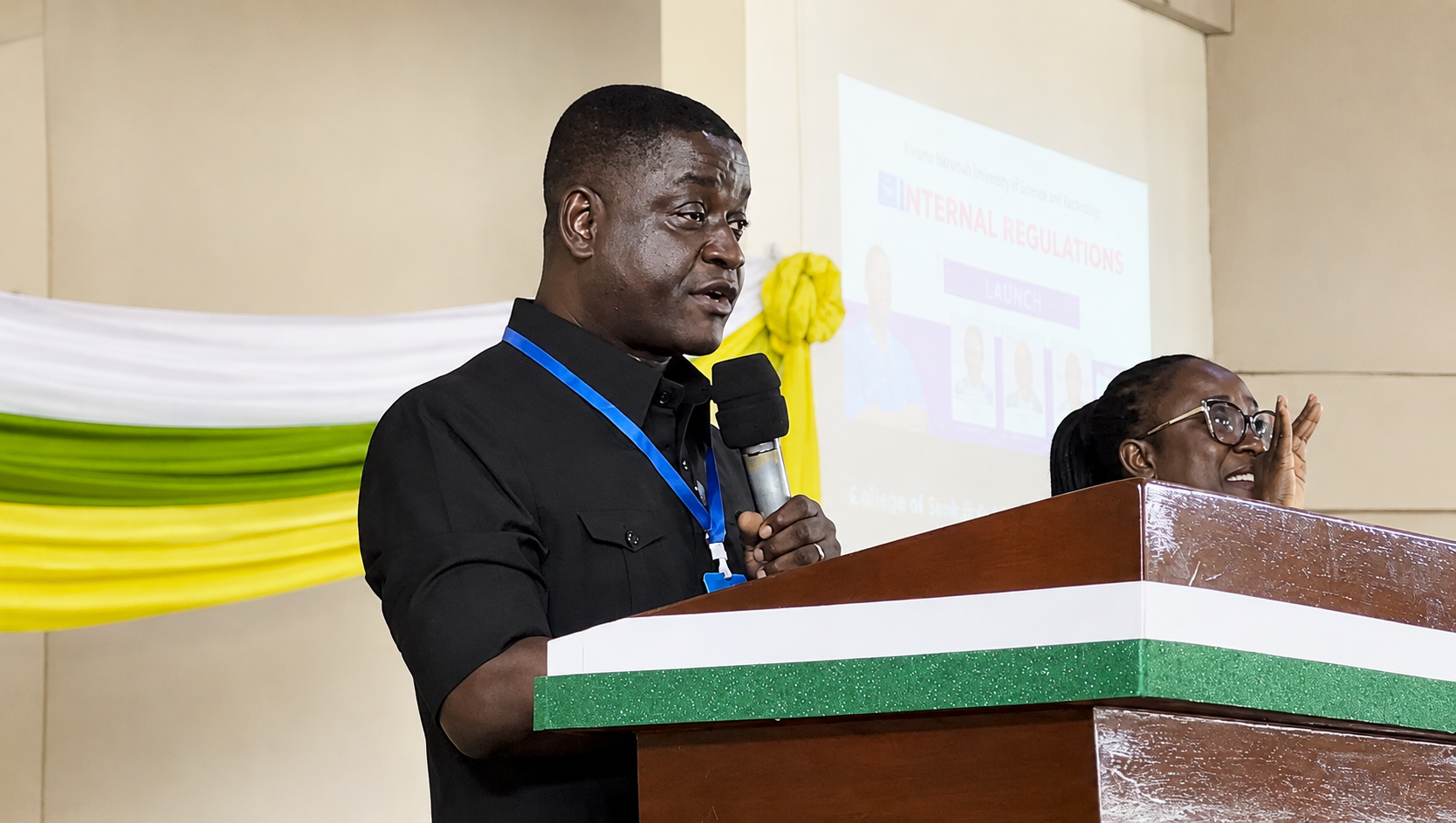
The Artificial Intelligence (AI) Coordinator at the Kwame Nkrumah University of Science and Technology, Kumasi (KNUST), Prof. Eric Appau Asante, has called for the structured and supervised adoption of artificial intelligence in teacher education to ensure that technology enhances, rather than dictates, pedagogy.
Speaking at the National Conference of Principals of Colleges of Education (PRINCOF), held under the theme, "Transforming Research-Based Teacher Education in Ghana in the Era of Artificial Intelligence," Prof. Appau Asante said the rapid adoption of AI tools by students was already outpacing the preparedness of educational institutions, making it imperative for schools and teacher-training institutions to develop deliberate strategies to guide their use.
Delivering a presentation on "Transforming Research-Based Teacher Education in Ghana in the Era of Artificial Intelligence: Opportunities, Challenges and the Future of Teacher Preparation in Ghana," he said educational institutions could no longer view AI adoption as optional.
Prof. Appau Asante stressed that the integration of AI into teacher education must be guided by Ghana's National Teachers' Standards and the National Teacher Education Curriculum Framework.
"The teacher that we have already said Ghana wants to produce, how can AI strengthen that teacher? Those in school, those we want to produce, the destination is very important," he said.
"If we introduce AI without reference to the National Teachers' Standards and the National Teacher Education Curriculum Framework, I think we risk allowing technology to drive pedagogy."
He noted that the question facing educational institutions was no longer whether to adopt AI, but whether its use would remain unstructured or be deliberately integrated into teaching and learning.
"AI adoption amongst our students is already ahead of our institutional preparedness, and therefore our choice is not between AI or not, but between seeing an improvised, invisible AI use by students, or going for structured, supervised, research-informed use of AI," he said.
Prof. Appau Asante envisaged a new relationship between teachers, students and AI, in which educators would move beyond simply transmitting information to becoming designers, evaluators and mentors in the learning process.
To support this transition, he called on institutions to develop comprehensive AI policies aligned with existing national education frameworks.
"Every institution needs an AI policy. It must align with the frameworks we have talked about," he said.
He also urged institutions to embed AI competencies within their curricula rather than relying on isolated training sessions.
"We must map AI competencies into the components and provisions of the curriculum. Don't simply organise a one-day AI workshop and check the box, but let it be an intentional capacity-building venture," he said.
Prof. Appau Asante further identified infrastructure as a critical enabler of effective AI adoption, urging educational institutions to provide students and faculty with appropriate access to AI tools.
"Let's provide institutional accounts, explore low-bandwidth options that can support access and, most crucially, I'm glad principals are here. Let's think of incorporating AI adoption into our budgets," he said.
The conference brought together principals of colleges of education and other stakeholders to explore how research-based teacher education in Ghana can respond to the opportunities and challenges presented by the increasing use of artificial intelligence.


