
The Kwame Nkrumah University of Science and Technology, Kumasi (KNUST) and JUNIA have secured funding under the NKABOM Grant to advance the application of generative artificial intelligence (AI) in the development of next-generation solar energy materials.
The project, titled "Generative AI for Stable Lead-Free Perovskites and High-Performance Organic Solar Cells," is funded by the French Embassy in Ghana under the NKABOM 2026 Research Projects initiative.
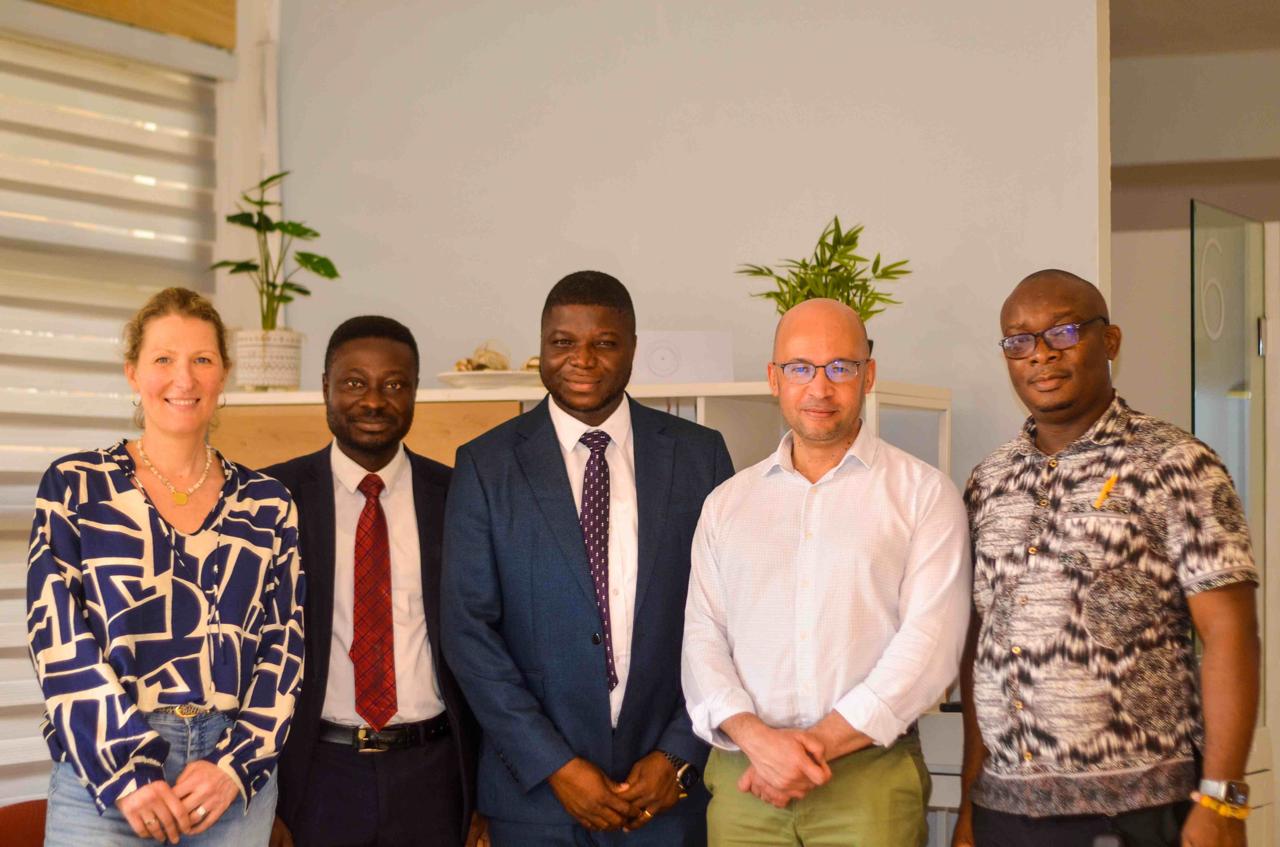
The consortium comprises researchers from the DIPPER Lab at KNUST's Department of Computer Engineering, the University of Ghana (UG), France's Institut d'Électronique, de Microélectronique et de Nanotechnologie (IEMN), and JUNIA. The project is co-led by Professor Eric Tutu Tchao of KNUST and Dr. Kekeli Nkonou of JUNIA/IEMN.
The initiative builds on an existing partnership among KNUST, JUNIA and IEMN, which has focused primarily on training in artificial intelligence, data science and materials science.
Under the NKABOM project, the collaboration will expand into a full-scale research programme, with the University of Ghana joining to establish a trilateral research network between Ghana and France.
The consortium combines complementary expertise in photovoltaic materials, artificial intelligence, machine learning and experimental validation. French partners will contribute expertise in perovskite and organic photovoltaics, KNUST will lead the AI and machine learning components, while the University of Ghana will undertake the experimental validation of promising materials.
The project is expected to deepen scientific collaboration between Ghana and France, strengthen local research capacity and transform an existing training-focused partnership into a sustainable international research ecosystem.


