
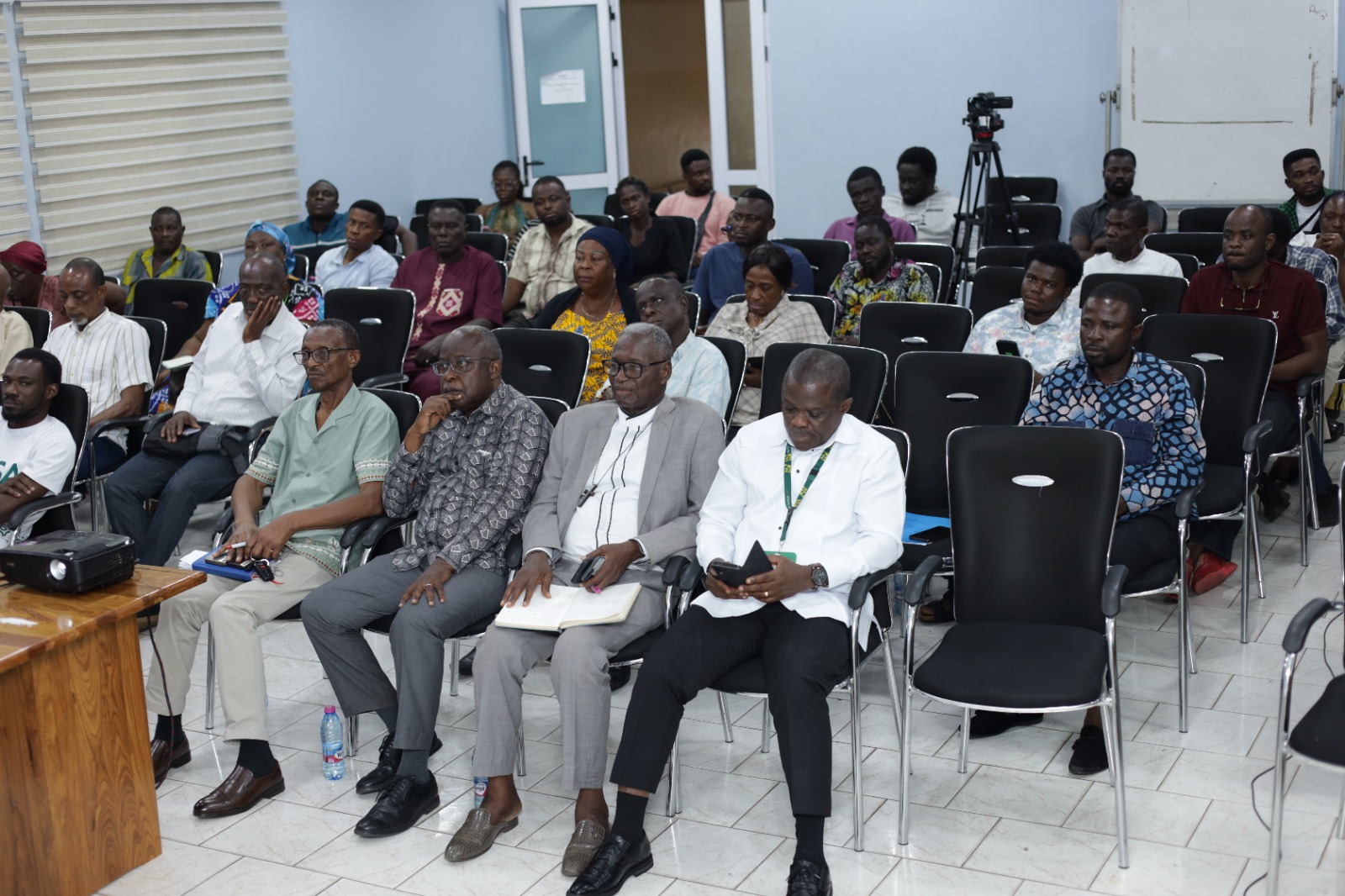
The Directorate of Student Affairs (DOSA) in collaboration with the Ghana Chamber of Construction Industry (GhCCI), has held a half-day stakeholder roundtable on the rules affecting student accommodation in Ghana.
The roundtable was facilitated by Dr Kenneth Appiah Donkor-Hyiaman, a member of GhCCI and senior lecturer in the Department of Land Economy at KNUST on the theme was "Emerging Regulatory Risks in Ghana's Student Accommodation Sector and the need for collective institutional representation."
The meeting brought together owners and operators of hostels and other off-campus student accommodation facilities.

Prof Amos-Abanyie, Deputy Director of DOSA in charge of Housing and Welfare, opened the session. He said student welfare does not end in the lecture hall.
"A student spends about six hours a day in the lecture hall," he said. "The rest of the time is spent in the hostel, under the care of the accommodation owners. Our work goes beyond the classroom, because it is about making sure students have a sound mind."
Prof Amos-Abanyie said hostel owners and off-campus accommodation operators have, in recent months, faced growing demands from bodies such as the Rent Control Department, the Ghana Tourism Authority and the Ghana Revenue Authority. He said DOSA and accommodation owners need to speak with one voice on these matters.
"When we look at our theme, the last part talks about institutional representation," he said. "We see ourselves as one. Students, DOSA and the accommodation owners are not separate entities."
Dr Donkor-Hyiaman explained the history behind rent control in Ghana. He said the country's first rent law dates back to the 1940s and was formalised into the Rent Act in 1963.
"Rent control in Ghana started around 1942," he said. "It was formalised into the Rent Act in 1963. When Ghana adopted the Economic Recovery Programme in 1983, the government agreed to stop controlling the prices of goods and services, including rent."
He also took part in the discussion on how the Rent Act defines the properties it covers, and where student hostels stand under that law.
Other resource persons at the roundtable included Kwaku Obeng Mireku, an estate surveyor and lawyer, and Nana Akwasi Awuah, a lawyer. They spoke to the hostel and off-campus accommodation owners on business registration requirements and on the legal steps available to challenge decisions made by public officers such as the rent commissioner.
Prof Amos-Abanyie said the roundtable was the start of a wider conversation, not the end of it. He said DOSA plans to keep engaging with hostel and off-campus accommodation owners, together with regulatory bodies, so that the sector is properly represented in policy discussions.


