
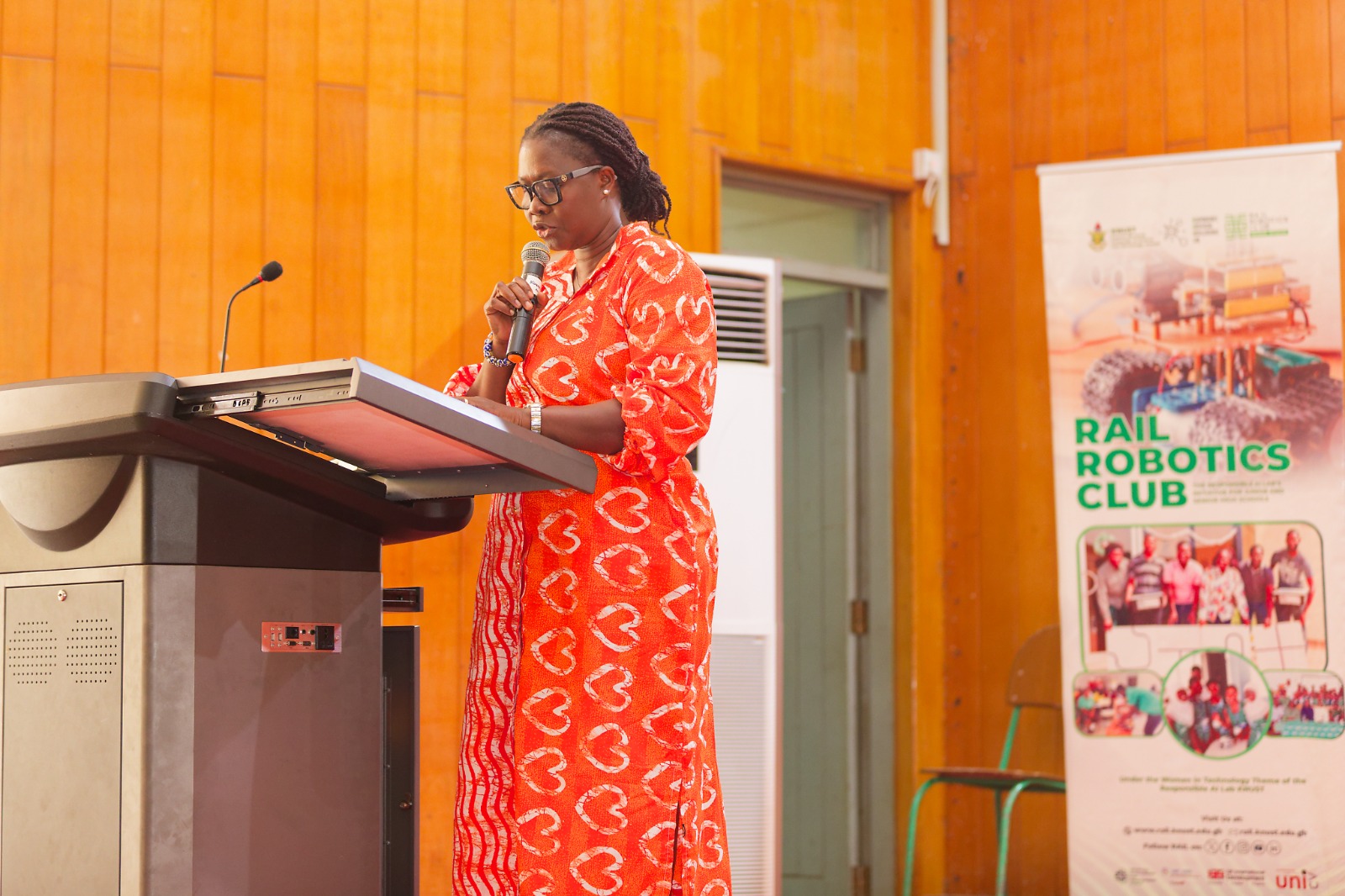
The head of the Gender, Inclusion and Vulnerability (GIV) Office at Kwame Nkrumah University of Science and Technology, Professor Mercy Badu, has urged stakeholders to prioritise inclusion as artificial intelligence reshapes education.
Speaking at the Responsible AI Lab (RAIL) robotics training for mentors, Badu highlighted barriers facing students with disabilities, including inaccessible learning materials and limited assistive technologies.
She said AI could help remove such obstacles through tools including screen readers, real-time transcription and adaptive learning platforms.
“Without intentional action, AI risks widening existing inequalities. Technology alone is not enough. Educators must provide empathy and guidance alongside AI,” she said.
The training session, organised under RAIL Phase II and the Artificial Intelligence for Sustainable Development (AI4SD) projects, also featured contributions from education and technology experts.
Professor Eunice Akyereko Adjei, lead of the Women in Technology and AI in Education theme, said AI was already transforming classrooms and education systems worldwide.
“AI is no longer a distant concept. It is already in the hands of our learners, influencing classrooms and reshaping education systems worldwide,” she said.
Adjei said the team aimed to build digital skills, shape protective policies and promote equity for girls, rural learners and persons with disabilities.
“Above all, AI must enhance human intelligence, not replace it. Together, we will build an education system where technology serves humanity, and no one is left behind,” she added.
The event brought together educators, policymakers and development partners to equip mentors with practical skills and ethical frameworks through a training-of-trainers model.
Emmanuel Acheampong, a tutor at Ayeduase Roman Catholic Primary School in Kumasi, said the RAIL Robotics Club had transformed his students’ learning experiences and increased interest in science.
“Seeing a robot in action opened the students’ eyes; many chose science as their first subject,” he said.
Professor Kwadwo Mensah-Darkwa, vice-dean of the Faculty of Mechanical and Chemical Engineering, reiterated the importance of responsible AI development.
“We have a responsibility to ensure what we develop is impactful and does not destroy. Let us be responsible in our development,” he said in closing remarks.


