

The Africa Health Collaborative at the Kwame Nkrumah University of Science and Technology, Kumasi (KNUST), in partnership with the Mastercard Foundation, has concluded a 10-day Sustainable Business Start-Ups (SBS) training programme aimed at equipping students with practical entrepreneurial skills to transform innovative ideas into viable enterprises.
Now in its fourth year and first cohort of 2026, the Sustainable Business Start-Ups programme forms part of the Africa Health Collaborative’s Health Entrepreneurship pillar. The initiative continues to empower students to develop sustainable and impact-driven businesses within Ghana’s health ecosystem and beyond.
Health Entrepreneurship pillar lead, Prof. Wilberforce Owusu-Ansah said the programme had significantly transformed participants’ entrepreneurial thinking and business development capabilities over the 10 days.
“Today marks the final day for the Sustainable Business Start-Ups programme. We had 200 students participating, and quite a number of them came in with very little or no idea at all. Over the 10 days, there has been a lot of transformation in terms of the ideas they showcased,” he said.
According to him, participants were taken through practical entrepreneurial processes, including idea generation, hybrid business model development, design thinking, marketing strategies, and pitch practice sessions to refine their concepts into workable business solutions.
“They have gone through several techniques including the hybrid business model canvas, design thinking approaches, marketing plans, and pitch practices, which have helped them develop their ideas further,” he noted.
Prof. Owusu-Ansah explained that the next phase of the programme would involve mentorship support to help participants improve their business concepts ahead of the final pitching and awards session later in the year.
“The next stage is to connect them with various mentors through the programme coordinators so they can continue developing prototypes, address challenges identified during training, and refine their ideas before the pitching sessions in November and December,” he added.
He further encouraged participants to use the knowledge and skills acquired to create meaningful impact within their communities and beyond.
“All that we ask of them is to use these skills to positively affect themselves, their families, their communities, Africa, and the world at large. We believe the investment we are making in these young people will yield significant transformation through their business ideas,” he stated.
Some participants also shared how the programme had reshaped their understanding of entrepreneurship and innovation.
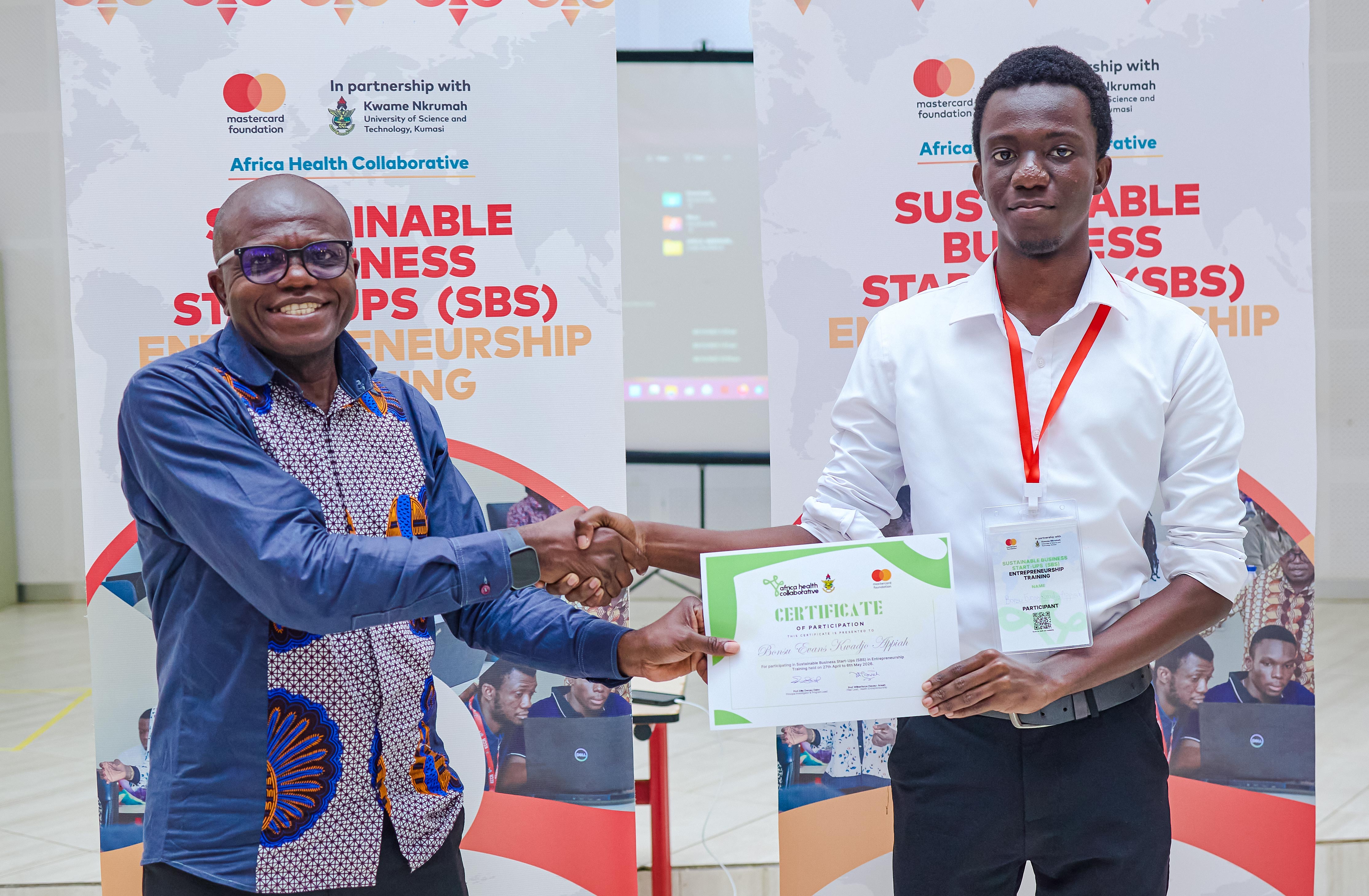
A Biological Sciences student, Evans Bonsu, described the training as impactful in instilling entrepreneurial values among students.
“This training taught us how to identify problems, develop solutions, create services around those problems, and generate value from them,” he said.
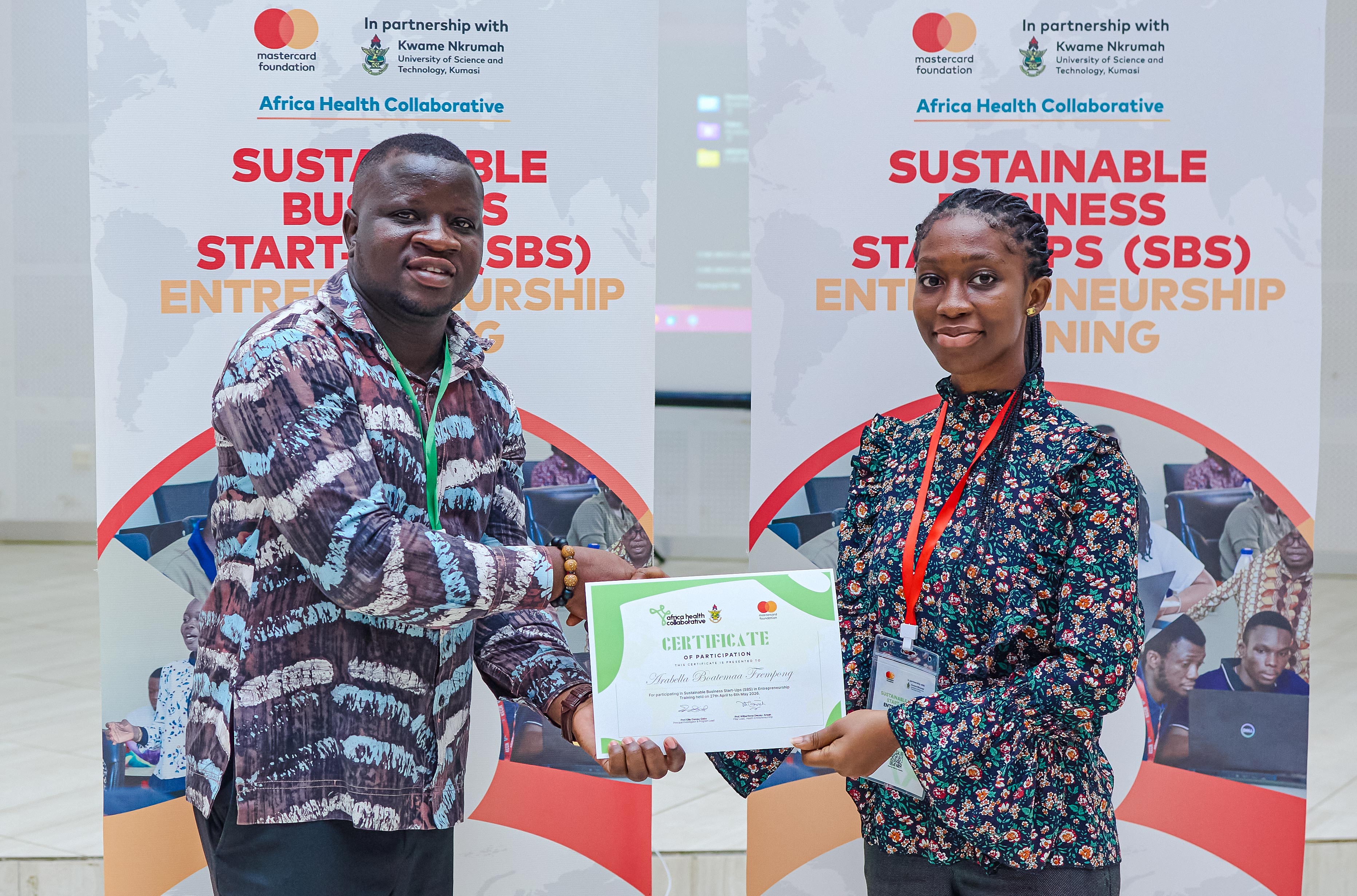
Similarly, Arabella Boatemaa Frempong, a first-year Physiotherapy student, said the programme introduced participants to practical business analysis tools such as problem tree analysis and SWOT analysis.
“It taught us how to identify problems, analyze their effects, and also understand our strengths, weaknesses, opportunities, and threats. The programme has helped me so much, and I now feel confident enough to start something on my own,” she noted.
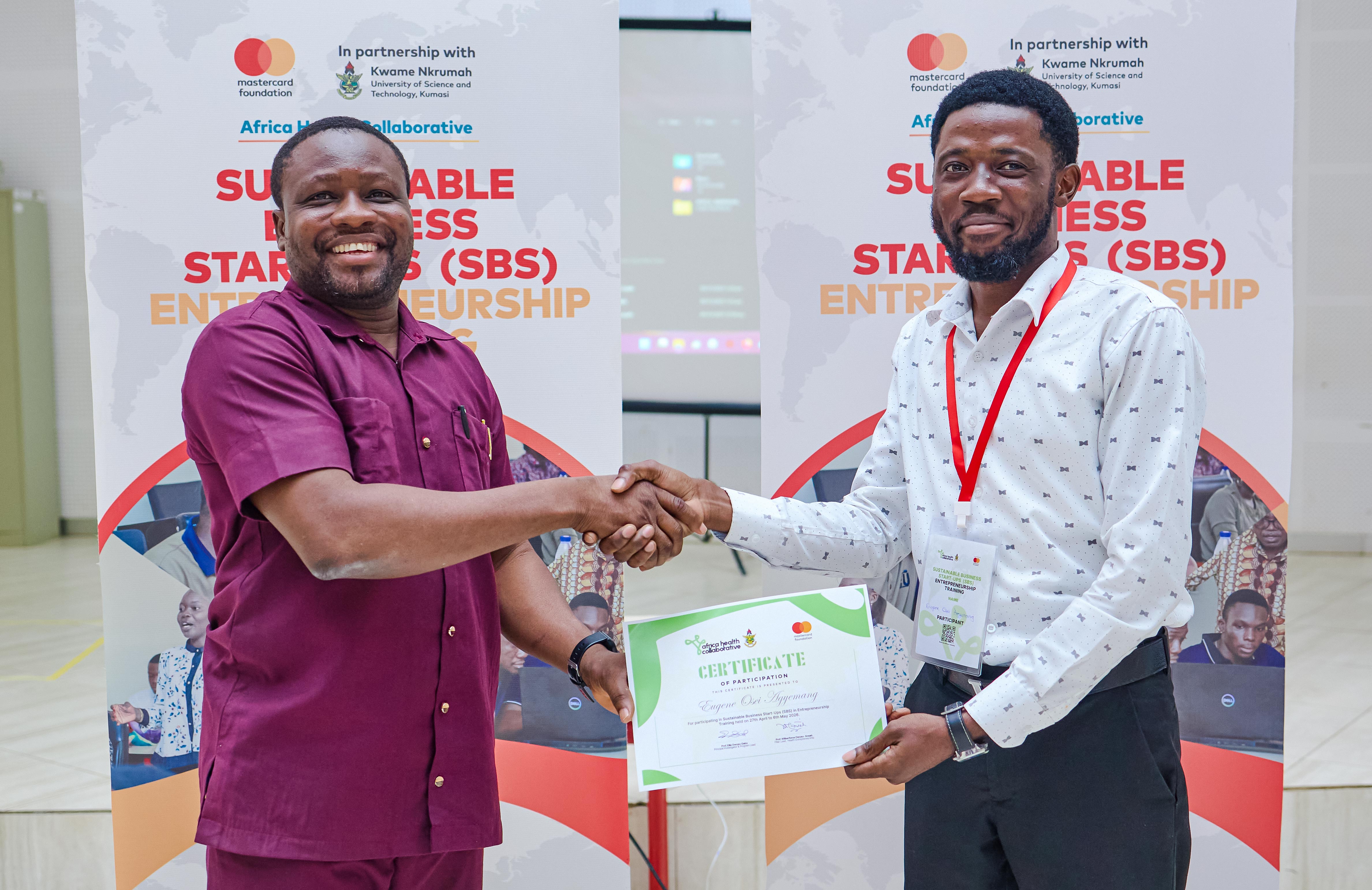
For Eugene Osei Agyemang, the programme provided the practical tools needed to confidently venture into entrepreneurship.
“Going through this 10-day programme has given me the tools to start my own business. We learnt how to use the HBMC for pitching business ideas, budgeting, and many other entrepreneurial skills. This programme has been very impactful,” he said.
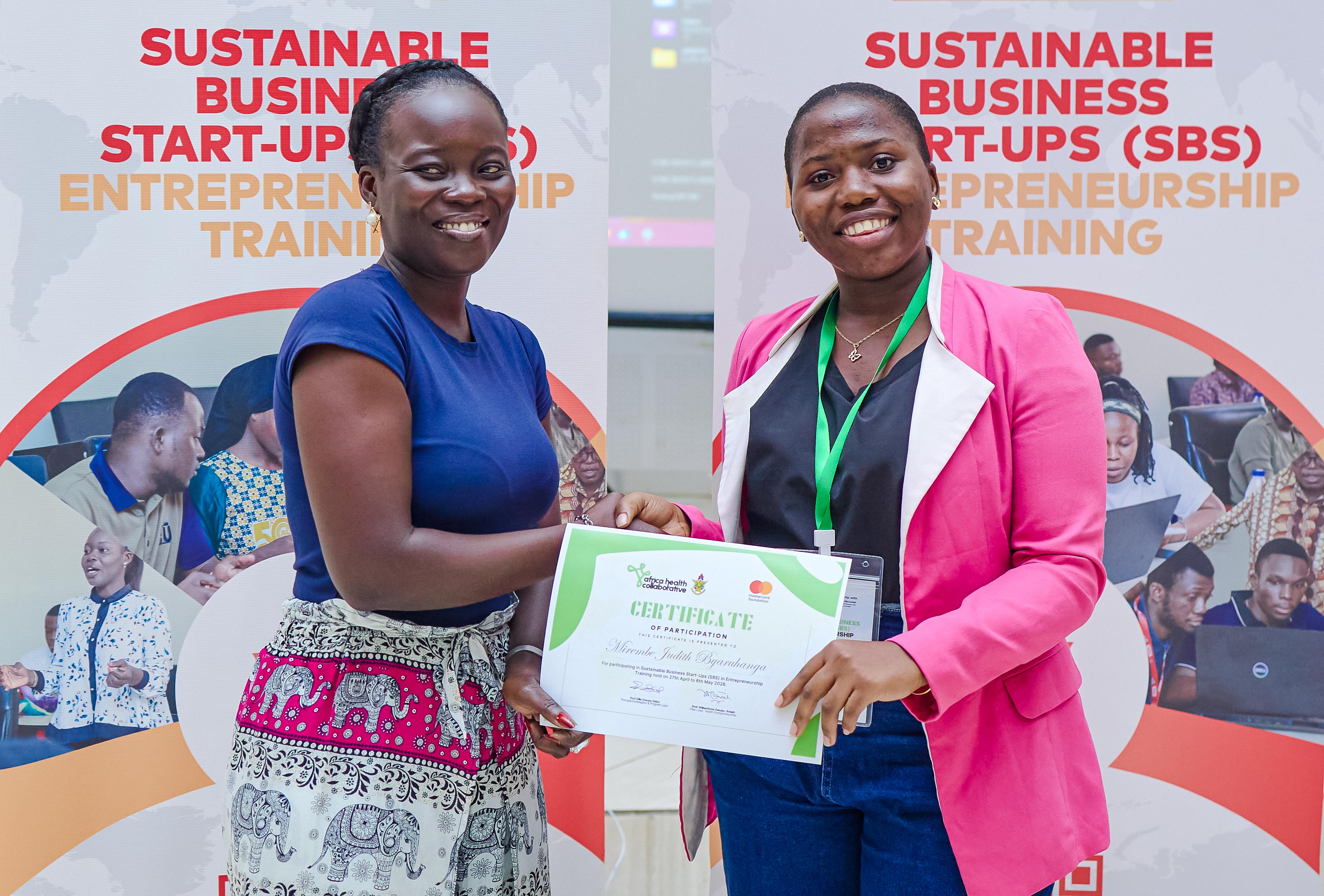
A BSc Food Science and Technology student, Ms. Mirembe Judith Byaruhanga, also praised the programme for mentoring students from idea conception to business development.
“I learnt how to identify problems in my environment and turn them into viable business ideas, how to start and manage a business, and grow it successfully. I would recommend this programme to every young person interested in entrepreneurship because it truly grooms and mentors you into becoming capable of building your own business,” she stated.


