
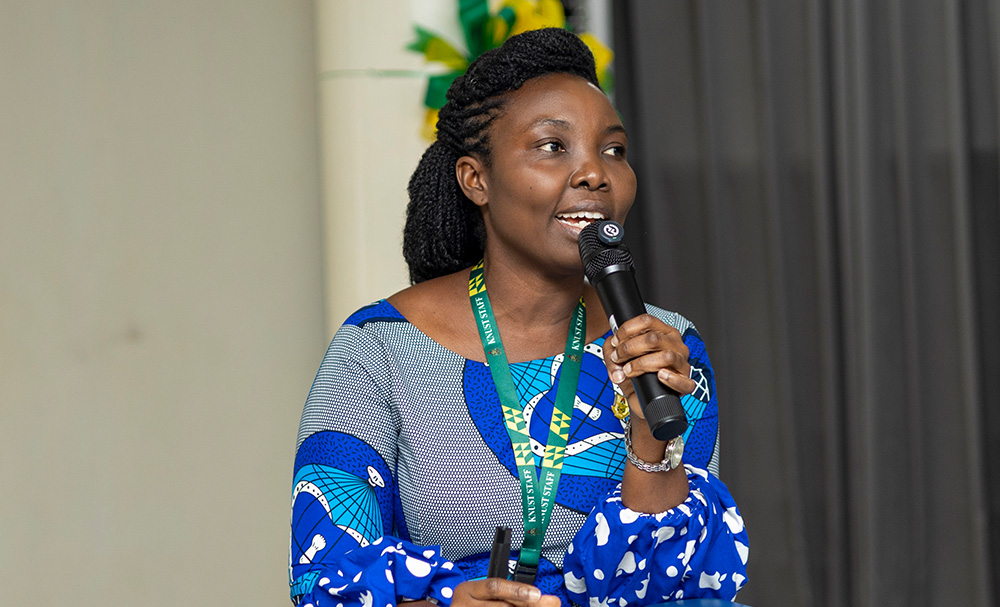
Indigenous crops could play a critical role in addressing hunger, malnutrition and food insecurity in Ghana and across Africa, a food scientist at the Kwame Nkrumah University of Science and Technology, Kumasi (KNUST) has said.
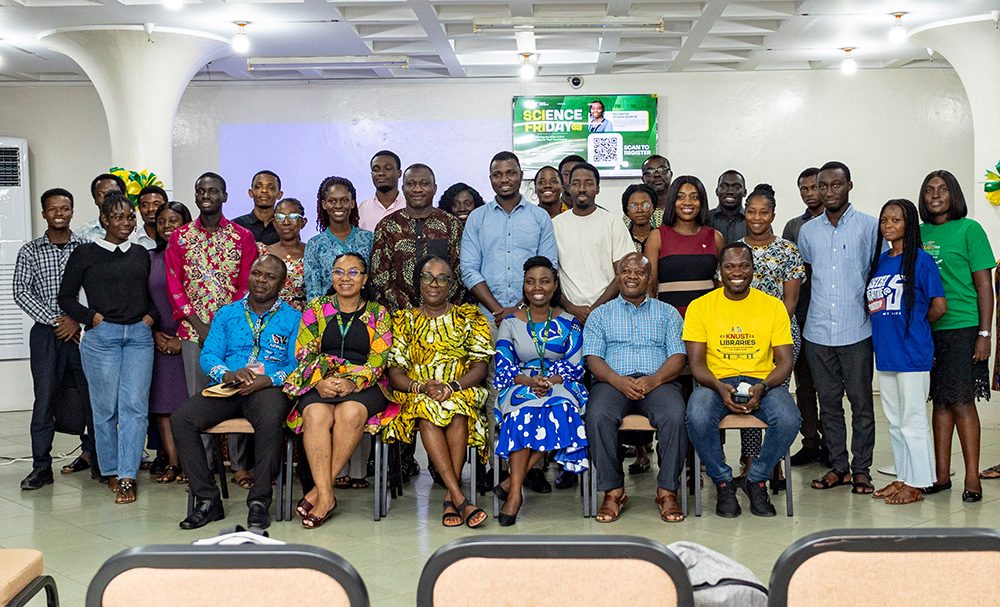
Speaking at a KNUST Library ScienceFriday lecture on indigenous crops and sustainable development, Dr. Abena Achiaa Boakye, Senior Lecturer and Consultant at the Department of Food Science and Technology, said indigenous crops offer a sustainable pathway toward achieving key Sustainable Development Goals (SDGs) and Africa's Agenda 2063.
"There are global recommendations that in achieving these SDGs, we must change the paradigm and focus on what we call indigenous crops because it is a sustainable solution," she said.
Dr. Boakye highlighted the scale of hunger and malnutrition challenges facing the country and the sub-region.
"We have over 3.6 million Ghanaians who are vulnerable to hunger and malnutrition," she noted, adding that malnutrition remains a leading cause of child mortality in sub-Saharan Africa.
She explained that indigenous crops are nutrient-dense, climate-resilient and capable of improving livelihoods while preserving cultural food traditions.
"The literature says that most of them are highly nutrient dense. They are also resilient, so irrespective of the climate and environmental challenges, they can be grown and used to improve livelihoods," she said.
Dr. Abena Boakye focused on Sustainable Development Goals 1, 2 and 3, No Poverty, Zero Hunger, and Good Health and Well-being and their alignment with Aspiration 1 of Africa's Agenda 2063.
Encouraging participants to move beyond awareness of the SDGs, she challenged them to reflect on their personal contributions to sustainable development.
"Have you ever pondered to ask which of them can I contribute to? We hear them, we talk about them, but have you ever pondered what your contribution can be?" she asked.
She further urged participants to think critically about solutions to societal challenges.
"The world is now a global village," she said. "And so, because it has become a global village, we cannot do science outside of the globe. We look at science starting from the global needs, then break it down to the continent, the nation, groups of people, and eventually individuals."
Dr. Abena Boakye encouraged participants to view themselves as part of the solution to Africa's development challenges.
"You are not just in the university community for being here. You are here to think about a solution," she said.
Speaking on behalf of the University Librarian, Dr. Richard Bruce Lamptey, Deputy Librarian Dr. Edward Mensah underscored the relevance of the topic.
"At the end of the day, I'm sure there are a lot of things we'll pick up to help us in the way we manage our lives, because food is what we take almost every day," he said.
Mrs. Felicia Amankwah, speaking on behalf of the University Librarian and the KNUST Library staff, thanked the guest speaker for the presentation.
"On behalf of the University Librarian and the entire library staff, we would like to say thank you. It has been a very insightful presentation," she said.
She encouraged participants, particularly students considering further studies, to explore opportunities within the field and contribute to developing innovative solutions to food, nutrition and sustainability challenges.


