
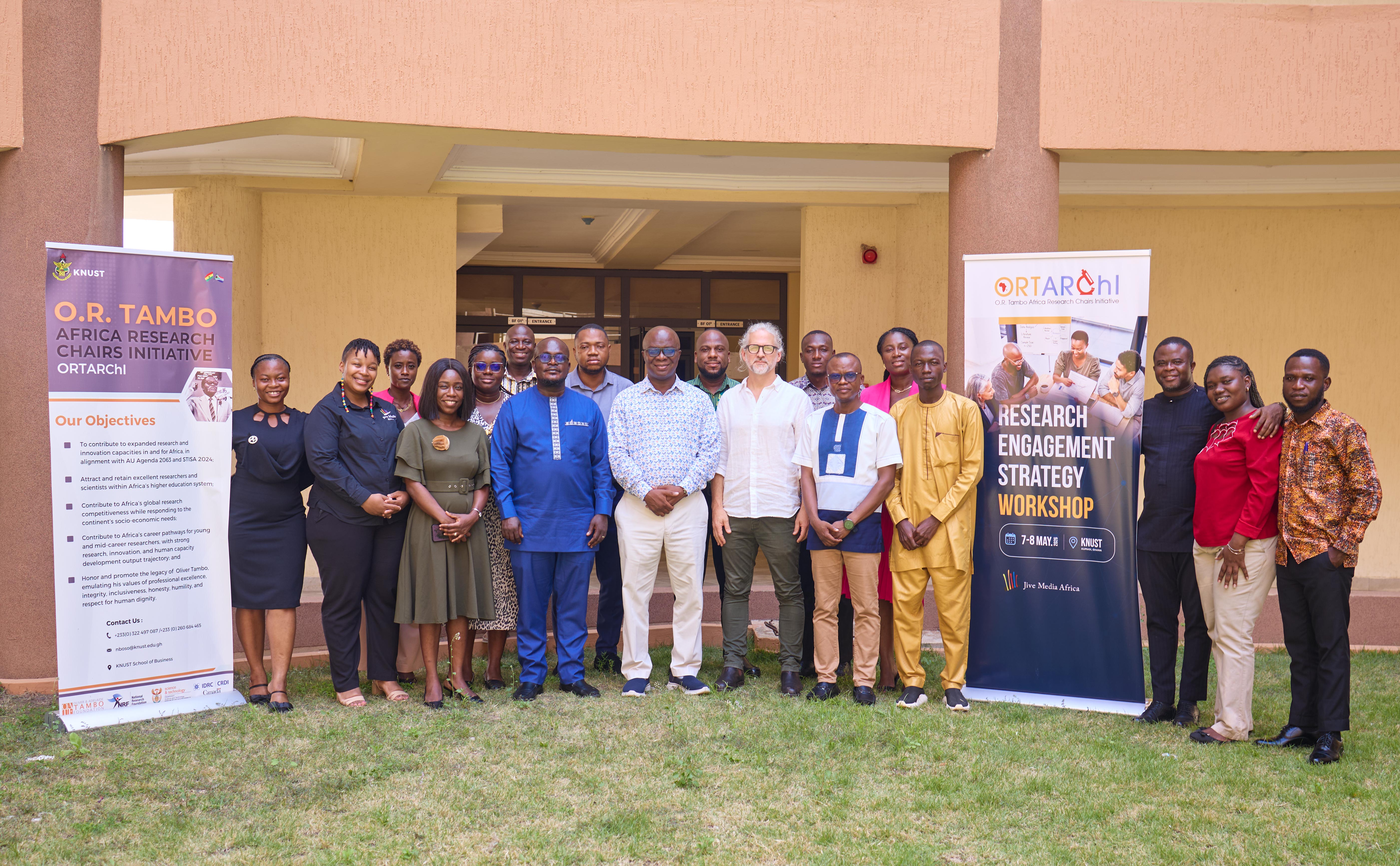
The O. R. Tambo Africa Research Chairs Initiative (ORTARChI), in collaboration with Jive Media Africa from South Africa, has organised a two-day Research Engagement Strategy Workshop at the Kwame Nkrumah University of Science and Technology (KNUST), Kumasi. The training is aimed at strengthening communication and research engagement strategies for ORTARChI Chairs.
The workshop forms part of an initiative by South Africa’s National Research Foundation to support research chairs across all 10 host institutions in developing sustainable science communication and research engagement strategies.
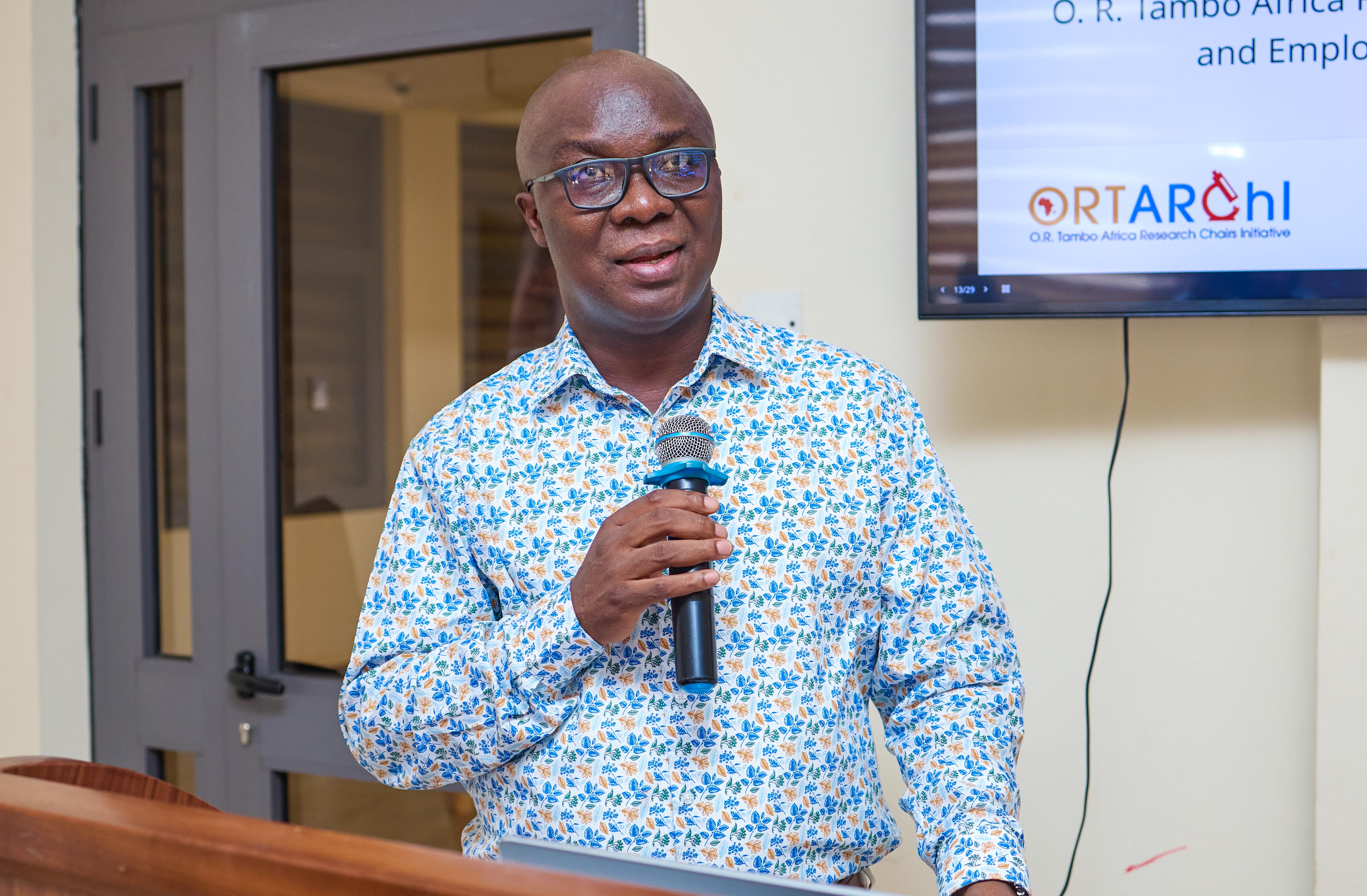
Chair of ORTARChI-KNUST, Professor Nathaniel Boso, highlighted the importance of structured communication in ensuring that research activities positively impact society.
“We need to have a structured way of communicating our research to the general public and engaging the public in what we do so that our research and educational activities can have an impact on society,” he said.
Professor Boso explained that the KNUST Chair was established as the only Humanities and Social Sciences Chair within the initiative, with a focus on entrepreneurship and employability.
He disclosed that the Chair has supported several doctoral and master’s students through fully funded scholarships while also training entrepreneurs in entrepreneurial skills and business development. According to him, the initiative also seeks to create stronger collaboration between academia, industry, and entrepreneurs to ensure that research addresses practical societal and business challenges.
“Our vision is to create a space where student inventions and ideas can be developed into commercially viable businesses before students even graduate,” he stated.
Beyond postgraduate training, Professor Boso said that about 125 entrepreneurs across the country have been trained in entrepreneurial skills and business development. “We share best practices from around the world with entrepreneurs and try to provide them with the resources to make those skills applicable in their own businesses,” he added.
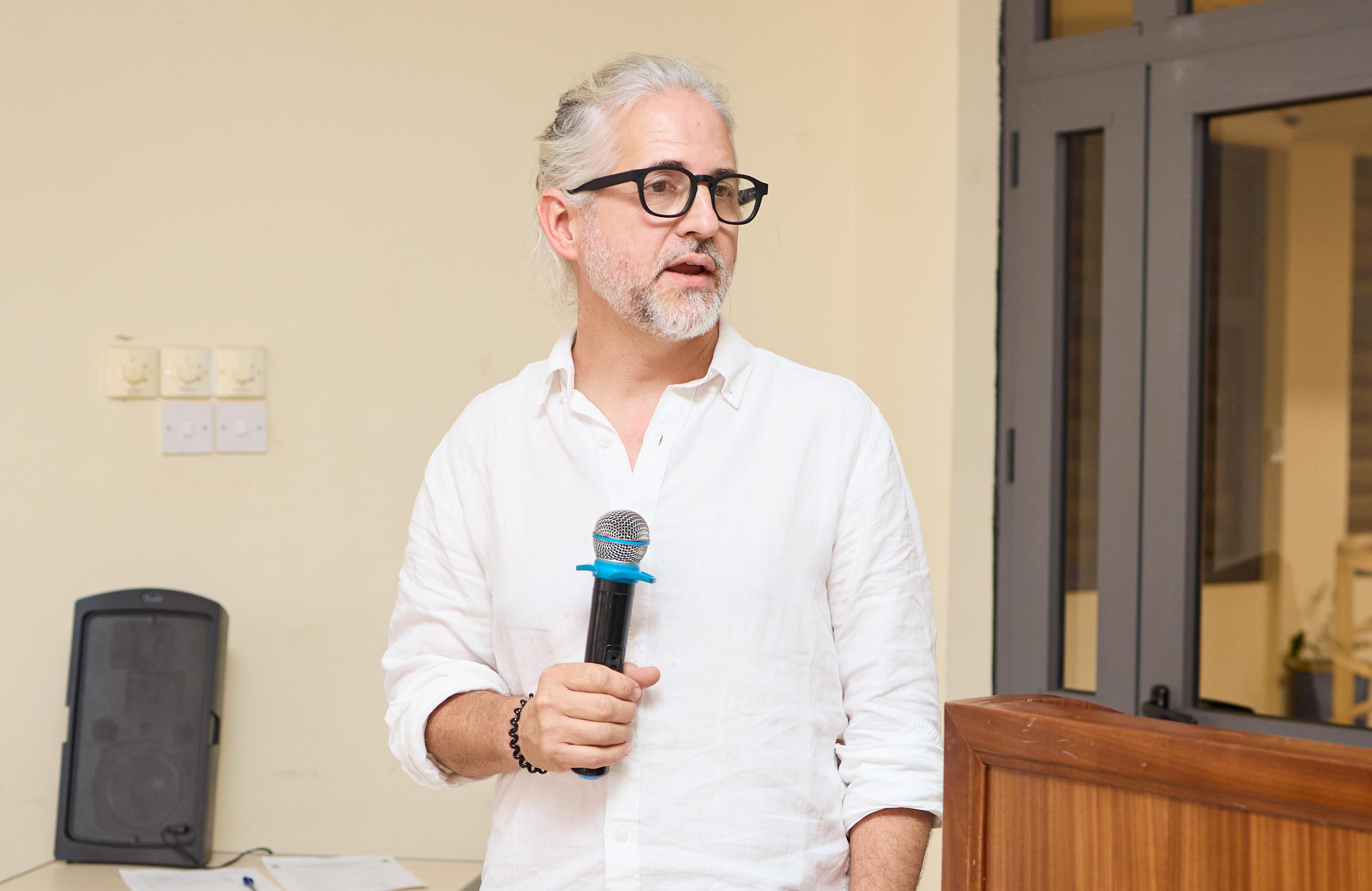
Facilitating the session, Mr. Robert Inglis, Director of Jive Media Africa, and Dr. Nozipho Madzivha stated that the workshop was designed to equip participants with practical skills in science communication, stakeholder engagement, and strategic communication.
“Our role is to help the chairs craft their research engagement strategies and equip them with the know-how to package the work they do in a manner that is appealing to various audiences,” Mr. Inglis said. He further explained that research must move beyond academic publication to create a visible societal impact.
“It is one thing to do research and publish it in a high-impact journal, but until somebody takes that research outside of the journal and applies it in the world, the research is not going to create impact,” he said. “For impact to be seen and felt, there needs to be engagement with stakeholders who are direct beneficiaries of the work being done within the Chairs.”
Mr. Inglis added that the workshop sought to help participants develop communication strategies capable of making research accessible and relevant to broader society. “We are really talking about how we take evidence-based, rigorous knowledge and make sure it becomes meaningful to people outside academia,” he noted.
As part of the workshop, participants were introduced to a communications framework known as the “Seven Ms for Impactful Communications,” which focuses on mission, target markets, media, messaging, and strategies for broadening engagement and sustainability.
The facilitators noted that the engagement would continue beyond the workshop through mentorship and training in communication and research engagement skills.
The workshop featured interactive sessions on communication strategy, stakeholder engagement, science communication, brand storytelling, and research visibility, all aimed at enhancing the impact of research across Africa.
The University Relations Officer of Kwame Nkrumah University of Science and Technology, Kumasi Dr Daniel Norris Bekoe, who participated in the training programme, described the initiative as highly impactful and timely, stressing that such engagements must be replicated across all colleges of the University in the future.
According to him, KNUST researchers produce enormous volumes of high-quality and globally relevant research every year.
However, the major challenge lies in translating these research outputs into simple, accessible and compelling communication formats that can easily be understood and appreciated by policymakers, industry players, the media and the public.
He emphasised that research only achieves its full value when its findings are effectively communicated to society in clear and relatable language.


