
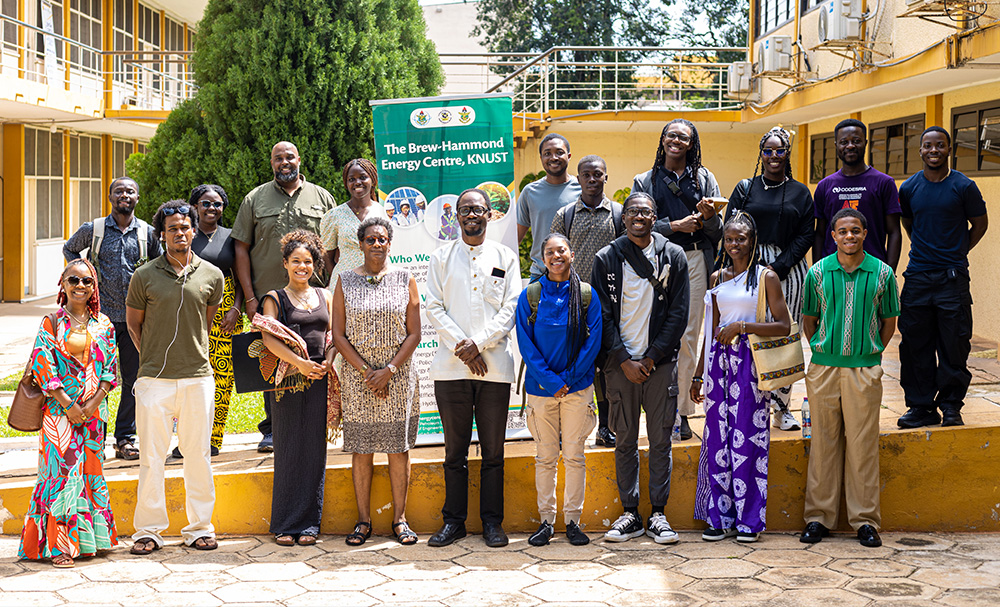
The Brew-Hammond Energy Centre (TBHEC) at the Kwame Nkrumah University of Science and Technology, Kumasi (KNUST) has hosted an international academic delegation for discussions on renewable energy research, sustainability and future collaboration opportunities.
The delegation, comprising professors and students from institutions in Ghana and the United States, visited the Centre to gain insights into Ghana’s energy landscape and explore potential partnerships in solar energy research, training and community development initiatives.
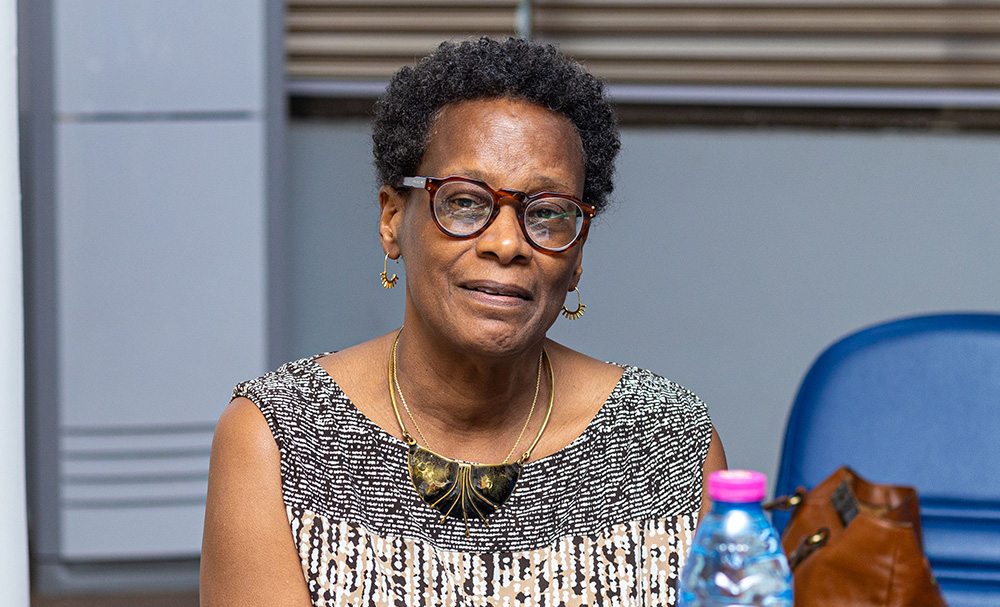
Director of International Comparative Labor Studies at Morehouse College, Prof Cynthia M. Hewitt, explained that the team’s interest in renewable energy stemmed from earlier community-based solar projects in Ghana, particularly a solar installation project at Mankessim.
“When the lights went out in the neighbourhood, schoolchildren gathered under the solar-powered lights to study. That was when I realised that even a small installation can make a difference in a community,” she said.
Prof. Hewitt noted that the experience inspired a broader interest in organic solar technologies and sustainable energy solutions capable of improving livelihoods in underserved communities.

Director of the Brew-Hammond Energy Centre, Prof David Ato Quansah, presented an overview of Ghana’s energy sector and the Centre’s role in advancing research, policy and innovation.
He noted that although Ghana has made significant progress in electrification, energy access and affordability remain major challenges across Africa.
“For many in Africa, access to electricity is still a daily challenge,” he said.
Prof. Quansah further highlighted Ghana’s Energy Transition Framework, which aims to increase renewable energy generation, promote the electrification of transport systems and modernise cooking technologies as part of the country’s journey towards achieving net-zero emissions.
He explained that TBHEC functions as a multidisciplinary research hub, bringing together experts from engineering, economics, social sciences, business and other disciplines to address energy challenges from multiple perspectives.
“We recognise that energy challenges are not only technical issues. They are linked to policy, economics, communities and development, which is why we work in a very multidisciplinary manner,” Prof. Quansah stated.
There were discussions on emerging issues such as photovoltaic waste management, agrivoltaics, floating solar systems and sustainable mobility technologies. Others also focused on the social dimensions of energy transitions, including public acceptance of solar technologies, affordability challenges and the importance of interdisciplinary collaboration in driving sustainable development.
Prof. Quansah reaffirmed the Centre’s commitment to partnerships and knowledge exchange, noting that KNUST remains open to joint research, student exchanges, co-supervision opportunities and collaborative training programmes.
“We have an opportunity to strengthen the friendship that started many years ago and expand it further,” he said.


