
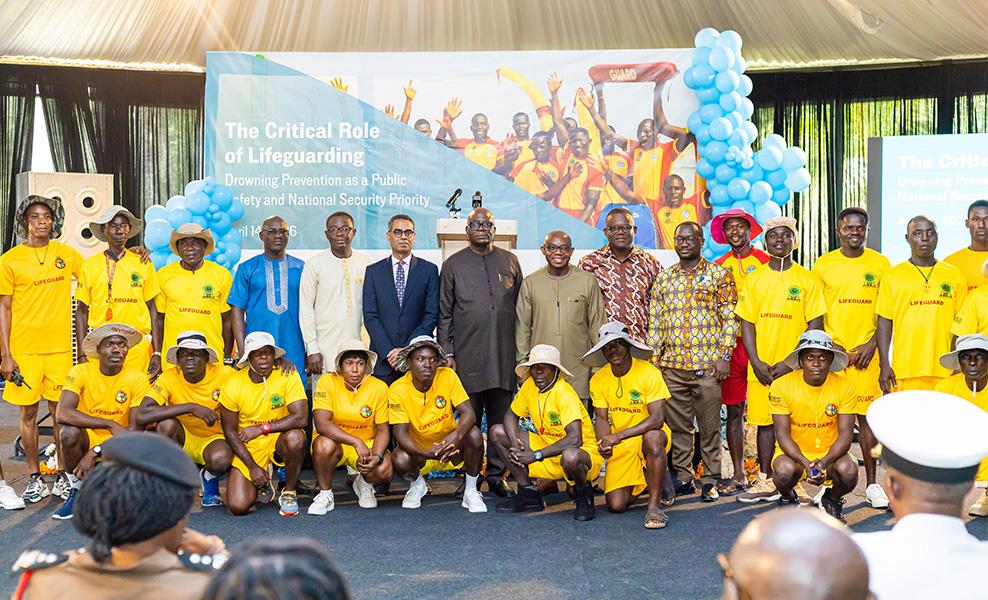
The Kwame Nkrumah University of Science and Technology, Kumasi (KNUST) has played a leading role in supporting a new national lifeguarding initiative aimed at reducing drowning deaths and improving safety at Ghana’s beaches and water bodies.
The initiative, launched on April 14, 2026, at the Labadi Beach Hotel, was spearheaded by the National Coordination Board for Drowning Prevention with technical support from KNUST and the Johns Hopkins International Injury Research Unit, alongside backing from Bloomberg Philanthropies.
At the centre of the initiative is KNUST’s contribution through research, technical guidance and public health expertise aimed at addressing what stakeholders describe as a major but preventable public safety challenge.
An estimated 1,400 people die from drowning annually in Ghana, with children and young people among the most affected. Stakeholders at the launch said many of these deaths can be prevented through stronger safety systems, public education and the deployment of trained lifeguards.
Speaking during the launch, Deputy Minister for the Interior, Ebenezer Okletey Terlabi, stressed the need for urgent national action.
“Drowning is not a distant or occasional problem, but it is a present and persistent threat,” he said.
He added that safety for many Ghanaians means confidence that everyday activities such as work, travel and recreation can be carried out safely.
A key component of the initiative has already been rolled out in parts of the Greater Accra Region, particularly in the La Dade Kotopon Municipality, where 21 trained lifeguards have been deployed across Laboma, La Pleasure and Acapulco beaches.
The lifeguards, trained in water rescue, CPR, first aid and risk assessment, are being employed and paid by the municipal assembly as part of efforts to ensure long-term sustainability.
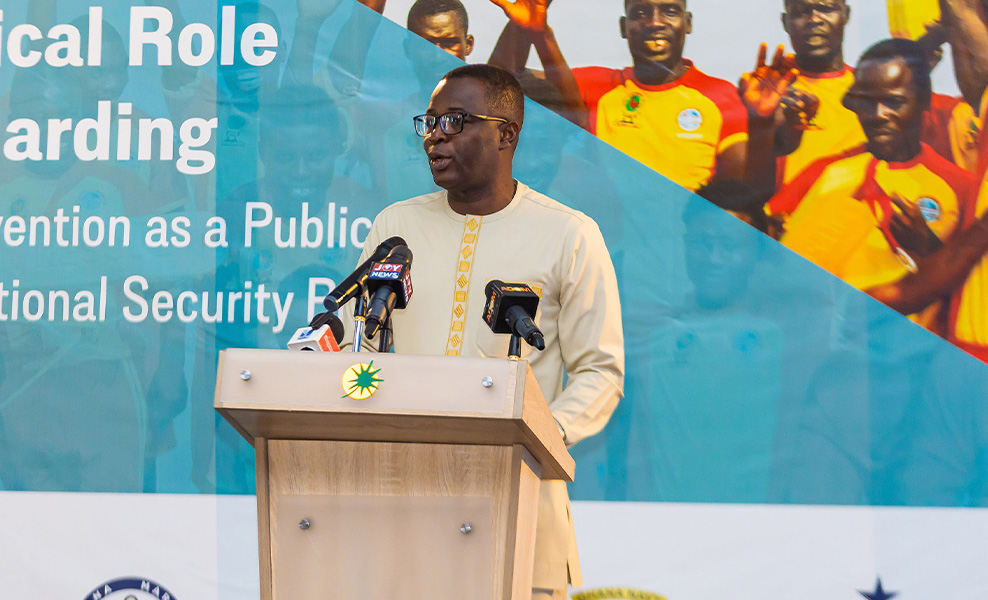
Professor Emmanuel Nakua was among experts involved in the initiative, reflecting KNUST’s growing contribution to injury prevention research and public health interventions in Ghana.
The programme also brings together institutions including the Ghana Navy, Ghana National Fire Service, Ghana Police Service, the National Ambulance Service and the National Security Council Secretariat.
Commodore Ben Baba Abdul said drowning prevention requires collective responsibility.
“We believe that drowning is not the responsibility of one institution, but a shared duty that calls for unity of purpose,” he said.
The launch also featured the inauguration of the National Coordination Board for Drowning Prevention, which is expected to coordinate and guide long-term drowning prevention efforts nationwide.


