
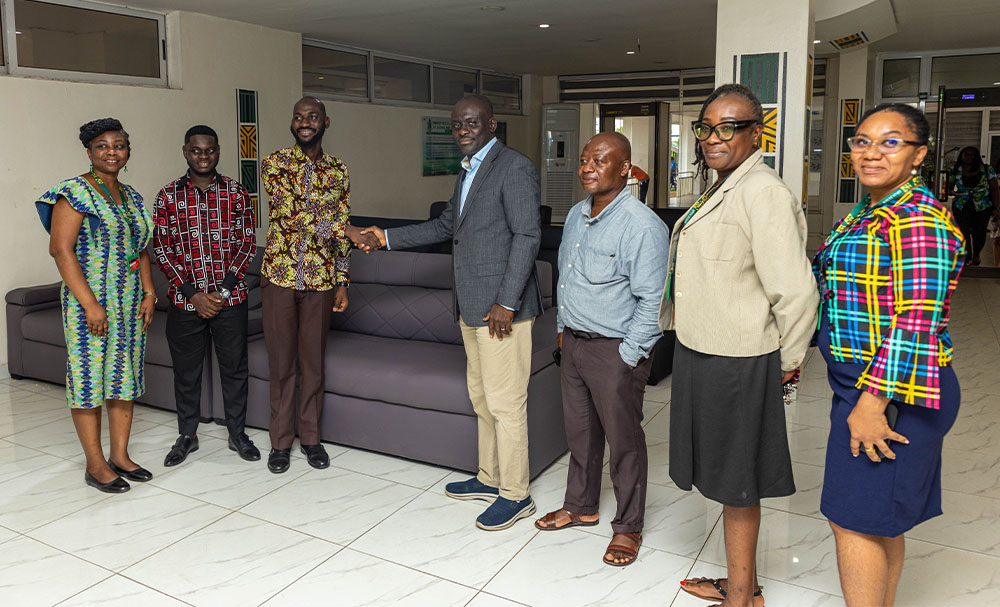
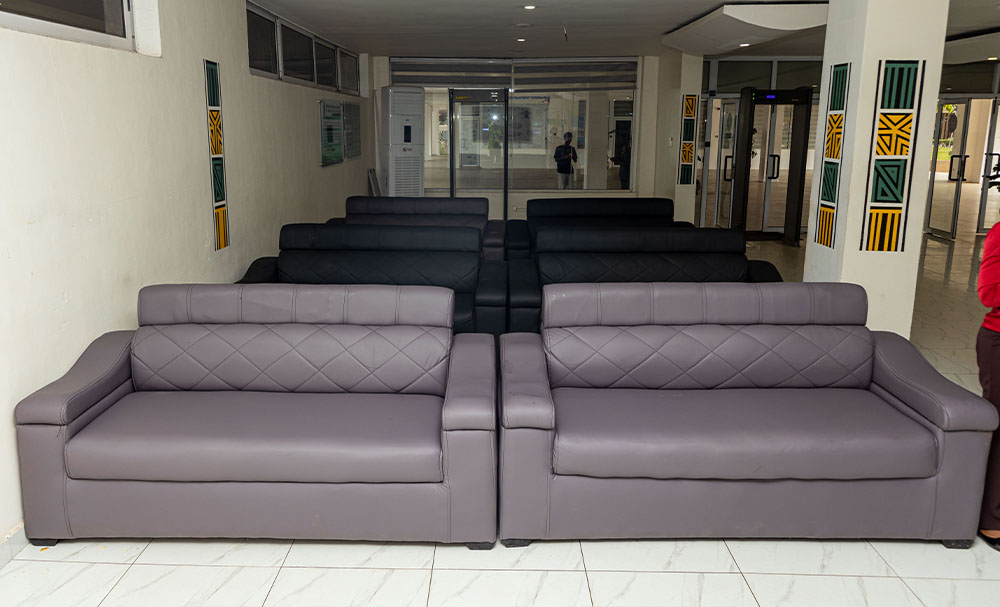
The Student Representative Council (SRC) of the Kwame Nkrumah University of Science and Technology, Kumasi (KNUST), has donated six chairs to the university’s main library to improve seating conditions for students.
The gesture forms part of efforts by the SRC to support ongoing plans to upgrade facilities at the library and enhance the overall learning environment on campus.

SRC President Shakir Is-Haq Waiz said the donation was prompted by concerns over the poor condition of existing furniture. He noted that during a recent visit, some students had resorted to using makeshift classroom chairs, which were not suitable for a modern academic library.
He said engagements with library management revealed broader renovation plans aimed at transforming the facility into a world-class learning space, and that the SRC considered it necessary to contribute.
“We realized the chairs were in bad shape, and although temporary arrangements had been made, they did not reflect the standard of a university library. After discussions with management, we decided to take up the responsibility of providing seating support,” he said.
Waiz added that the council mobilised resources and collaborated with relevant stakeholders to procure the chairs, describing the donation as a step toward improving student welfare and the academic experience.

University Librarian Dr. Richard Bruce Lamptey said the facility is continuously evolving to meet the diverse learning needs of students, stressing the importance of flexible and inclusive study spaces.
“Students have different learning styles, and it is important to provide varied environments that support effective learning,” he said. “We are very grateful for this support, which will enhance what we are trying to achieve.”
He said the library has outlined several improvement projects, including plans to make the entrance more accessible for persons with disabilities and to upgrade sections such as the research commons.
Dr. Lamptey also disclosed plans to introduce recreational learning spaces, including areas where students can engage in board games, as part of efforts to create a balanced academic environment.
“This place is not only for academic work but also for other forms of learning and engagement,” he added.
He further highlighted the need for institutional memory projects, including spaces that document the contributions of past university officials, as part of a broader vision for the library.

The Director of the Directorate of Student Affairs (DOSA), Prof. Marian Asantewah Nkansah, said student leaders had earlier been encouraged to consult widely with key stakeholders upon assuming office.
“When they took office, we encouraged them to visit key officials and engage them, so they would have a full grasp of the state of affairs and ensure their policies are well informed,” she said.
She said such collaboration fosters collective responsibility and strengthens institutional support for student-led initiatives.
“If what you are doing is in the interest of all of us, then we will definitely support it,” she added.
Prof. Nkansah commended the SRC for what she described as “modest but impactful” interventions, noting that incremental efforts can significantly improve the university environment.
“Most people want to execute big projects but never get to start. These smaller contributions, when sustained, can build something meaningful,” she said.
She urged students to take proper care of the chairs to ensure their longevity.
“I am hoping that students will appreciate this and put it to good use. Let’s take good care of them so they serve their intended purpose,” she said.
“You shouldn’t come here with pens or sharp objects and tear the leather apart within a short time,” she added.
| Story: Alice Laura Kyerewaah Prempeh | Photos: Isaac Kwaku Duah |


