
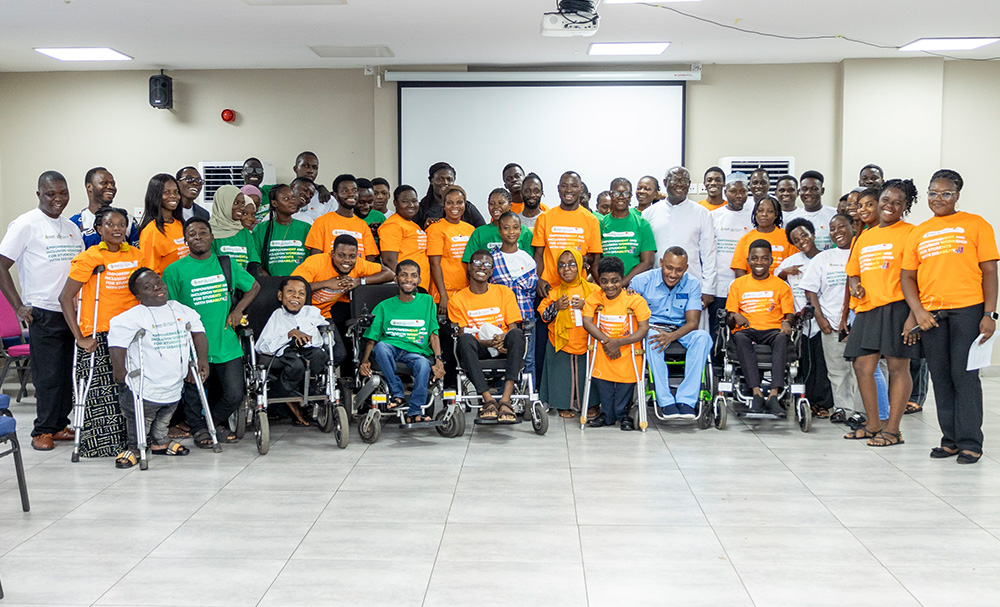
Students with disabilities at the Kwame Nkrumah University of Science and Technology, Kumasi (KNUST) have been encouraged to build confidence, showcase their talents and actively participate in campus life as part of efforts to promote inclusion and personal development.
The call was made during an Empowerment and Inclusion Workshop organised by the Gender, Inclusion and Vulnerability (GIV) Office of the University in collaboration with the Mastercard Foundation Scholars Program.
The workshop formed part of the University’s ongoing efforts to create a supportive and inclusive campus environment that empowers students with disabilities to fully participate in academic and social life.
Head of the GIV Office, Prof. (Mrs.) Mercy Badu, said the programme was designed to provide students with disabilities a platform to showcase their talents, interact with one another and build their confidence.
“We have gathered here to give students with disabilities the opportunity to express themselves and showcase the unique talents and abilities that make them who they are,” she said. “It is also an opportunity for us to learn from each other and build a strong community.”
Delivering a message on behalf of the Director of Students Affairs, Prof. (Mrs.) Francess Dufie Azumah reaffirmed the University’s commitment to creating an environment where every student feels valued and supported.
“This workshop is a key step in promoting accessibility and empowering students with disabilities. As a university, we remain committed to providing the resources and opportunities that will enable all students to thrive academically and personally,” she said.
She also emphasised the importance of involving persons with disabilities in decisions that affect them.
“There is a mantra in disability advocacy which says, ‘Nothing about us without us and disability is not inability’. Students with disabilities must be included in conversations that shape policies and programmes concerning them,” she noted.
Chief Counsellor of the Mastercard Foundation Scholars Program at KNUST, Rev. Dr. Stephen Jantuah, highlighted the programme’s commitment to supporting students with disabilities. He noted that the programme had introduced a policy reserving 10 percent of its scholarships for persons with disabilities, enabling brilliant but economically disadvantaged students to access quality higher education.
“Empowerment means accepting persons with disabilities, respecting them and providing them with the skills, tools and opportunities they need to succeed in life,” he said.
Rev. Jantuah also stressed the need to challenge negative societal perceptions about disability, which often stem from ignorance and cultural misconceptions.
During an open forum session, participants discussed issues relating to confidence, self-esteem, the creation of inclusive communities and the need to break the stigma associated with disability.
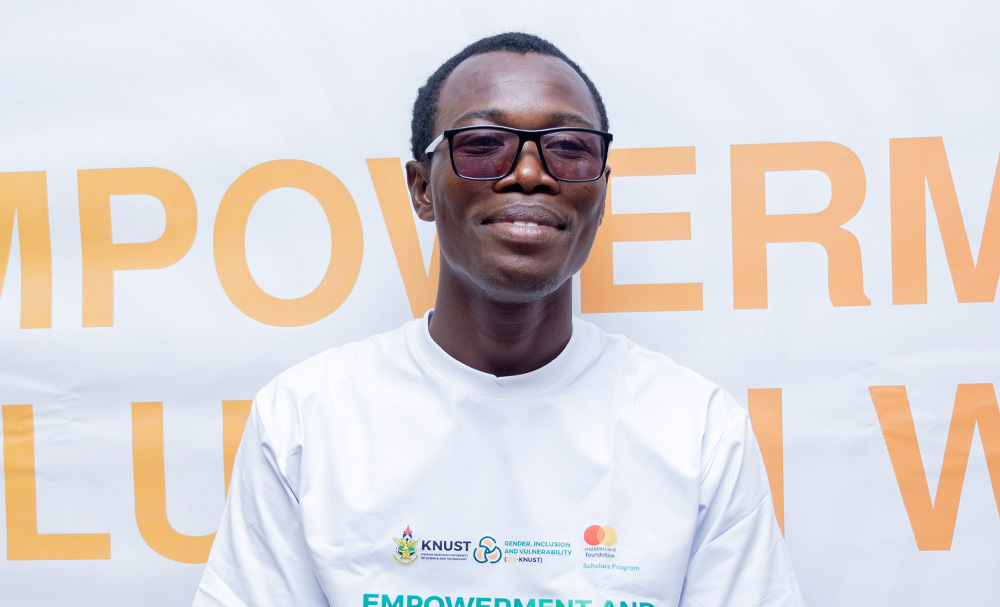
A Mastercard Scholar, Muntari Afoyem Ayoka, said confidence begins with self-acceptance and belief in one’s abilities.
“Confidence for me means believing that my disability does not define my potential. When you accept who you are and focus on your strengths, you realise that you are capable of achieving the same goals as anyone else,” he said.
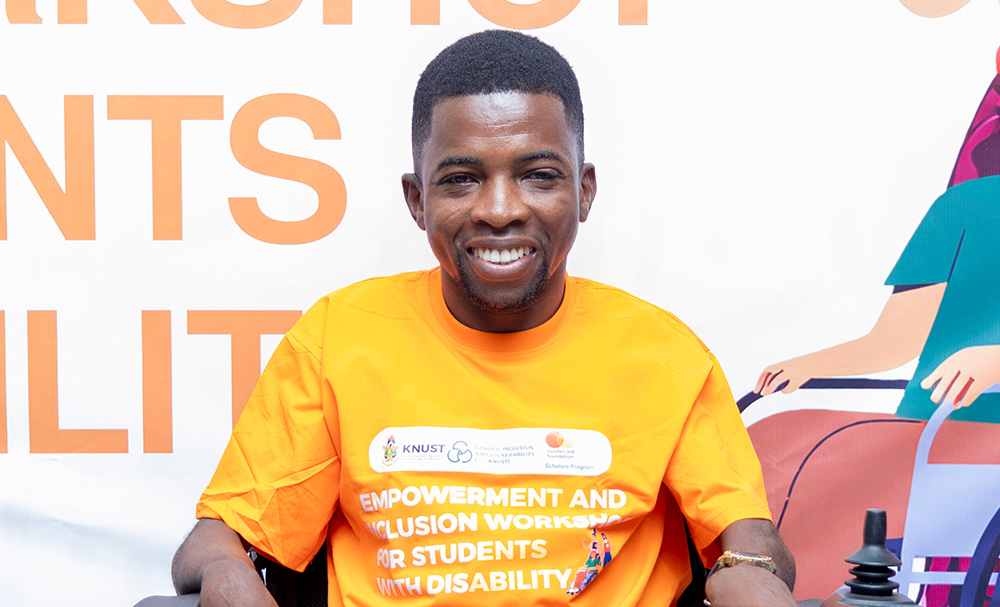
Another Mastercard Scholar, Maximillian Morimi, emphasised the importance of community support and open dialogue in breaking the stigma associated with disability.
“Sometimes we feel shy or afraid to speak because of how society sees us. But when we share our stories and support each other, we begin to see that our voices matter,” he said.
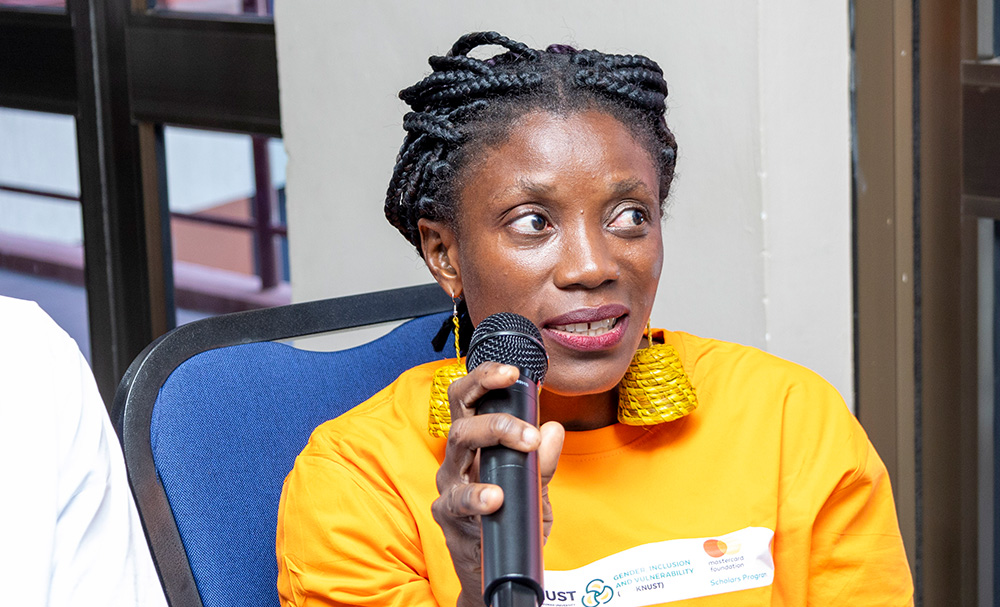
An alumna of KNUST, Olivia Diane Nkrumah, commended the University for creating an inclusive environment that supports students with disabilities and encourages them to pursue their ambitions. She urged students to remain confident, creative and proactive in pursuing opportunities.
“KNUST has created an environment where students with disabilities can grow and succeed, and that is something worth celebrating. But beyond the opportunities available, you must also be creative in the space you find yourself and be willing to put yourself out there,” she said.
The workshop also featured contributions from Prof. Ibok Oduro, President of Women in Science, Technology, Engineering and Mathematics Ghana (WiSTEMGh), Prof. Anthony Kwaku Edusei of the Department of Health Promotion and Disability Studies, and Rabbi Darko, who moderated the open forum.
They shared insights on strengthening support systems, building confidence among students with disabilities and promoting opportunities for inclusive participation within the University community.
Story: Esther Nutsugah


