
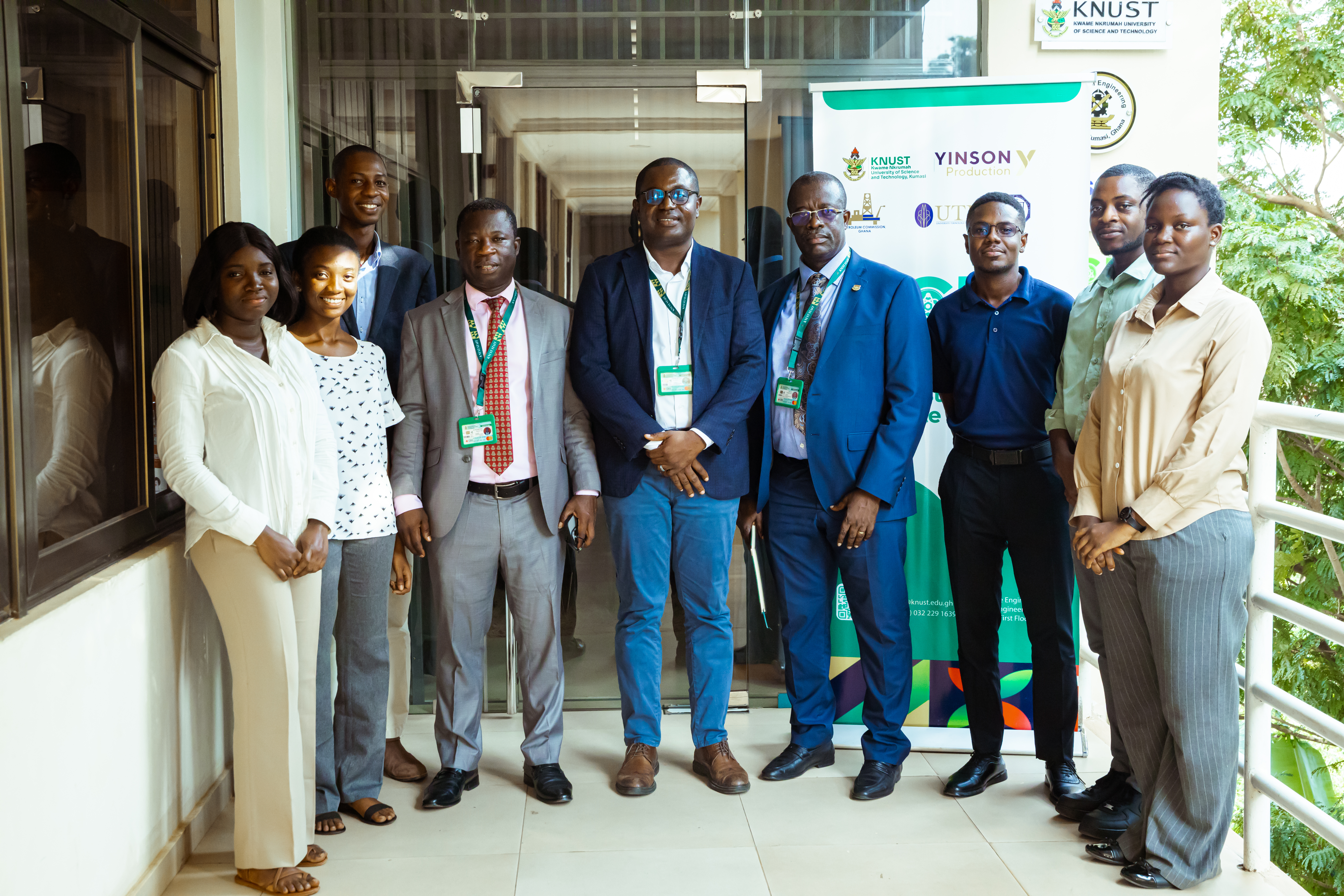
The Finance Officer of the Kwame Nkrumah University of Science and Technology, Kumasi (KNUST), Dr Charles Nsiah, has visited the Net Zero Carbon Emission Lab (NCEL) to gain first-hand insight into the laboratory's research and explore opportunities to integrate scientific carbon accounting into the University's sustainability and financial reporting systems.
Dr Nsiah was accompanied by the Deputy Finance Officer, Dr Owusu Acheampong, as part of the engagement, which forms part of the University's broader commitment to strengthening environmental sustainability through evidence-based decision-making and institutional collaboration. The delegation was received by the Principal Investigator of the Net Zero Carbon Emission Lab, Dr Yen Adams Sokama-Neuyam.
During the visit, Ms Christabel B. Kusi delivered a technical presentation demonstrating the methodologies used by the laboratory to quantify greenhouse gas emissions. She explained how activity data, including electricity consumption, fuel use, waste generation and procurement records, are converted into carbon emissions using internationally recognised emission factors and accepted accounting standards.
She added that while the current approach relies on standard emission factors, more advanced methodologies involve direct measurements from equipment and facilities to improve the accuracy of emissions inventories.
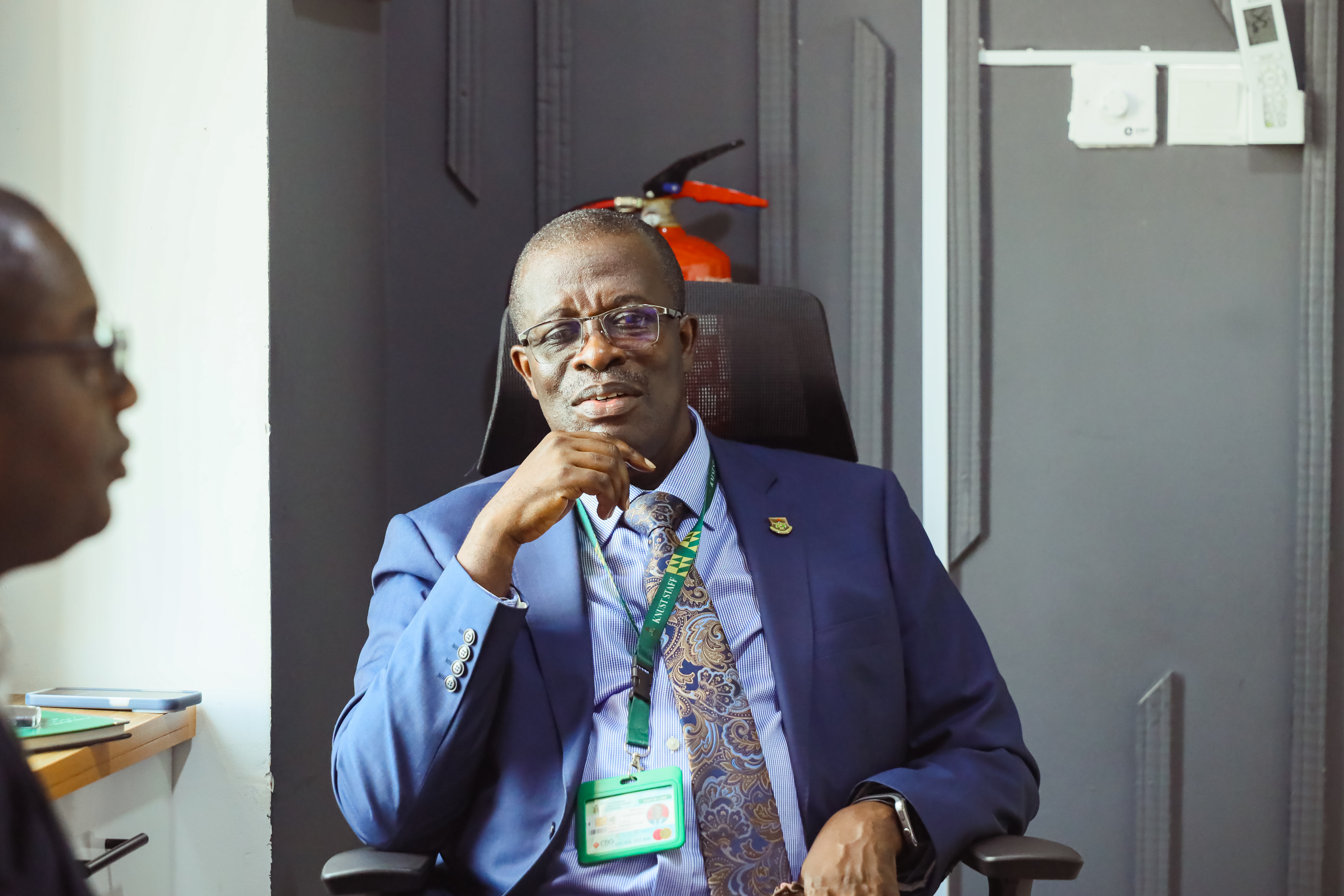
The presentation prompted discussions during which Dr Nsiah commended the scientific rigour of the laboratory's work and explored how its research could support institutional planning, procurement and sustainability reporting across the University.
He said modern financial reporting is evolving beyond traditional accounting to incorporate environmental, social and governance (ESG) considerations, making carbon accounting an important component of institutional accountability.
Dr Acheampong emphasised the importance of establishing robust institutional systems for collecting and managing activity data across the University's academic and administrative units.
He said the reliability of greenhouse gas inventories and sustainability reports depends on the availability of high-quality financial and operational data and stressed the need for close collaboration between the Finance Directorate and the Net Zero Carbon Emission Lab to institutionalise data collection processes that support long-term carbon accounting and ESG reporting.
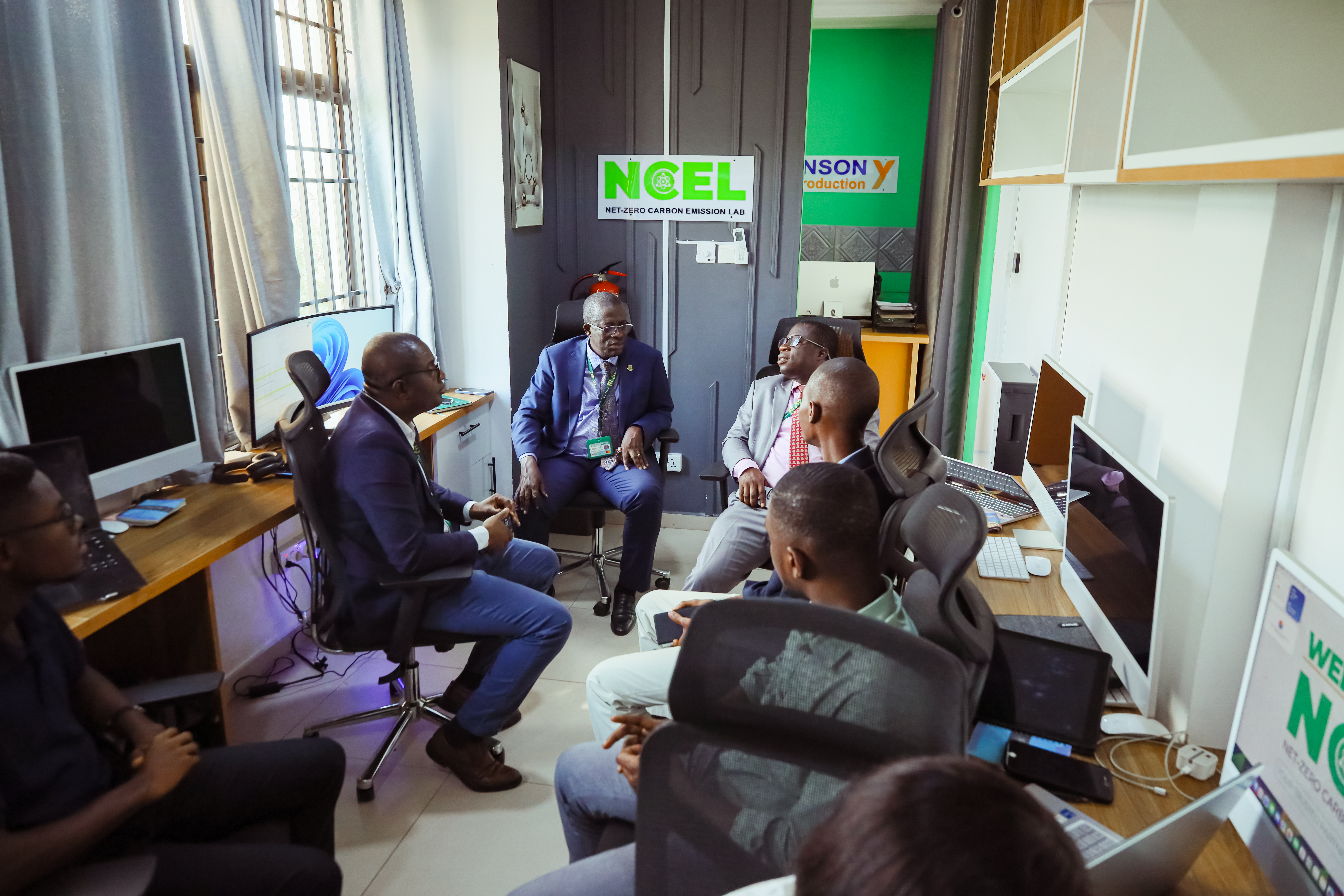
The Finance Officer encouraged the research team to expand the University's carbon footprint assessment beyond the College of Engineering to include all colleges and administrative units, with the aim of producing a comprehensive institutional emissions inventory.
Discussions also explored the next phase of the project, which includes assessing KNUST's green cover to quantify the amount of carbon absorbed by vegetation across the campus. This would enable researchers to determine the University's net carbon emissions and potentially position KNUST to participate in future carbon credit initiatives.
"The immediate benefits may not be visible today, but the impact will be significant. The world is moving in this direction, and very few institutions are doing this kind of scientific work. KNUST has an opportunity to become a leader in sustainability reporting, and that places the University in a strong position to attract international collaborations, research funding and strategic partnerships."
Responding, Dr Yen Adams Sokama-Neuyam expressed appreciation for the visit and the discussions, saying the engagement reinforces the importance of integrating research into institutional policy and decision-making.
The visit concluded with both parties expressing optimism about future collaboration to strengthen sustainability reporting, enhance environmental stewardship and position KNUST as a continental leader in scientific carbon accounting and net-zero research.


