

Student planners at the Kwame Nkrumah University of Science and Technology, Kumasi (KNUST) engaged the Director-General of the National Development Planning Commission (NDPC), Dr Audrey Smock Amoah, on how Ghana's development policies are designed, implemented and monitored during a policy dialogue held as part of the 65th Ghana Association of Student Planners (GASP) Week celebration.
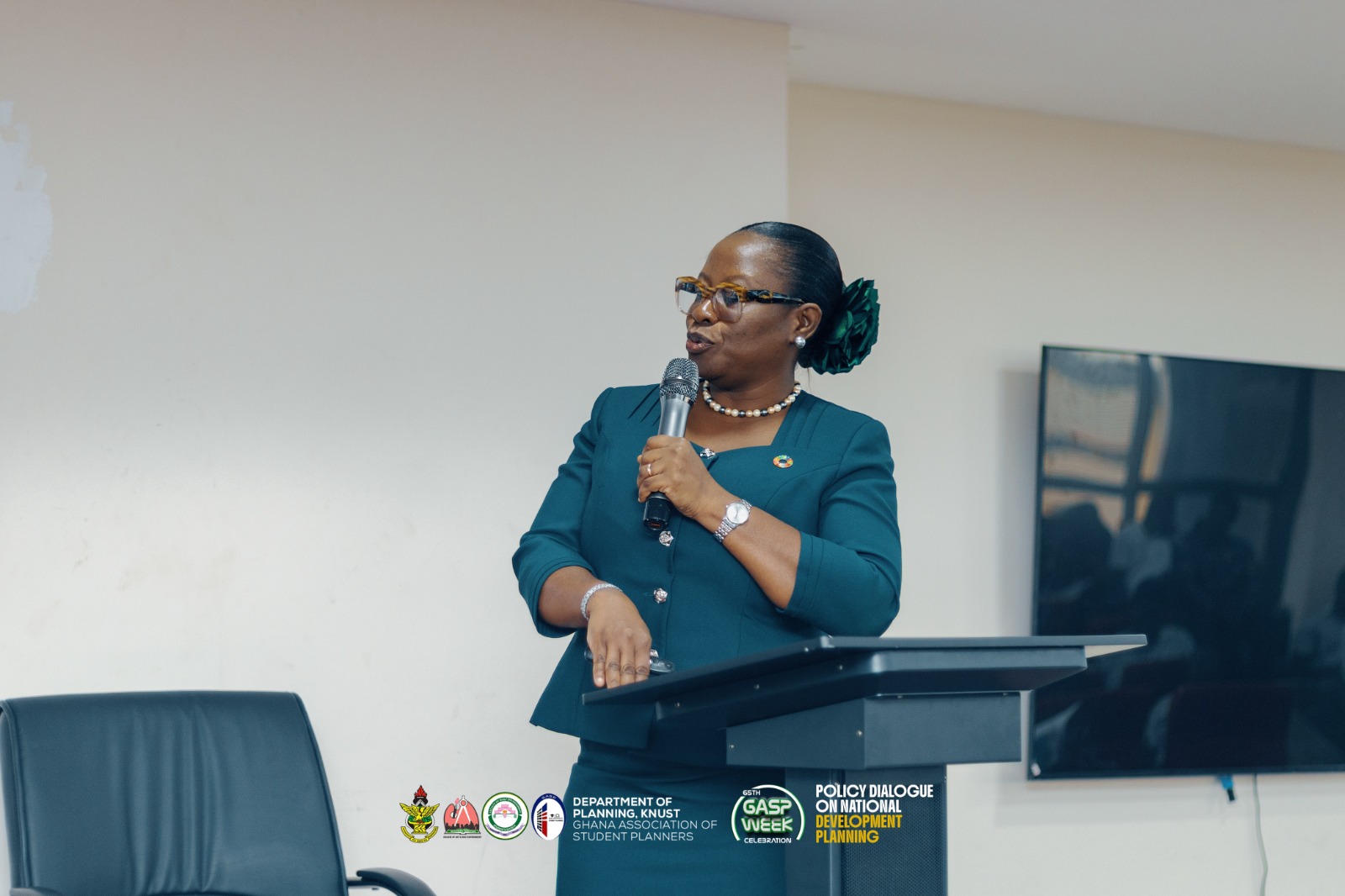
The event, organised by the Department of Planning, brought together students, faculty members and planning professionals, giving students the opportunity to interact with the country's chief planning institution and discuss the role of young planners in national development.
Welcoming participants, the Head of the Department of Planning, Professor Charles Peprah, described the dialogue as an opportunity for students to connect classroom learning with public policy and professional practice.
He welcomed Dr Amoah, an alumna of KNUST, back to the University and encouraged students to use the session to gain a better understanding of Ghana's planning framework.
"This is an opportunity for our students to learn directly from the institution responsible for coordinating national development planning," he said.
Chairing the programme, the Provost of the College of Art and Built Environment, Professor Christian Koranteng, challenged students to think beyond identifying problems and focus on solutions.
He said Ghana's development challenge was no longer the absence of policies but the failure to implement them.
"Ghana does not need more plans; she needs fewer excuses," Professor Koranteng said. "Stop discussing the problem and start dismantling it."
Delivering the keynote address on "Bridging the Gap Between Policy and Practice: An Analysis of the Planning Guidelines and National Development Planning in Ghana," Dr Amoah explained the legal framework that guides development planning in Ghana.
She introduced students to the Coordinated Programme of Economic and Social Development Policies (2025–2029), the Medium-Term National Development Policy Framework, the National Development Planning Guidelines and the process of preparing a Consolidated National Development Plan.
Dr Amoah said national development requires evidence-based planning, stronger coordination among institutions and effective monitoring to ensure policies achieve their intended outcomes.
She also discussed the government's Resetting Ghana Agenda, saying it focuses on job creation, accountability and shared prosperity while supporting Ghana's long-term development goals.
"The Medium-Term National Development Policy Framework translates the Coordinated Programme into policy objectives, strategies and institutional responsibilities," she said. "The two documents serve different purposes but work together."
During the question-and-answer session, students sought clarification on issues including policy implementation, monitoring and evaluation, data management, accountability and long-term national planning.
Responding to the questions, Dr Amoah said Parliament reviews Annual Progress Reports submitted by Ministries, Departments and Agencies as part of efforts to strengthen accountability. She added that similar systems would be introduced at the district level to improve implementation and track development outcomes.
The discussion also explored how universities could contribute to national development through research, policy advice and evidence generation.
For many student planners, the dialogue provided an opportunity to engage directly with the country's chief planning institution and gain a deeper understanding of the policies they study in the classroom.


