
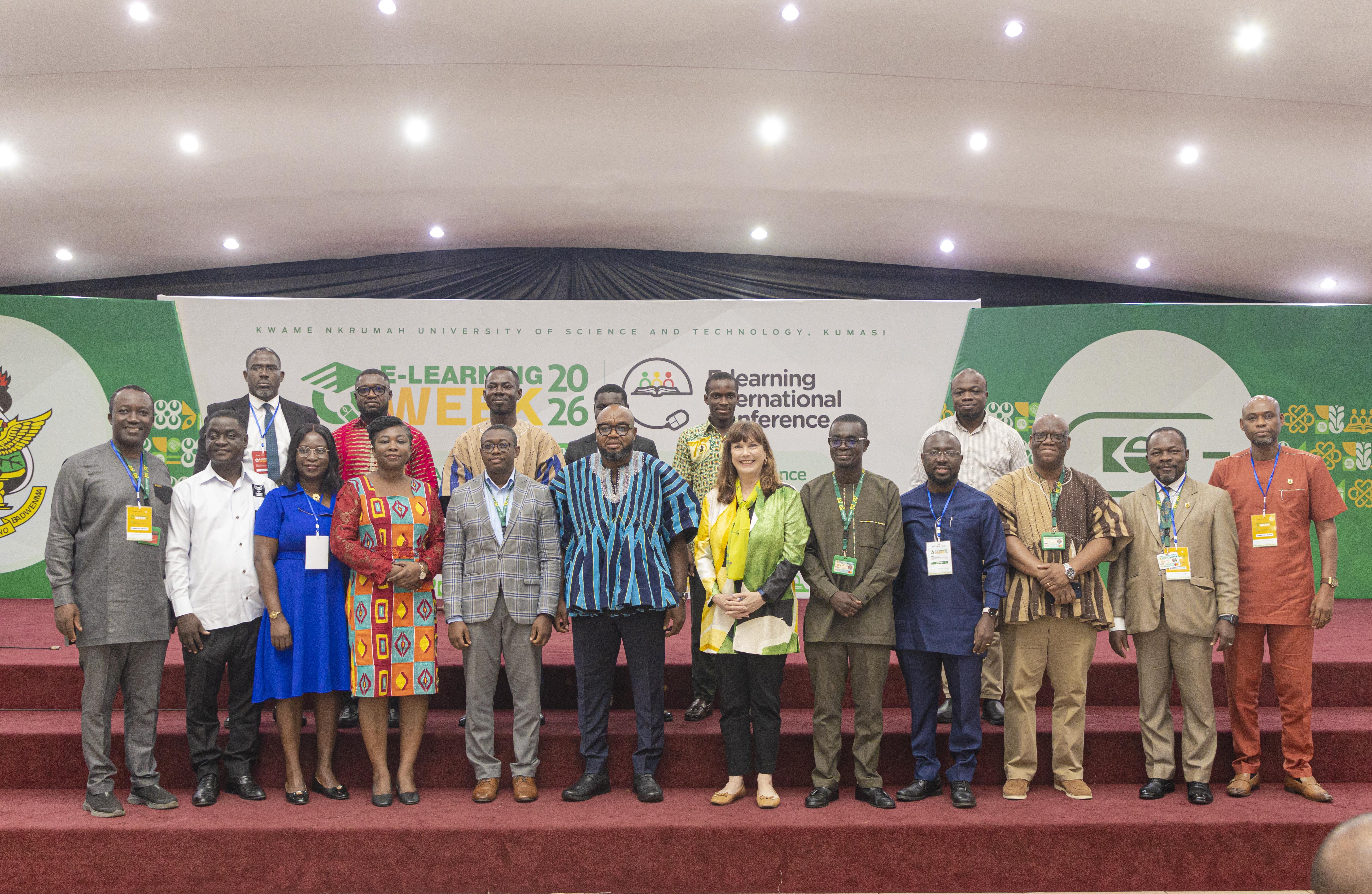
Speakers from government, academia, industry and international development organisations have called on universities to move beyond simply adopting digital technologies and instead build equitable, inclusive and ethical learning ecosystems capable of harnessing artificial intelligence (AI) to transform higher education.
The call was made at the Kwame Nkrumah University of Science and Technology, Kumasi (KNUST) 2026 E-Learning International Conference (ELIC).
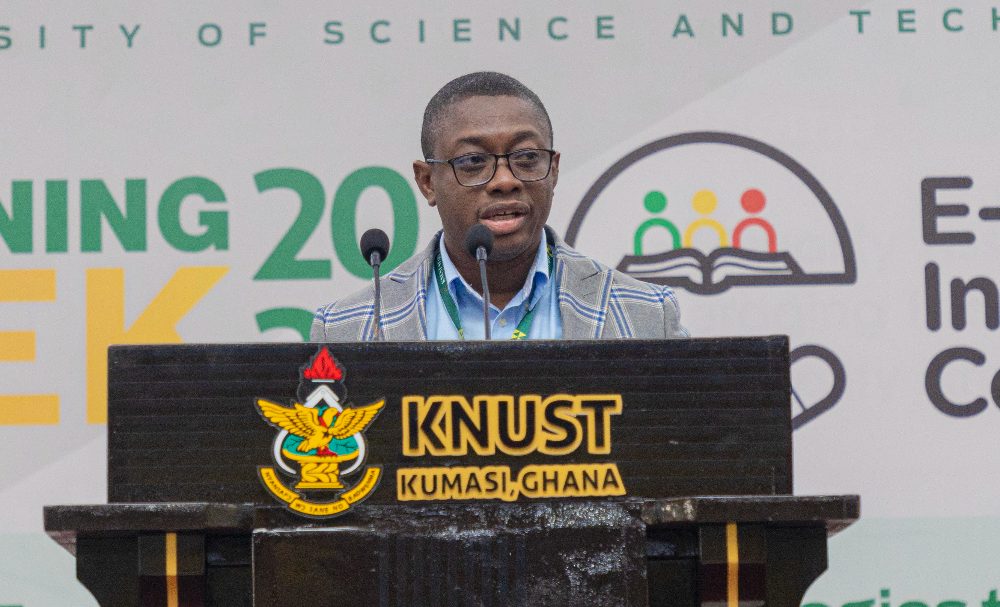
Delivering the Vice-Chancellor's address, the Director of the Institute of Distance Learning (IDL), Professor Anthony Andrews, reaffirmed KNUST's long-standing commitment to digital education. He said the University's extensive investments in digital infrastructure, campus-wide connectivity and learning technologies had positioned KNUST to embrace artificial intelligence from a position of strength rather than reaction.
"KNUST has demonstrated, with real investment and measurable outcomes, what is possible when a university commits seriously to digital transformation," he said. "We have built the infrastructure, addressed connectivity, invested in the skills, and we have also aligned with national priorities. What we now ask of Government is a response that matches ambition."
Speaking on behalf of the Vice-Chancellor, Professor Andrews called on the Ministry of Communication, Digital Technology and Innovation to partner with KNUST through clear, sustained and adequately funded support to establish the University as a recognised Regional Hub of Excellence in Innovation and Disruptive Technologies.
"Not a hub in name, but a hub in capability, in resources, and in mandate," he said, adding: "Ghana's premier science and technology university, properly resourced and strategically supported, can become the institution through which this country can lead Africa's AI transformation rather than following it. KNUST is ready to be that institution. We ask the Government of Ghana to be ready to partner with us at that level."
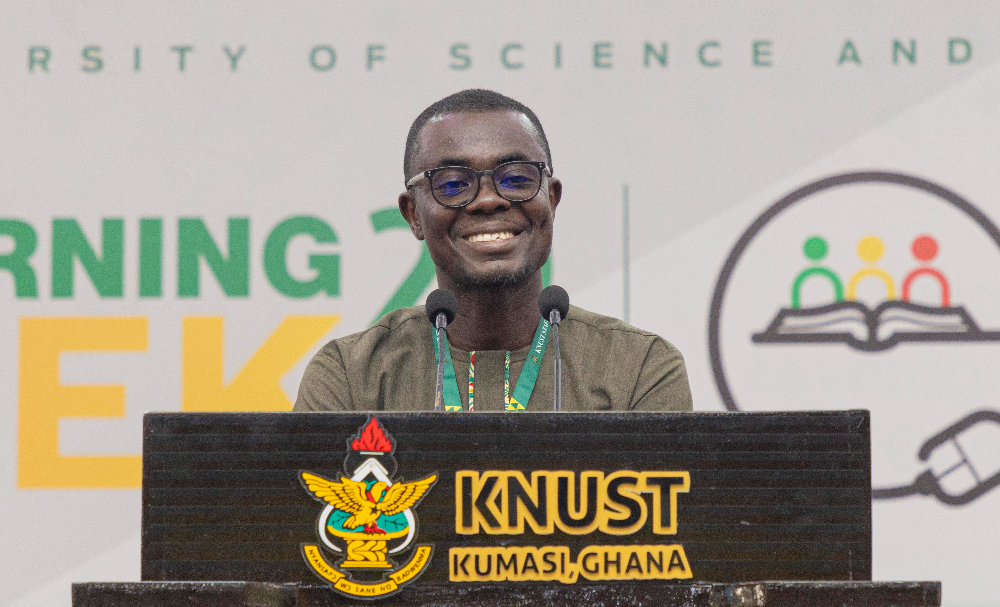
Speaking on the purpose of the conference, the Director of the KNUST E-Learning Centre, Ing. Professor Emmanuel Kofi Akowuah, said ELIC 2026 was deliberately designed to move beyond discussion and generate practical outcomes that would shape the future of digital education.
Held as part of the University's E-Learning Awareness Week under the theme, "Harnessing AI and Emerging Digital Technologies to Advance Inclusive, Equitable, and Ethical Learning Ecosystems," Professor Akowuah said the conference seeks to stimulate dialogue on AI, lifelong learning, digital innovation, micro-credentials and emerging educational models that will shape the future of higher education.
He added that although the conference is hosted by the E-Learning Centre, it represents a collective institutional effort involving every College of the University, as well as government, industry and development partners committed to advancing digital transformation in higher education.
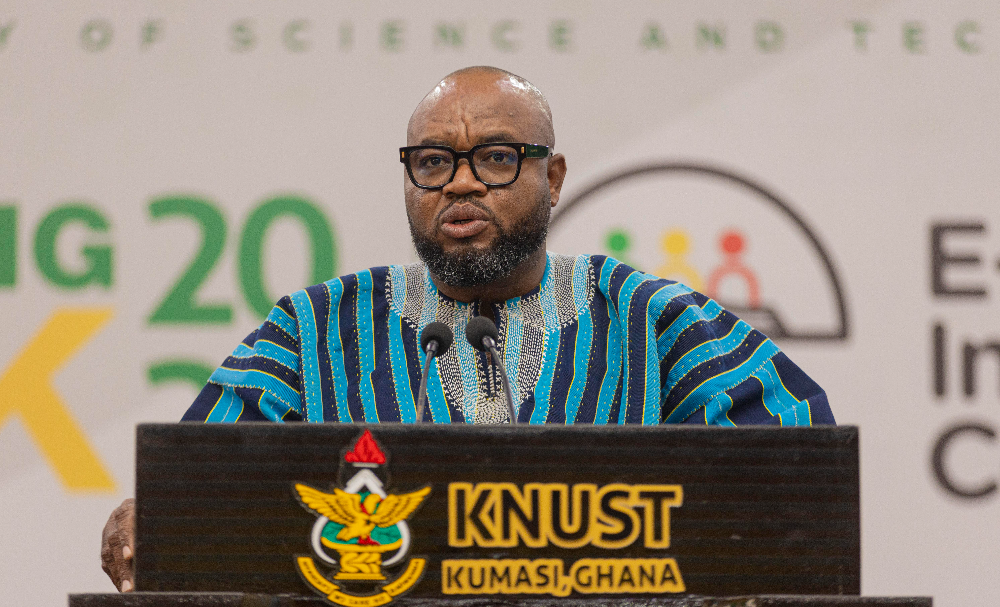
Delivering the keynote address on behalf of the Minister for Communication, Digital Technology and Innovation, the Member of Parliament for Sissala West, Mohammed Adams Sukparu, emphasised the need for universities to reposition themselves as innovation hubs capable of preparing students for the demands of the digital economy.
"Universities can no longer serve only as centres for academic instruction but must become engines of innovation, research, entrepreneurship and future-ready talent development," he said.
He, however, stressed that AI adoption must be accompanied by responsible governance, highlighting concerns including misinformation, algorithmic bias, data privacy and equitable access to digital technologies.
"Technology must never become a source of inequality or exclusion. It must become a powerful tool for empowerment, opportunity and shared prosperity," he said, adding that stronger collaboration among government, academia and industry would be essential to translating research and innovation into national development.
He said the Ministry recognises that digital transformation is a national imperative.
"At the Ministry of Communication, Digital Technology and Innovation, our focus remains deliberate and strategic. We are working to expand digital infrastructure, strengthen nationwide connectivity, deepen digital inclusion and create an enabling environment for innovation, entrepreneurship and technological growth," he said.
Representing the international development partner perspective, Dr. Ann Nielsen, Director of the Mastercard Foundation Scholars Program e-Learning Phase II at the University Design Institute, Arizona State University, USA, said universities across Africa have moved beyond using digital technologies simply to respond to disruptions such as the COVID-19 pandemic. Instead, she said, institutions are now focused on building the capacity to adapt continuously to technological change.
She said meaningful digital transformation extends beyond deploying technology to strengthening leadership, governance, faculty development, student success systems and institutional partnerships.
"Technology has become the catalyst, not the destination," she said. "The institutions that will thrive are those that develop the capacity to learn, innovate and evolve as technology continues to change."
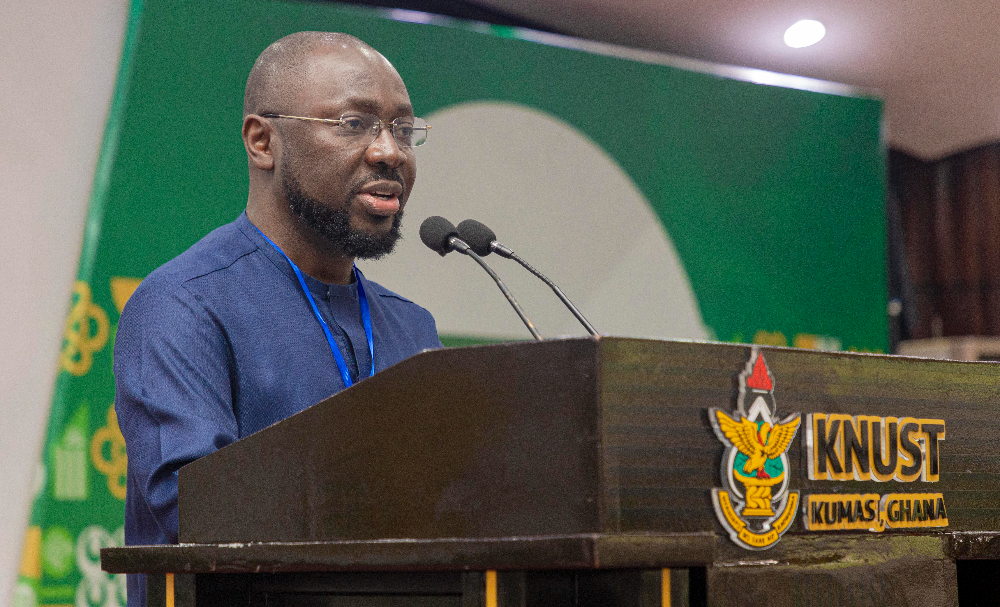
Providing the industry perspective, the Chief Solutions Architect at IT Consortium, Mr. Franklin Eleblu, challenged universities to rethink how they prepare students for a labour market where technologies and workplace demands are constantly evolving.
"Our graduates must also develop critical thinking, creativity, communication, collaboration and adaptability skills that enable them to work effectively alongside artificial intelligence rather than compete with it," he said.
Mr. Eleblu also advocated stronger partnerships between universities and industry to ensure curricula remain relevant to changing workforce needs, while encouraging educators to redesign assessments to prioritise problem-solving, practical application and the responsible use of AI technologies.
Story: Abigail Ofori Photos: Emmanuel Offei


