
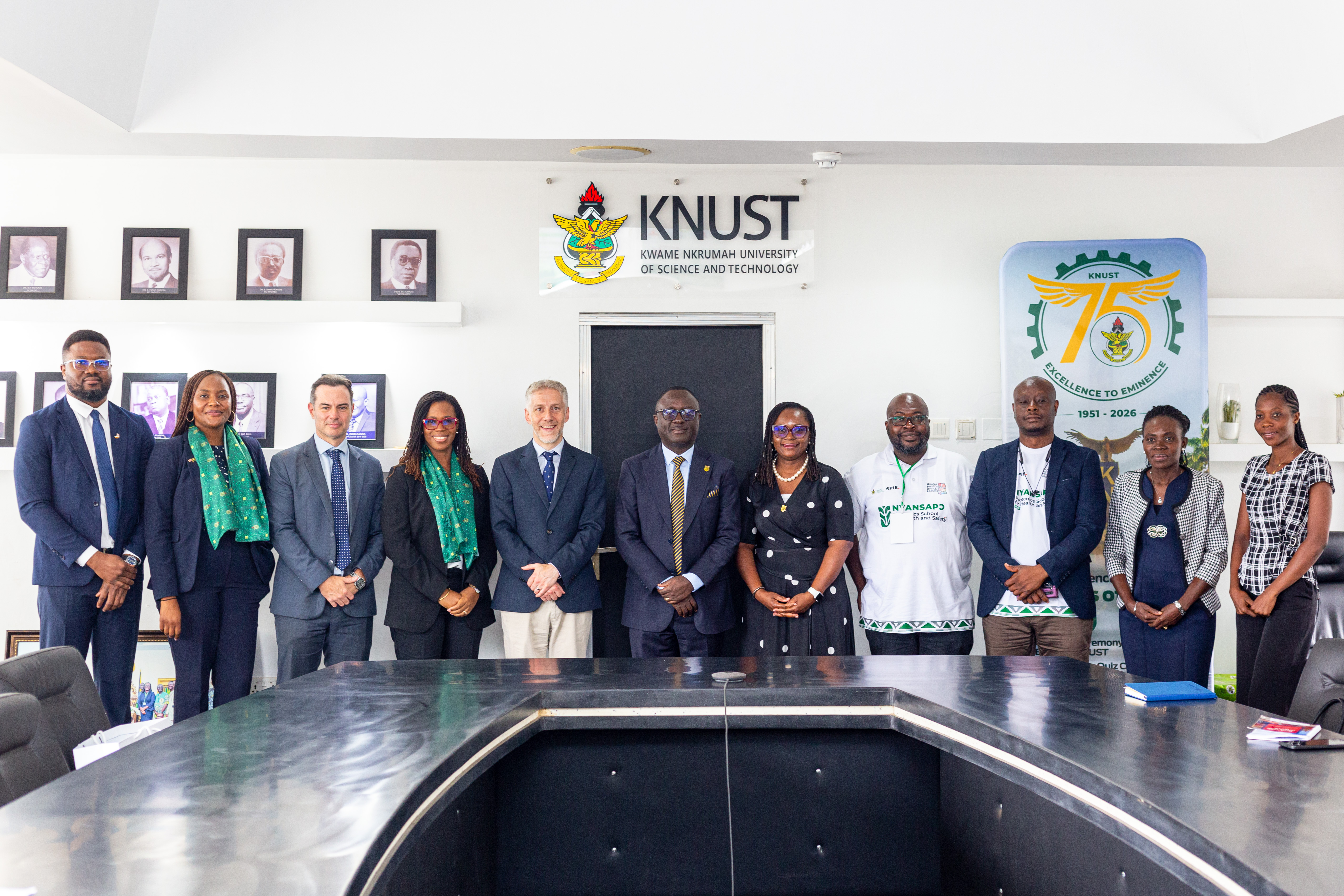
His Majesty’s Trade Commissioner for Africa, Mr Alastair Long, has paid a courtesy call on the Pro-Vice-Chancellor of the Kwame Nkrumah University of Science and Technology, Kumasi (KNUST), Professor David Asamoah, following the launch of the Ghana Photonics and Optics Laboratory (GPOL) at the University.
Mr Long and his delegation met KNUST management to discuss the University’s existing partnerships with UK institutions and explore opportunities to expand collaboration in research, education, innovation and technology.
Mr Long commended KNUST for establishing the laboratory, describing photonics and optics as critical to emerging technologies, including quantum computing.
He said the UK was keen to support initiatives that connect university research and innovation to economic development, job creation and practical solutions to societal challenges.

The Trade Commissioner highlighted existing areas of UK-KNUST collaboration and opportunities for further engagement, including scientific research funding, partnerships with UK universities, transnational education, educational technology and the hosting of international examinations.
“We have a lot more to do to foster and expand our collaboration,” he said.
Mr Long said UK institutions, including the University of St Andrews and Imperial College London, were already engaging with KNUST and expressed interest in expanding these relationships into broader academic and research partnerships.
He also emphasised the importance of strengthening links between universities and industry, particularly by supporting promising research and university-based start-ups to develop into commercially viable enterprises.
Mr Long said the UK was interested in working with KNUST to identify high-potential innovations and start-ups in Ghana and provide access to expertise, mentorship, investment and international networks to support their growth.
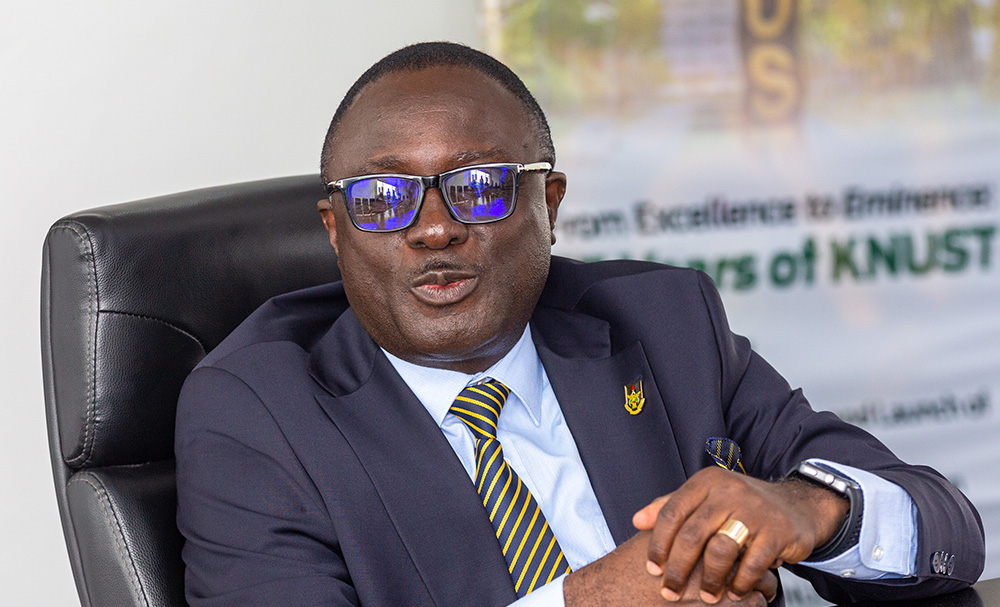
Professor Asamoah welcomed the delegation and highlighted KNUST’s increasing focus on research and its application to societal and industrial challenges.
“We don’t want to do research and put it on the shelf. We want our research to impact on our society,” he said.
He said the University’s strategic direction placed increasing emphasis on research, postgraduate education, innovation and the practical application of research outcomes.
Professor Asamoah said KNUST was particularly interested in partnerships that would enhance opportunities for student and faculty mobility, joint research, curriculum development and transnational education.
He also highlighted the University’s investment in distance and digital learning infrastructure, saying KNUST’s presence across all 16 regions of Ghana provided opportunities for collaboration in educational technology and the delivery of programmes beyond the traditional campus environment.
Professor Asamoah further pointed to the University’s growing focus on artificial intelligence and its application to societal and industrial challenges, and welcomed opportunities for collaboration with UK partners in the area.
The Pro-Vice-Chancellor called for a more coordinated approach to identifying potential UK partners for departments and faculties across the University, particularly in emerging areas such as artificial intelligence, photonics, life sciences and educational technology.
Discussions also focused on the possibility of expanding transnational education partnerships, including the development of joint programmes with UK universities.
Mr Long encouraged KNUST to communicate its priority areas for collaboration to the UK team to help identify suitable partners and facilitate further engagements.
He said the UK was increasingly looking to universities as sources of research-driven economic growth.
“It’s our focus as well, you know, that those universities should be creating that economic future,” he said.
Professor Asamoah said KNUST was open to partnerships that could help translate its research and innovation into practical solutions and opportunities for industry and society.


