
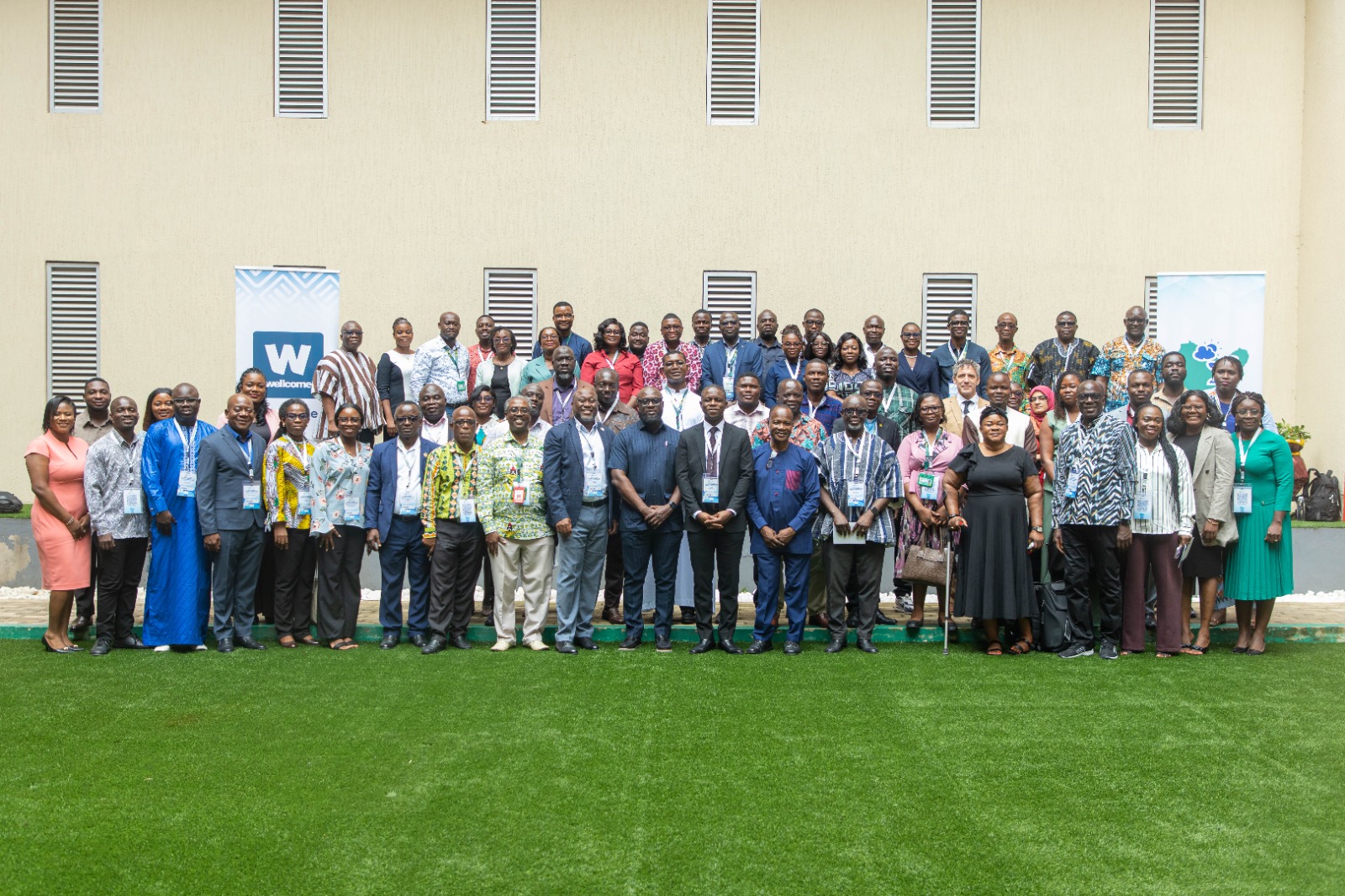
The West Africa Climate Change, Health and Policy Consortium (WACH) has been launched at the Kwame Nkrumah University of Science and Technology, Kumasi (KNUST) with a call for stronger collaboration among researchers, policymakers, governments, communities and development partners to tackle the growing impacts of climate change on health and food systems across West Africa.
Supported by the Wellcome Trust, the African-led consortium brings together researchers and institutions from Ghana, Senegal and other West African countries to generate evidence that informs policy and strengthens climate resilience across the region.
Provost of the College of Science and Consortium Director, Professor Philip Antwi-Agyei, said climate change was increasingly affecting communities through heatwaves, droughts, dust storms, flooding and changing rainfall patterns.
He said women, children, older persons, persons with disabilities and agricultural communities were among the most vulnerable to the impacts.
"African researchers, institutions and communities must play a central role in designing, testing and scaling solutions grounded in the realities of our region," he said.
Prof. Antwi-Agyei said WACH would serve as a leading regional platform for generating actionable evidence and ensuring that research findings informed policy and decision-making.
Representing the Vice-Chancellor of KNUST, Professor Samuel Asare-Nkansah described the consortium as more than a research initiative, saying it represented a new approach to addressing the interconnected challenges of climate change, health and food systems in West Africa.
He said climate change was increasingly affecting public health through extreme heat, poor air quality, flooding, drought and changing rainfall patterns, with far-reaching consequences for food production, nutrition, water security and livelihoods.
"This is why climate action must also be health action," he said.
Prof. Nkansah urged the consortium to ensure its research translated into practical outcomes, including stronger early warning systems, better-informed agricultural policies, effective adaptation measures and improved identification of climate-related health risks.
"Ultimately, the success of the consortium will not be measured by the number of publications produced or meetings convened, but by whether lives are protected, health systems are strengthened, food systems become more resilient, policies become more evidence-informed, and communities are better prepared for a changing climate," he said.
He also called for policymakers, practitioners and communities to play an active role in shaping the consortium's research agenda, stressing the importance of shared ownership, gender equality, equity and inclusion.
Representing the Director of the Office of Grants and Research, Mrs Hannah Adom Eyison congratulated the consortium and its partners on securing the Wellcome Trust grant, describing it as recognition of the strength of the partnership.
She reaffirmed the Office's commitment to supporting the project beyond the award and said its success would be measured by its research impact, policy influence, strengthened capacity and contribution to climate resilience across West Africa.
Quoting the Director's philosophy that "grants must give birth to grants", she encouraged the consortium to leverage the award to attract additional funding and expand its research.
Speaking on behalf of the Chief Director of the Ministry of Health, Mr Ernest Owusu Sekyere reaffirmed the Ministry's commitment to strengthening Ghana's response to climate-related health risks through research, policy and strategic partnerships.
He said Ghana and other West African countries were experiencing rising temperatures, extreme heat, flooding, drought, air pollution, food and water insecurity, and changing patterns of infectious diseases.
Mr Sekyere highlighted ongoing national initiatives, including the Climate Change and Health Vulnerability and Adaptation Assessment covering all 16 regions, the development of the Health National Adaptation Plan, and projections of climate-sensitive diseases for the period 2025-2050.
He identified three priority areas for collaboration between the Ministry and WACH: strengthening capacity in climate change and health, developing a comprehensive health-sector climate change policy framework, and establishing a National Heat-Health Action Plan.
"We must ensure that the research generated through WACH responds to national and regional priorities and translates into practical action," he said.
He expressed confidence that the consortium would strengthen climate-health data, early warning systems, resilient health facilities, evidence-based policies and sustainable financing to reduce climate-related health risks across the region.
Professor Roger Tine of Cheikh Anta Diop University (UCAD), Senegal Country Lead, called for stronger African leadership in climate and health research and policy.
He cited rising temperatures, droughts, flooding and climate-related diseases as pressing challenges facing the continent and urged research institutions to ensure scientific evidence translated into policies that improve people's lives.
Prof. Tine commended KNUST, the University of Ghana and partner institutions for their collaboration and reaffirmed Senegal's commitment to the consortium.
"African researchers and institutions must increase their contribution to global science if we are to effectively address the challenges unique to our continent," he said.
He encouraged partners to sustain the collaboration through high-quality research that strengthens health systems and builds resilient communities.
Story: Ama Pokuaa Mensah


