
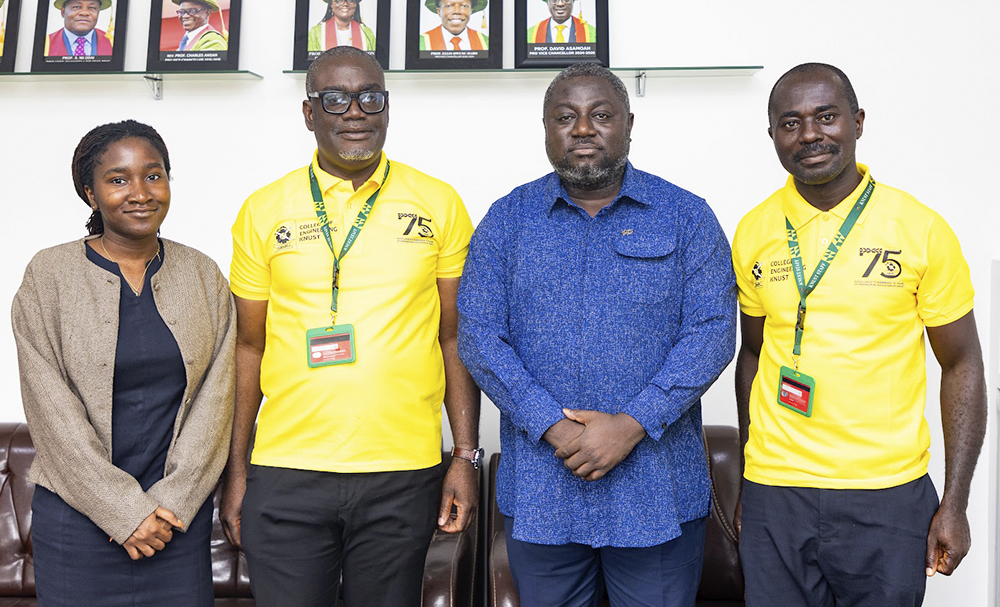
Siemens Ghana and the Kwame Nkrumah University of Science and Technology (KNUST), Kumasi are expanding the University's Industrial Automation Laboratory, a major boost to practical engineering training in Ghana. The expansion will add forty (40) new workstations and give more students hands-on experience with the technologies driving modern industry, including industrial automation, power systems digitalisation, and industrial Artificial Intelligence.
The upgraded facility will also include additional Siemens hardware, software, and certification pathways, giving KNUST graduates a direct advantage in the job market. The Laboratory was established through a partnership between Siemens and KNUST's Department of Electrical Engineering and was officially inaugurated in July 2023. It was originally designed to support three hundred (300) students. Today, it serves approximately one thousand, two hundred (1,200) students, a fourfold growth that reflects the strong demand for practical, industry-relevant training at KNUST. The latest expansion is a direct response to that demand.
Industrial automation is now central to manufacturing, energy, mining, water, and infrastructure, helping industries improve productivity, efficiency, reliability, and sustainability. At the same time, advances in AI and digitalisation are changing what industries expect from engineers. Mr. Kofi Oppong, Regional Manager, West Africa, Siemens, said, "Practical experience is becoming increasingly important as technology changes how industries operate. Young engineers need more than theoretical knowledge. They need opportunities to work with the technologies they will encounter in industry and understand how they are applied in real operating environments. By expanding this partnership with KNUST, we are giving more students access to that practical experience and helping prepare them for an increasingly digital and automated industrial landscape."
The expanded facility will support students in Electrical Engineering and Industrial Engineering, with scope to serve future multidisciplinary programmes. Speaking on the partnership, Sabine Dall'Omo, who leads Siemens' business in Sub-Saharan Africa, said Africa's industrial future depends on building local capability, not just importing technology. She said, "Africa's opportunity is not simply to adopt the technologies transforming industry but to build the skills and capabilities to shape how those technologies are used. That starts by giving young people meaningful, practical exposure to automation, digitalisation and artificial intelligence. Through our partnership with KNUST, we are helping develop the talent that will contribute to Ghana's and Africa's industrial future."
For Siemens, developing skills alongside technology is critical to sustainable industrial growth. As industries become more digital and automated, investment in technology must be matched by people with the capabilities to implement, operate, and continue developing those technologies. The expansion comes as German and African business and government leaders gather in Ghana for the German-African Business Summit (GABS), bringing renewed focus to investment, skills, and technology in Africa's industrial growth. It also builds on the wider cooperation between Ghana and Germany. During his state visit to Ghana in November 2025, German President Frank-Walter Steinmeier visited KNUST, where he highlighted the importance of deepening collaboration between German institutions and the University. The Siemens-KNUST partnership demonstrates how that cooperation can translate into practical investment in technology, education, and the skills needed to support Ghana's industrial future.
For KNUST, the expansion means more access for students, with more students able to train at the same time, reducing congestion and waiting time. It also means industry-ready graduates, as students train on the same systems used by industry, and a stronger link between the University and industry through equipment, training, and certification. It further supports KNUST's ambition under Plan 2K35 to move from excellence to eminence through industry engagement, practical research, and graduate employability. As Ghana's industries become increasingly digital and automated, developing local engineering capability will be critical to the country's long-term industrial growth and competitiveness. With this expansion, KNUST and Siemens are investing in that future, one workstation, one student, and one engineer at a time.


