
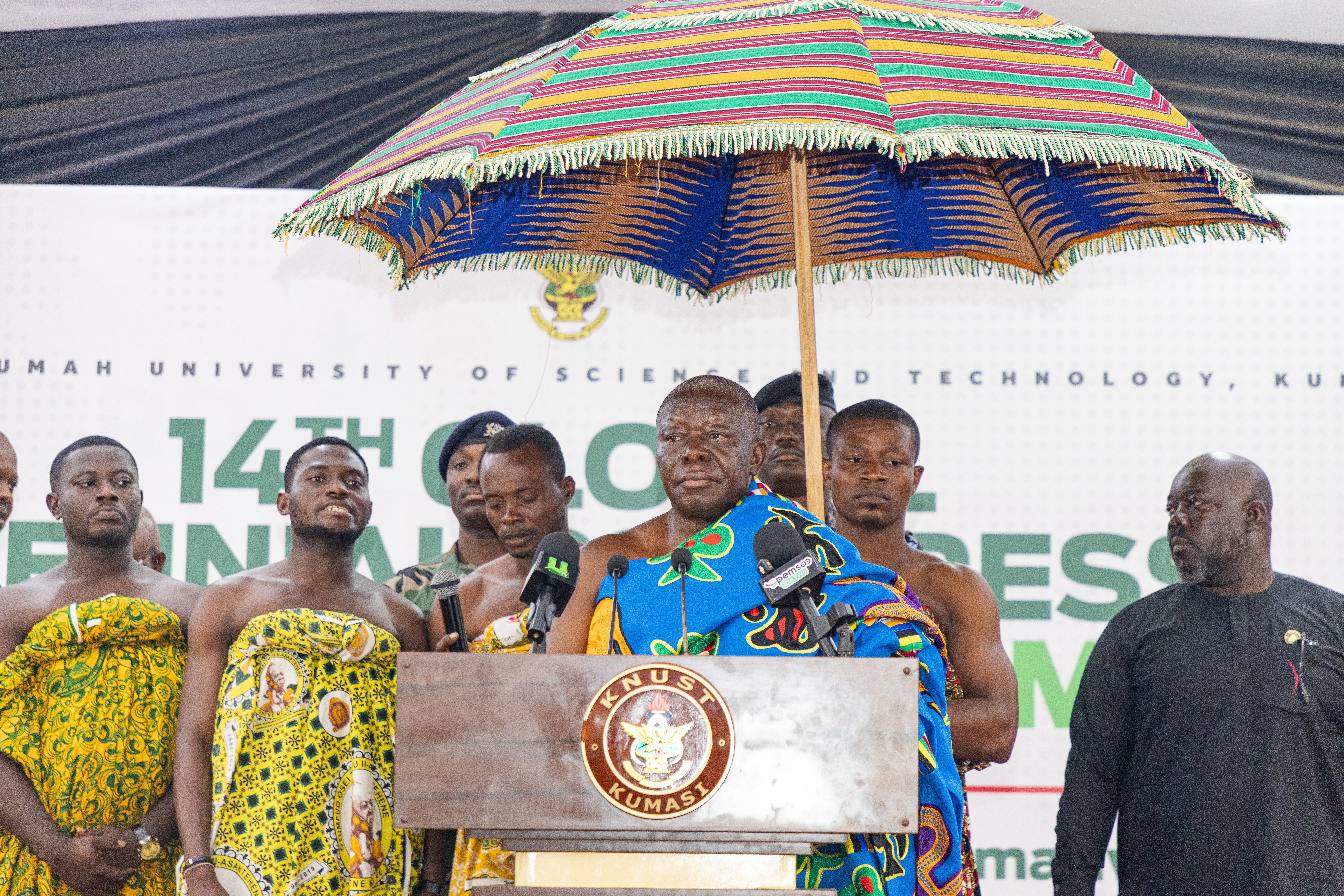
The Asantehene and Chancellor of the Kwame Nkrumah University of Science and Technology, Kumasi (KNUST), Otumfuo Osei Tutu II, has urged alumni to contribute their expertise, resources and professional networks to help the university achieve global eminence.
Addressing the 14th Global Biennial Congress and Alumni Homecoming, he challenged alumni to look beyond individual achievements and consider the legacy they would leave for future generations.
“We have inherited a great university, one whose history is rich, whose students have distinguished themselves and continue to inspire pride. But we must ask ourselves: What kind of KNUST shall we leave behind for generations yet unborn?” he asked.
He said KNUST had established a strong reputation in science, technology, healthcare, industry and national development but must continue to renew itself to remain relevant in a changing world.
Global eminence went beyond international rankings, he said. It included producing graduates whose competence and character command respect, conducting research that solves societal problems, developing innovations that transform industries and building meaningful international partnerships.
“Excellence is what we have achieved; global eminence is what we must now deliberate on,” he said.
The Asantehene commended the university’s strategic direction under Plan 2K35, which prioritises academic excellence, impactful research, innovation, entrepreneurship, digital transformation, internationalisation and sustainability.
He also highlighted the importance of effective governance, saying the KNUST Act, 2025 (Act 1157), provided a renewed legislative foundation for the university’s governance and administration.
He called for governance arrangements that promote accountability, collaboration, innovation and effective decision-making, saying institutional reforms must produce measurable results.
The Asantehene urged alumni in industry, academia, entrepreneurship and public service to create opportunities for students, facilitate research collaborations, mentor young innovators and strengthen the university’s partnerships.
“You do not have to be wealthy to make a difference. You do not have to occupy a powerful position to be useful. What matters is the willingness to contribute,” he said.
He also appealed to corporate organisations, development partners, philanthropists and other supporters of higher education to contribute to KNUST’s development, describing the pursuit of global eminence as a shared responsibility.
The Vice-Chancellor, Professor Christian Agyare, urged alumni to support initiatives to improve student welfare, expand access to higher education and strengthen the university’s infrastructure.
He said about 2,500 students from disadvantaged backgrounds had been admitted during the October admissions period under arrangements intended to ease the financial burden of university education.
“These students need sustained support to complete their studies and realise their potential,” he said.
Prof Agyare called for contributions towards scholarships, mentorship programmes and other student support initiatives, saying these investments would benefit students, their families and their communities.
He also urged alumni year groups, corporate partners, international organisations and individual benefactors to work with university management to mobilise the resources needed to complete the project.
The President of the KNUST Global Alumni Association, Dr Herman Yobo Addae, called for a sustained culture of giving and stronger alumni commitment to the university’s development.
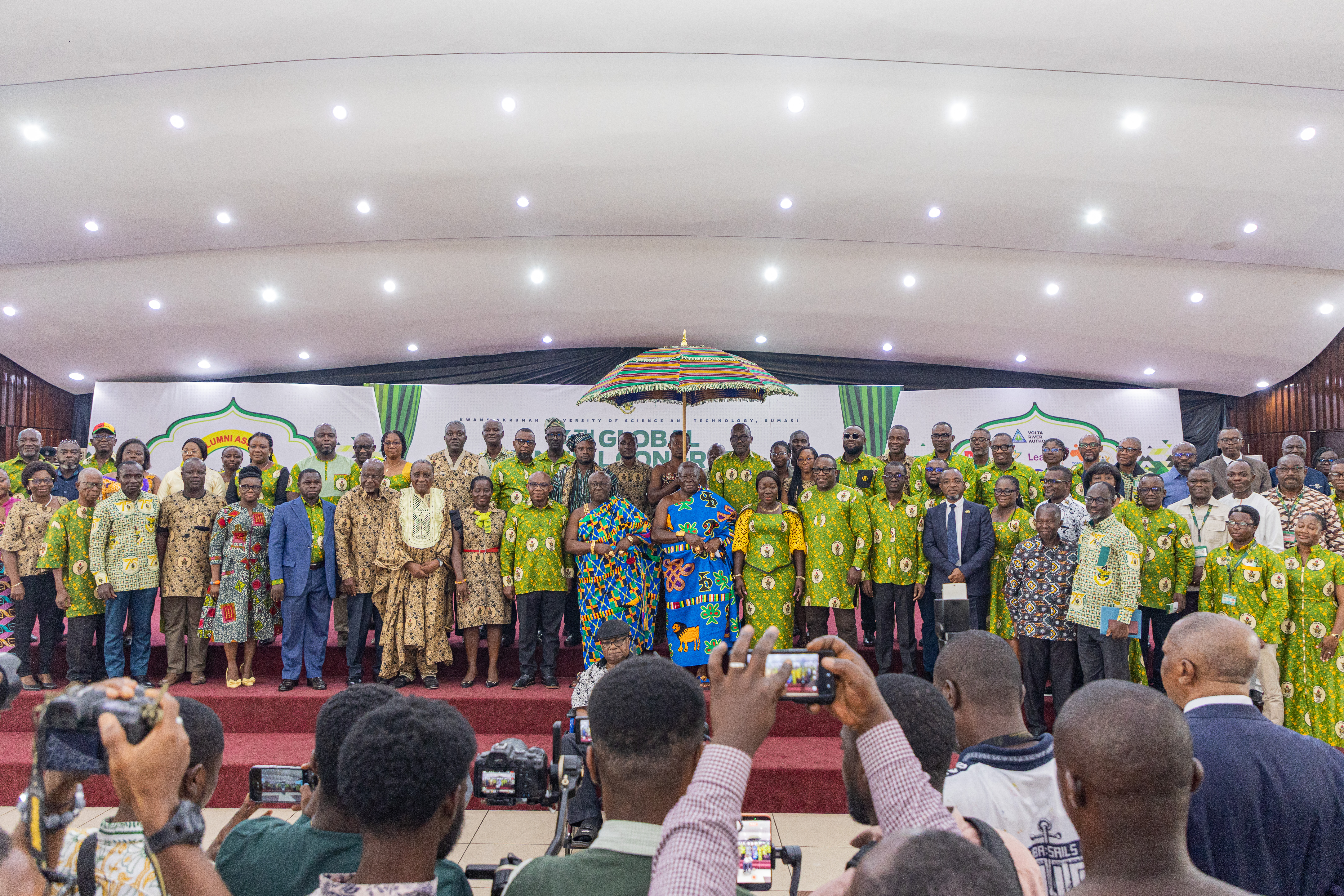
He urged members to move beyond maintaining social and professional connections to contributing through mentorship, research partnerships, investment and opportunities for students.
“We want to move from connection to real contributions,” he said.
Dr Addae said alumni could support KNUST by sharing professional expertise, opening doors for students, facilitating partnerships, supporting innovation or providing financial assistance.


