
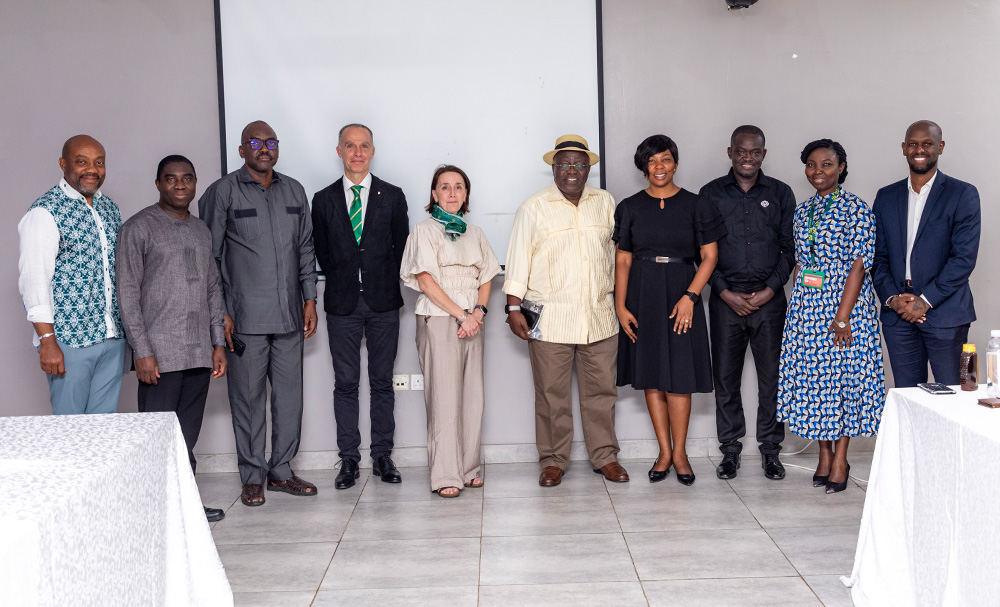
The Kwame Nkrumah University of Science and Technology (KNUST) Nutrition and Sustainable Agri-food Collaborative, in partnership with the Mastercard Foundation (Nkabom Collaborative), has hosted a delegation from McGill University, Canada, to assess the progress of the Nkabom Collaborative and explore opportunities to strengthen the partnership.
The visit provided the delegation with an opportunity to engage with the KNUST implementation team, interact with programme beneficiaries and gain first-hand insight into the practical interventions being implemented to address youth unemployment through opportunities across the agri-food value chain.
As part of the visit, the delegation toured selected project sites, including an aquaculture training facility where participants of the Multipurpose Integrated Project (MIP) are receiving practical training. The team also interacted with participants undergoing Entrepreneurship Intervention Training (EIT), gaining insights into their experiences, acquired skills and entrepreneurial aspirations.
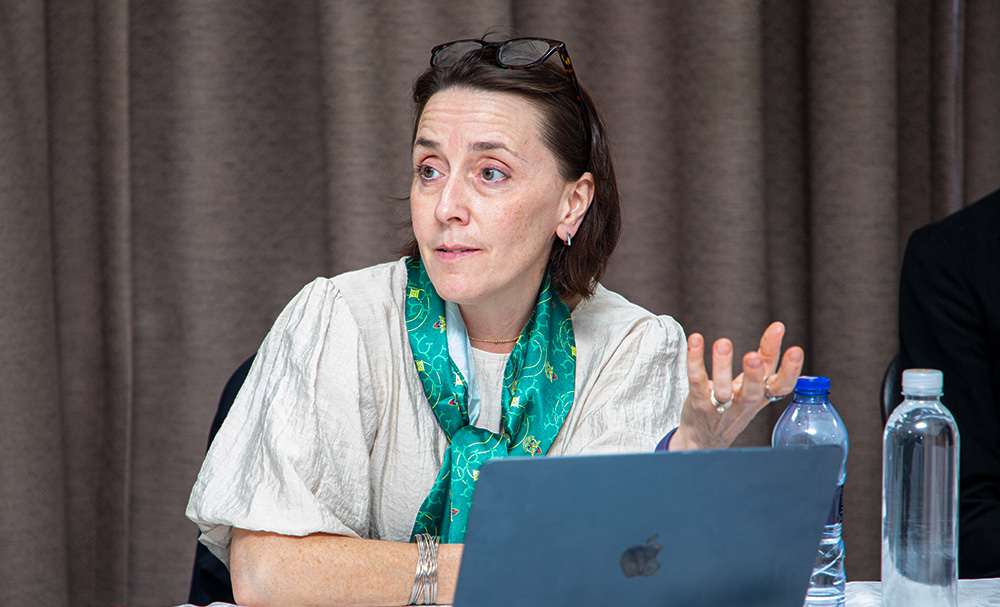
Professor Angela Campbell, Provost and Executive Vice-President of McGill University, expressed satisfaction with the progress of the Collaborative, particularly the work being undertaken across its three strategic pillars.
She explained that it was an opportunity to meet the partners in person and appreciate the work being undertaken at KNUST.
"there is a huge amount of excellent work being done on all three pillars of the Collaborative," she said.
Professor Campbell further commended the programme beneficiaries for their enthusiasm and engagement, describing the initiative as transformative in its contribution to the lives of young people.
"It was such a good way for me to see in very impressive terms the critical way in which Nkabom is making a difference in the lives of so many young people," she stated.
She also praised the facilitators for adopting active learning approaches that encourage participation and help learners connect with the training process.
The Principal Investigator (PI) of the KNUST Nkabom Collaborative, Professor William Otoo Ellis, reaffirmed KNUST's commitment to advancing the objectives of the partnership and delivering meaningful outcomes for young people.
He emphasised that successful partnerships depends on the commitment of all parties to the shared mission. He stated that the collaboration could only thrive when partners remained actively invested in its objectives.
Professor Ellis encouraged the McGill delegation to maintain effective communication and ensure that relevant information was shared among partners to strengthen coordination, address implementation needs and advance the broader agenda of the Collaborative.

Programmes Manager of the KNUST Nkabom Collaborative, Dr Charlotte Adjanor-Doku, presented an overview of the programme's implementation progress, achievements, challenges and lessons learnt.
Her presentation highlighted the Collaborative's interventions across its Education, Entrepreneurship, and Network Development and Learning pillars, demonstrating how the programme is building the capacity of young people and connecting them to opportunities within the agri-food ecosystem.
Under the Entrepreneurship Pillar, the presentation reported 1,259 participants reached through entrepreneurship training programmes, with 1,210 between the ages of 18 and 35. It also highlighted the establishment of 16 business start-ups, comprising seven female-owned businesses, six male-owned businesses and three jointly owned by males and females.
The Education Pillar has also recorded 581 participants in its short-course programmes, while the Collaborative continues to develop specialised curricula, training manuals and practical learning opportunities to strengthen expertise in the agri-food sector.
Dr Adjanor-Doku further outlined the programme's geographical reach across Ghana, alongside its inclusion commitments to women, persons with disabilities, refugees and displaced young people, and those living in rural communities.
Story: Michael Kwawu


