How well can artificial intelligence developed using medical data from Europe and North America analyse brain scans from Ghanaian patients?
This question took Ghanaian biomedical engineer Dr Prince Ebenezer Adjei to the German Cancer Research Center (DKFZ) in Heidelberg, where he worked with researchers to investigate how medical imaging AI tools perform on Ghanaian clinical scans.
Dr Adjei, who leads the Global Health AI Lab (GHAiC-K) at the Global Health and Infectious Diseases Group of the Kumasi Centre for Collaborative Research in Tropical Medicine (GHID-KCCR), has returned from the research visit with early findings that could inform the development of medical AI tools for Ghanaian healthcare.
Working with colleagues at DKFZ, he used approximately 1,600 unlabelled head CT scans from Ghana for further training of AI models through a method known as self-supervised learning. This allows models to learn patterns from medical images without requiring specialists to manually label every scan.
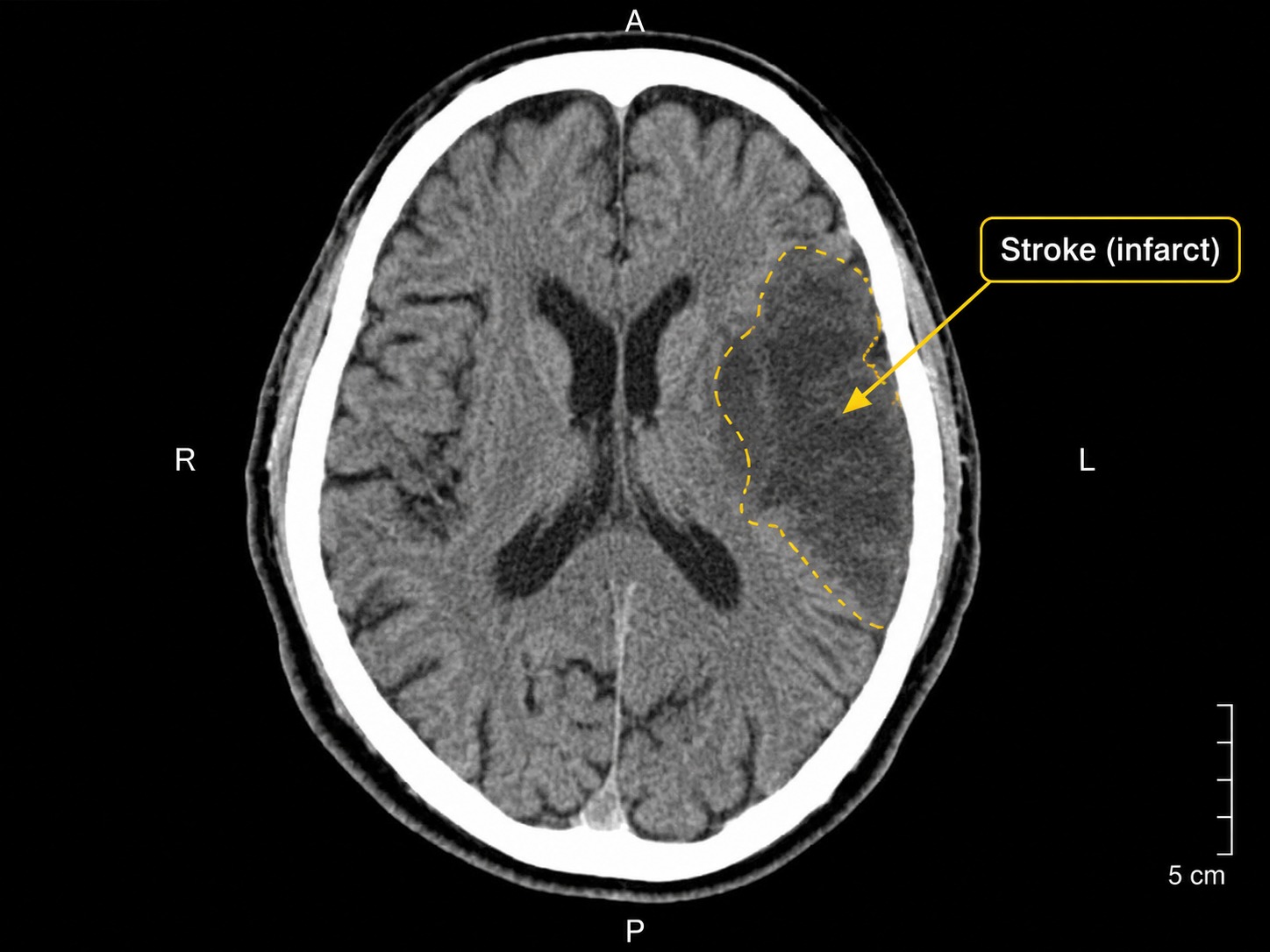
The work involved nnFoundation, one of DKFZ's newer medical imaging AI tools, and nnU-Net, an established framework developed at the same institution. The researchers tested the approaches on tasks including identifying areas of brain damage caused by acute stroke and estimating a person's brain age.
The preliminary results suggest that the benefits of additional AI training depend on the task being performed. For identifying stroke damage and estimating brain age, nnFoundation did not outperform the nnU-Net approach trained on Ghanaian scans, although it showed an advantage in some other tasks.
Dr Adjei, who is also with the Biomedical Engineering programme at the Kwame Nkrumah University of Science and Technology (KNUST), noted that one of the clearest lessons concerned the quality of the data.
"What surprised me was how much the quality of our data mattered. Clear, accurate examples improved results more than anything else. Large strokes were easy for the AI to find; small ones were much harder," he said.
The work has also left him with a question he intends to pursue: "Can we build good AI for Ghana without needing thousands of scans labelled by busy specialists?"
Preparing medical scans for AI research often requires specialists to identify abnormalities or outline affected areas. This can take considerable time, making it difficult to assemble the large datasets needed for developing and testing medical imaging tools.
The researchers are now investigating how much labelled data is necessary.
Through a series of experiments described as a "label ladder", they are testing how the models perform when trained with different quantities of annotated scans. The aim is to establish whether additional training using unlabelled Ghanaian scans can reduce the amount of specialist labelling required.
Could AI help doctors detect strokes faster?
A brain scan is an important part of diagnosing stroke. It helps doctors determine whether a patient has a blocked or bleeding blood vessel, information needed when deciding on treatment.
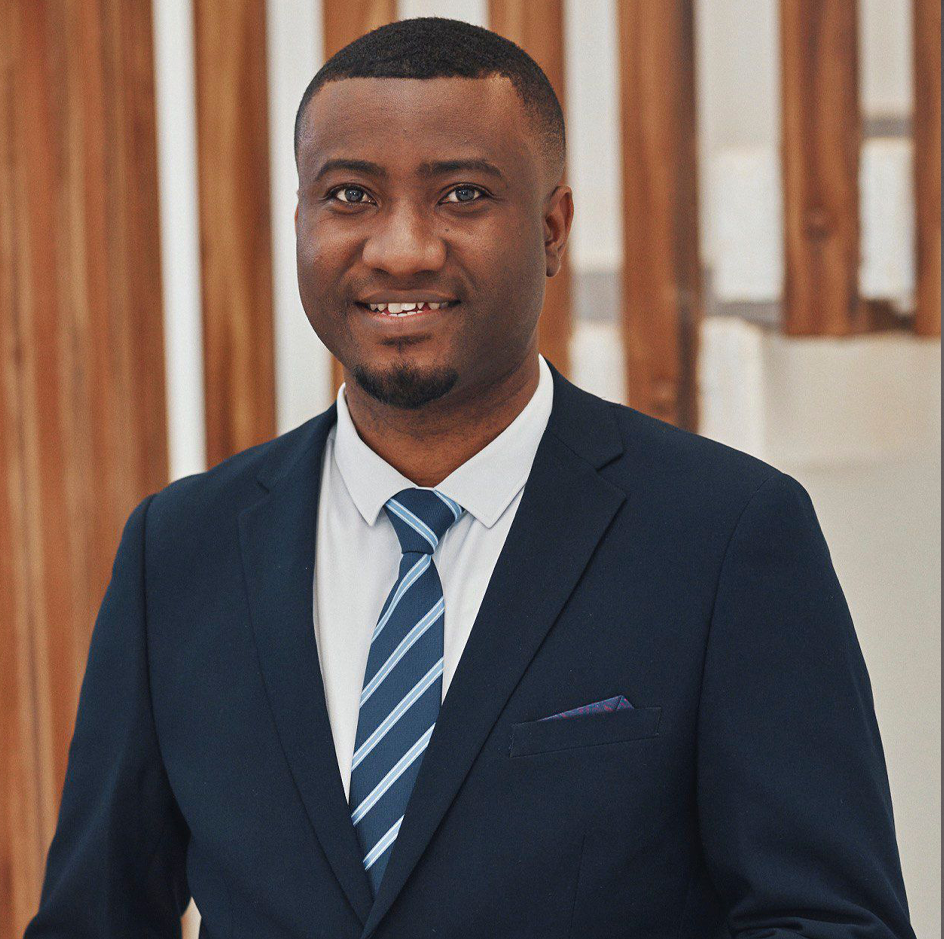
Dr Adjei believes AI could eventually help doctors interpret these scans more quickly, particularly in hospitals where radiologists are not readily available.
"One day, when a patient arrives with a suspected stroke, AI could check their brain scan within minutes and alert doctors to the problem. This could speed up treatment, especially in hospitals with few or no radiologists," he said.
However, the tools would need further testing before they could be introduced into routine clinical care.
Dr Adjei also wants greater attention paid to how AI is regulated in healthcare, particularly regarding patient information, the training of health professionals and the responsibility of doctors using such systems.
"Before that happens, Ghana's existing data protection laws need to be updated for AI, and the national AI health policy must be put into practice. Health workers will need training, the tools must be tested in many Ghanaian hospitals, with doctors always making the final decision."
Maintaining research partnership
Dr Adjei undertook the research visit through the inaugural Global Research Opportunities for the South (GROW) programme of the German Academic Exchange Service (DAAD).
The programme, funded by Germany's Federal Ministry for Economic Cooperation and Development, supports researchers from developing countries to undertake research in Germany and establish international scientific partnerships.
At DKFZ, he worked under the supervision of Dr Fabian Isensee, a medical image computing researcher and one of the developers of nnU-Net, a framework widely used in medical image analysis.
Although Dr Adjei has returned to Ghana, the research is continuing.
"Our findings are still early and not yet conclusive, so the work continues. We are still working with the team in DKFZ on the questions this visit raised," he said.
The researchers are conducting larger, repeated experiments using DKFZ's computing cluster. They also plan to examine additional tasks, including detecting bleeding in the brain and retrieving relevant medical images from datasets.
In Ghana, Dr Adjei's team is working with Spectra Health Imaging Limited to build a larger collection of high-quality Ghanaian brain scans for further research.
The work forms part of the activities of the Global Health AI Lab at GHID-KCCR, which Dr Adjei leads, and provides opportunities for young researchers to gain experience in medical imaging and AI.
"For KNUST, GHAICK (GHID-KCCR) and young Ghanaian researchers, this partnership opens doors to world-class expertise and tools and helps build AI made with African data for African patients," he said.
The next stage of the research will establish whether the early findings hold across larger experiments and whether additional training on Ghanaian scans can reduce the need for extensive manual annotation.


