
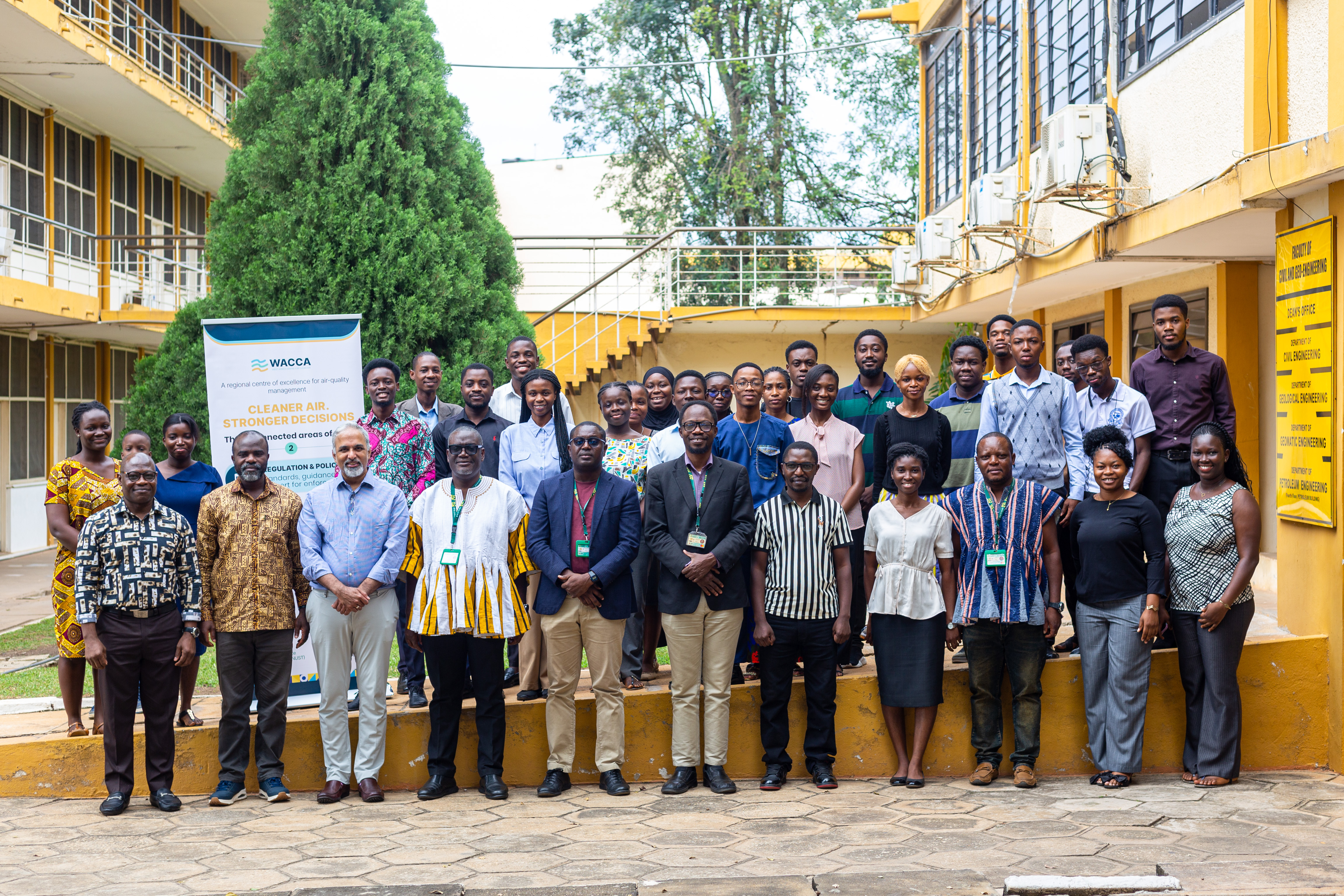
The Kwame Nkrumah University of Science and Technology, Kumasi (KNUST), has hosted a training workshop on low-cost air quality sensors as part of efforts to strengthen air quality monitoring and data-driven environmental decision-making in Ghana and the West African sub-region.
The workshop forms part of activities under the West Africa Center for Clean Air (WACCA), a regional Centre of excellence hosted by KNUST and established to support research, monitoring, policy and stakeholder engagement on air quality.
The training brought together participants from different engineering and technical backgrounds to gain practical knowledge in low-cost air quality sensors including selection, calibration, data analysis and network design.
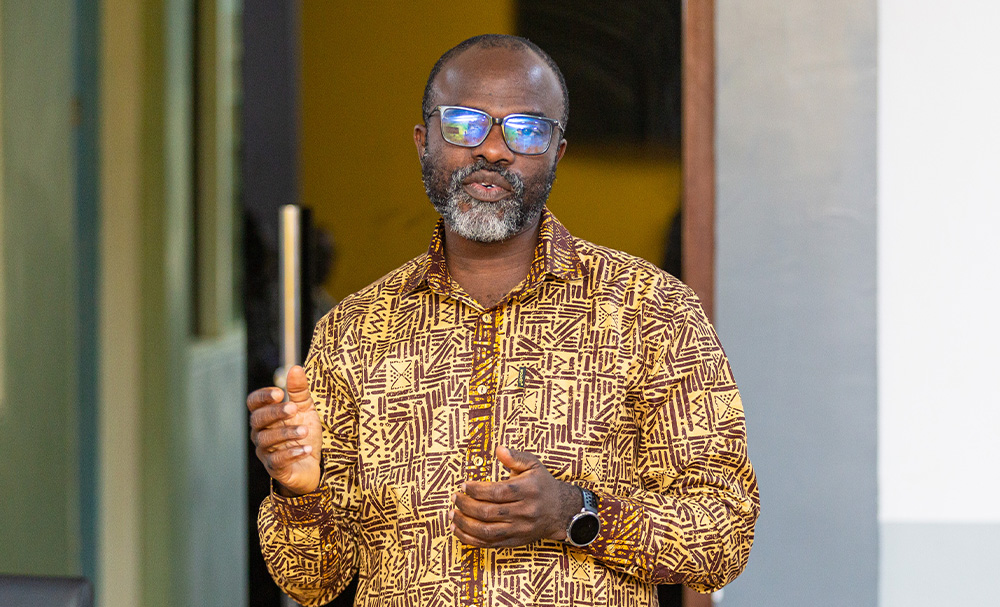
Principal Investigator (PI) of WACCA, Professor Francis Kemausuor, said the Centre would work with relevant stakeholders to address issues surrounding air quality, including regulation, policy, sensor deployment and the analysis and use of air quality data.
He said the training was the first of a series of capacity-building activities under WACCA intended to bring participants up to speed on sensor technology and its application in air quality monitoring.
‘‘This maiden workshop will help participants gain the knowledge required to effectively deploy and utilize low-cost air quality sensors,’’ he said.
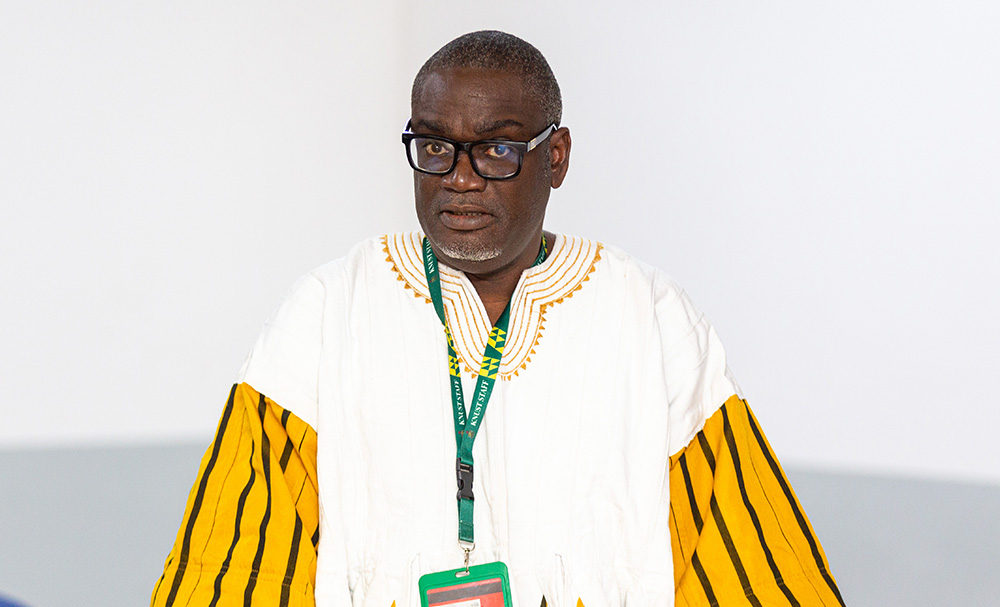
Provost of the College of Engineering, Professor Kwabena Biritwum Nyarko, said the workshop reflected the College’s interest in addressing environmental challenges through engineering and technology.
He said low-cost air quality sensors could enable real-time monitoring of air pollution and generate data that could inform decision-making.
“Once we have the data, this training will help us with the analytics. And once we have the results, it should inform what we do,” Professor Nyarko said.
He explained that following proper testing and calibration, the sensors could help provide information on air quality in areas with significant human and vehicular activity, thereby supporting a better understanding of local air pollution conditions.
Professor Nyarko congratulated the participants and expressed the hope that the training would equip them with practical skills they could apply in their respective fields.
The Director of the Brew Hammond Energy Centre (TBHEC), Professor Ato Quansah, stressed the importance of reliable measurement in addressing air quality challenges.
“What does not get measured cannot be improved,” he said, adding that effective measurement provides the evidence required to understand environmental conditions and take appropriate action.
Professor Quansah said the training presented an opportunity, particularly for young professionals, to develop the skills needed to operate air quality sensors and generate data that could support interventions at various levels.
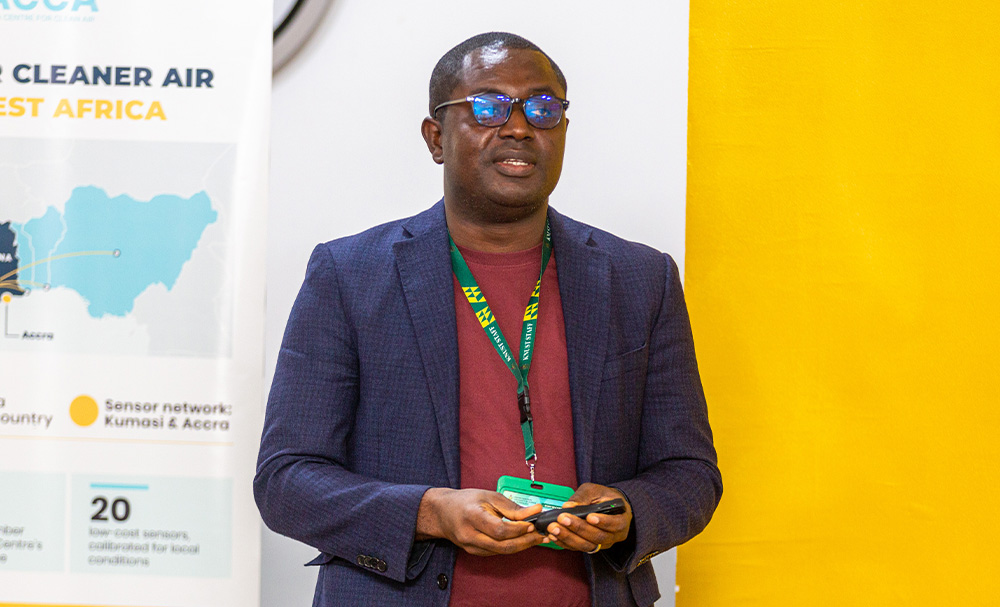
Providing an overview of WACCA, Dr. Yen Adams Sokama-Neuyam, Project Coordinator, said air pollution was both a health and economic challenge, making improved monitoring and evidence-based interventions necessary.
He explained that the Centre would focus on three broad areas: strengthening air quality regulation, improving the collection and use of air quality data, and developing WACCA into a regional Centre of excellence serving the West African sub-region.
Dr. Sokama-Neuyam said the Centre had also begun engaging stakeholders to assess air quality gaps in Kumasi and Accra, while working towards broader collaboration with institutions and stakeholders across the West African region.
The Lead Facilitator, Mr. Ramachandran Subramanian of the Kigali Collaborative Research Centre (KCRC), Rwanda, led participants through an introduction to low-cost sensors, focusing on their advantages, limitations and strategies for selecting appropriate sensors for different monitoring needs.
He explained that where reference monitors were unavailable, reanalysis data could help reduce bias, while laboratory testing remained useful for understanding sensor behaviour and determining their operational lifetime.
Story: Abigail Ofori Photos: Isaac Kwaku Duah


