
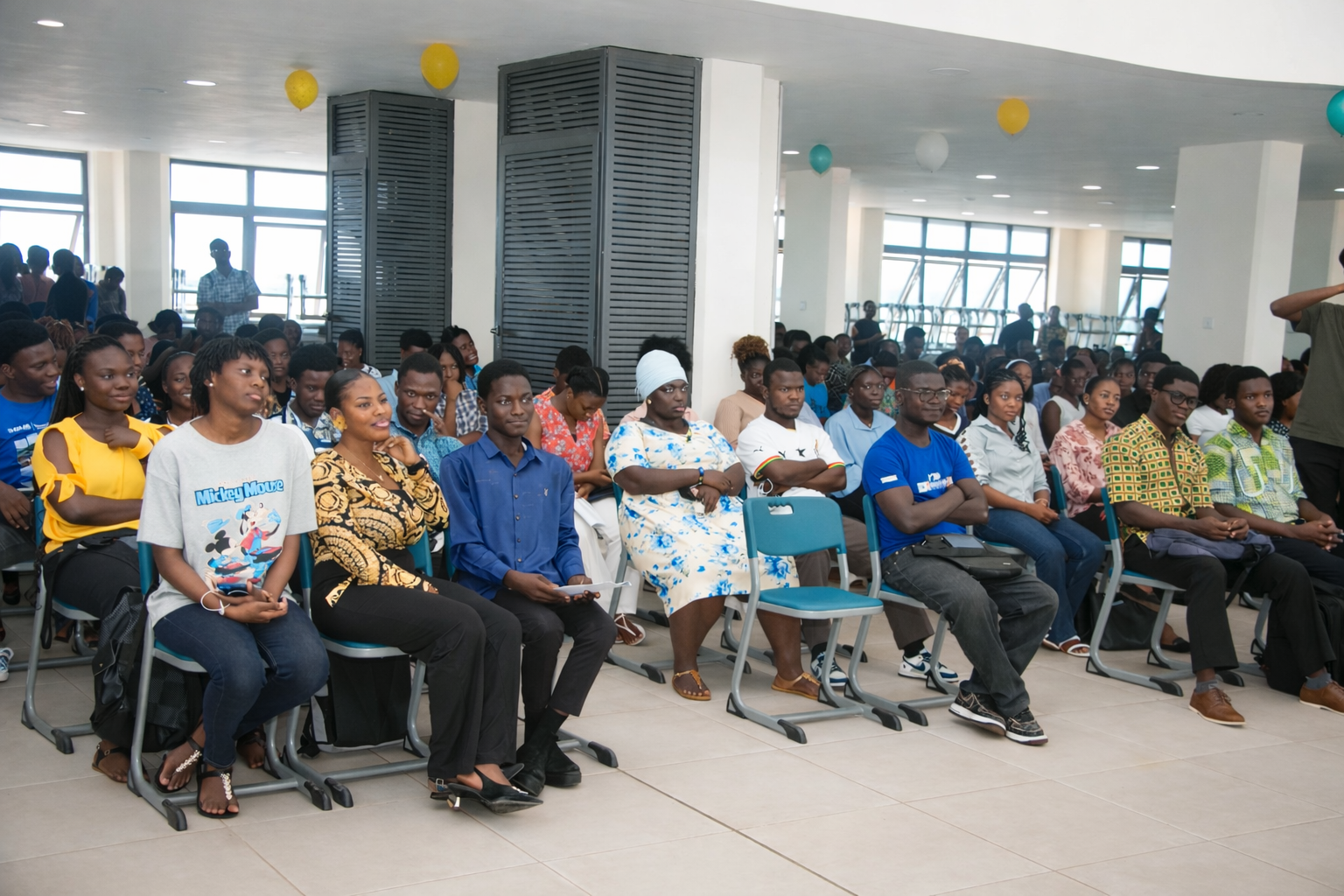
The Career Services Centre at the Kwame Nkrumah University of Science and Technology, Kumasi (KNUST) has organised a career engagement session for final-year students of the Faculty of Built Environment, aimed at preparing them for the transition from academia to the professional world.
The session brought together experienced professionals from the construction and built environment sector to interact with students, share industry insights and provide guidance on career pathways and professional development.

The Director of the KNUST Career Services Centre, Mrs Selina Angmor Doe, said the Centre has a threefold mandate: building leadership capacity, creating career opportunities and providing professional guidance to students.
She explained that one of the Centre’s key objectives is to empower students to define themselves within the academic world of research and knowledge development.
Mrs Doe noted that while some students may remain in academia by pursuing master’s and doctoral studies and eventually becoming lecturers, others will transition into industry where they will apply the knowledge gained during their university education.
“Industry is where you put into practice what you have learned here and apply the outcomes of the research you have conducted during your studies,” she said.
She encouraged the final-year students to make full use of opportunities offered by the Centre, including interview preparation training, professional development programmes, networking events and mentorship initiatives.
“We can bring many opportunities your way, but you also have a responsibility to take advantage of the opportunities that we provide,” she added.
The Dean of the Faculty of Built Environment, Professor Emmanuel Adinyira, urged students to take advantage of the platform to engage with professionals and gain insights that will help them prepare for their careers.
He encouraged students to actively participate in the session and ask questions to better understand the demands of the profession.
“We want to move from excellence to eminence, and our partners here today are helping us to advance that agenda,” he said.
Professor Adinyira noted that the engagement forms part of the Faculty’s broader agenda to strengthen professional development among students and enhance the impact of academic training on industry and society.
He added that collaborations with industry partners help students gain practical insights into the job market and learn strategies for building successful careers.

The Chief Executive Officer of the Ghana Chamber of Construction Industry, Mr Emmanuel Cherry, emphasised the importance of stronger collaboration between academia and industry in preparing students for professional practice in Ghana’s built environment sector.
He noted that the sector relies on the collective efforts of various professionals, stressing that no single discipline can successfully deliver projects on its own.
“In the industry, we classify all of you as professionals because your works are unique,” he said, adding that successful projects require the collaboration of multiple experts.
“The architect may lead the design, but you also need electrical, mechanical and other technical professionals. All these professionals must come together for a project to succeed.”
Mr Cherry said creating platforms where students can interact directly with industry practitioners is essential for bridging the gap between academic training and practical industry experience.
“The time has come for industry to have an interface with academia. Without that, it will be very difficult for us to achieve what is expected of us,” he said.
He also highlighted the role of the Ghana Chamber of Construction Industry in bringing together professional bodies, trade associations, artisans and academic institutions to support the development of the construction sector in Ghana.
Surv. Reginald Obeng, Property and Project Manager at R and J Systems Limited, also highlighted the gap between academic institutions and the construction industry.
“One of the most important things we can do is create stronger partnerships between academia and industry,” he said. “When professionals come to share their experiences and students interact with practitioners, it becomes easier for them to make informed career choices.”
He encouraged students to participate in internships, mentorship programmes and professional networks to gain exposure to real construction projects and industry practices.
According to him, Ghana’s growing population and expanding urban centres are creating significant demand for skilled professionals such as engineers, architects, surveyors, construction managers and project managers.
“There is a lot of development happening around us,” he said. “Every building, road and infrastructure project requires professionals with the right skills.”

The Technical Director of Nickseth Construction Company, Mr Charles Essel, said building a strong professional reputation in architecture, engineering and construction requires time, dedication and continuous learning.
“It takes time to become a professional in this field sometimes four, six or even seven years before you truly establish yourself,” he said. “You must use the time you have wisely and keep improving your skills.”
He added that decisions made by professionals directly affect the safety and durability of buildings and infrastructure.
“When someone asks who designed or supervised a building, a professional’s name is attached to that work,” he said. “That is why integrity and competence are very important in this industry.”
Mr Essel encouraged the students to maintain high ethical standards and continually upgrade their knowledge as new technologies reshape the construction industry.
Story: Alice Laura Kyerewaah Prempeh Photos: Jonathan Gyepi-Attee


