
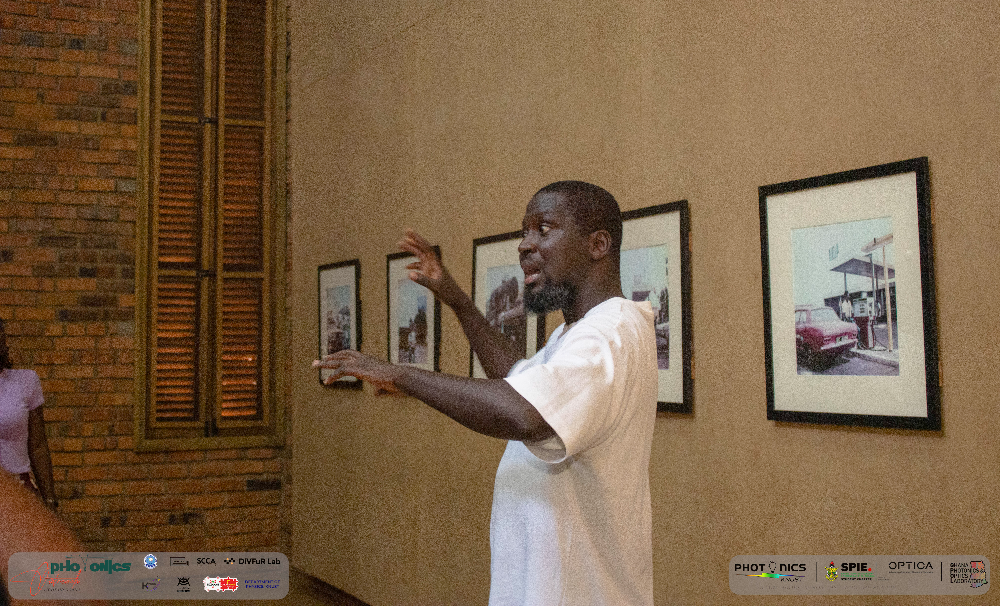
KNUST alumnus and founder of Red Clay Studios, Ibrahim Mahama, has called for urgent action to preserve Ghana’s historical and industrial artefacts, warning that the continued destruction and sale of culturally significant materials as scrap threatens the country’s heritage and collective memory.
Speaking during an outreach programme organised by the Ghana Photonics and Optics Laboratory (GPOL) in Tamale, Mahama said abandoned railway materials, factories, bridges and colonial-era structures should be seen as important parts of Ghana’s history rather than waste.
“When we sell them as scrap, we are not just losing materials, we are losing parts of ourselves,” he said.
The outreach formed part of the third edition of the “Light Up Ghana” initiative organised by the KNUST Photonics Student Chapter (KPSC) to mark the 2026 International Day of Light at Red Clay Studios in collaboration with the Savannah Centre for Contemporary Art (SCCA), Tamale.
Mahama said the dismantling and commercialisation of heritage materials reflected what he described as a lingering colonial mindset that prioritises profit over preservation.
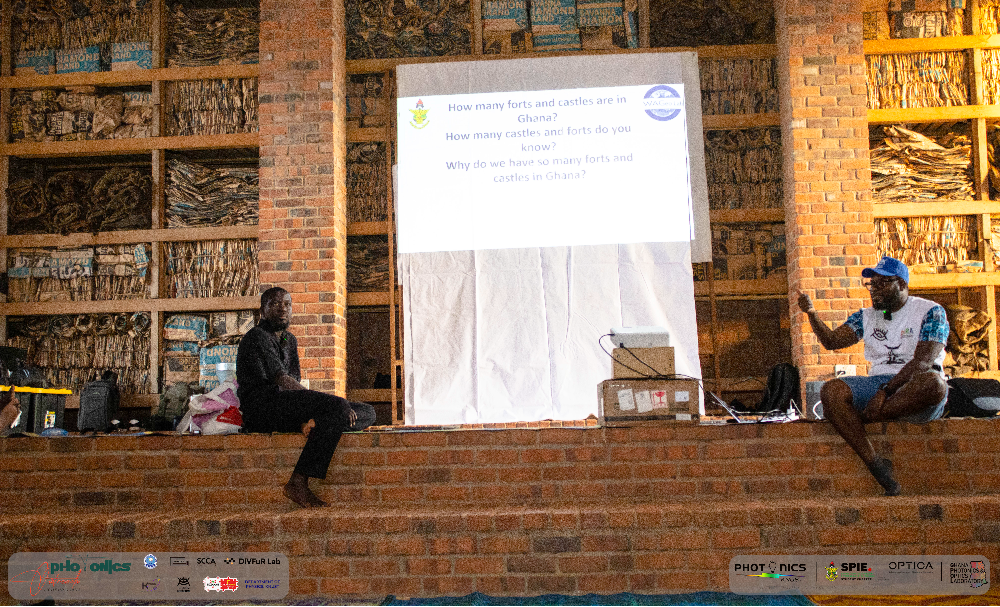
According to him, the role of art today goes beyond aesthetics and includes restoring public memory through the recovery and preservation of discarded historical objects and industrial relics.
He said Red Clay Studios and SCCA Tamale are actively involved in reclaiming and reconstructing industrial and cultural artefacts to preserve Ghana’s history for future generations.
At the event, Dr. Cyril Boateng, Project Investigator at the West African Geophysics Laboratory in KNUST’s Department of Physics, delivered a lecture titled “Muskets & Megahertz: A Geophysical Detective Story.”
Boateng explained how technologies such as drone imaging, ground-penetrating radar and electrical resistivity tomography are being used to uncover hidden aspects of Ghana’s colonial history.
He said researchers recently investigated the remains of Fort Tantumquery in Otuam in Ghana’s Central Region, a colonial fort largely absent from major historical records.
Working with the Department of Archaeology and Heritage Studies at the University of Ghana and the Ghana Museums and Monuments Board, the research team recovered 365 artefacts, including pottery fragments, hinge pins, grinding stones, shells used as lime and four musket balls.
According to Boateng, the project achieved an 83.3% feature-detection rate despite challenges posed by clay-rich soils and humidity.
The research project was funded by UNESCO and Germany’s Ministry for Research and Education, while the recovered artefacts are currently on display at the KNUST Museum.
Organisers said the event highlighted growing collaboration between contemporary art and physics in preserving Ghana’s cultural heritage through scientific and artistic innovation.


