
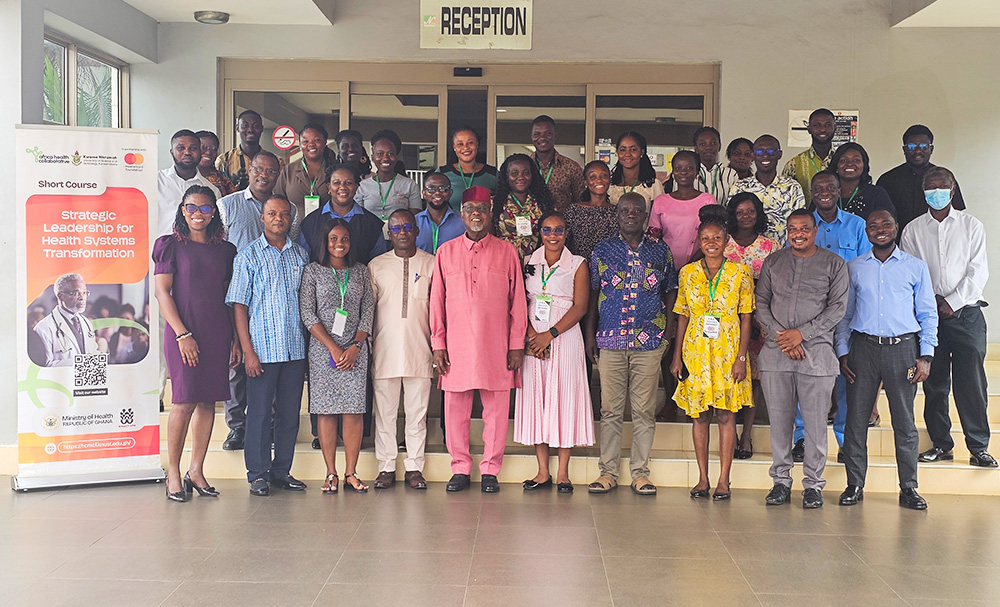
The Africa Health Collaborative at the Kwame Nkrumah University of Science and Technology (KNUST) has launched, for the fourth year running, a training programme to strengthen leadership capacity within health systems across developing countries.
The programme, titled “Strategic Leadership for Health Systems Transformation in Developing Countries (SLHSTDC),” brings together primary healthcare professionals from across Ghana for an intensive 10-day course focused on improving leadership, decision-making and service delivery.
Professor Kofi Akohene Mensah, pillar lead for the Health Employment Pillar (HEMP) of the Collaborative, said strengthening primary healthcare was critical to building resilient health systems in Africa, noting that leadership gaps remain a major challenge across the sector.
“Leadership challenges remain one of the key obstacles confronting our primary healthcare systems,” he said.
Mensah said the training would equip participants with essential skills in strategic thinking, team-building and decision-making, enabling them to improve service delivery and public health outcomes in their communities.
The Dean of the School of Public Health, Professor Peter Agyei-Baffour, underscored the urgency of strategic leadership in addressing complex health challenges in developing countries.
“Technical solutions alone are not enough. We need visionary and adaptive leadership grounded in the realities of our health systems,” he said.
Agyei-Baffour highlighted persistent challenges such as limited resources, inequities in healthcare access, workforce shortages, and the rising burden of communicable and non-communicable diseases, describing the training as timely and critical to building resilient health systems.
“This programme is an investment in the very foundation of healthcare delivery,” he added.
Training facilitators Dr. Alhaji Mohammed Bin Ibrahim and Professor Kwabena Antwi Danso said the course would focus on helping participants rediscover their leadership potential, emphasising that such capacity often exists but is underutilised.
“All of you are leaders, but this training will provide the frameworks, tools and skills needed to unlock your full potential and apply it effectively within your health systems,” Ibrahim said.
Participants were encouraged to take full advantage of the programme, with facilitators noting that its impact would depend on their level of engagement and commitment.
| Story: Belinda Opoku Danso | Photos: Isaac Kwaku Duah |


