
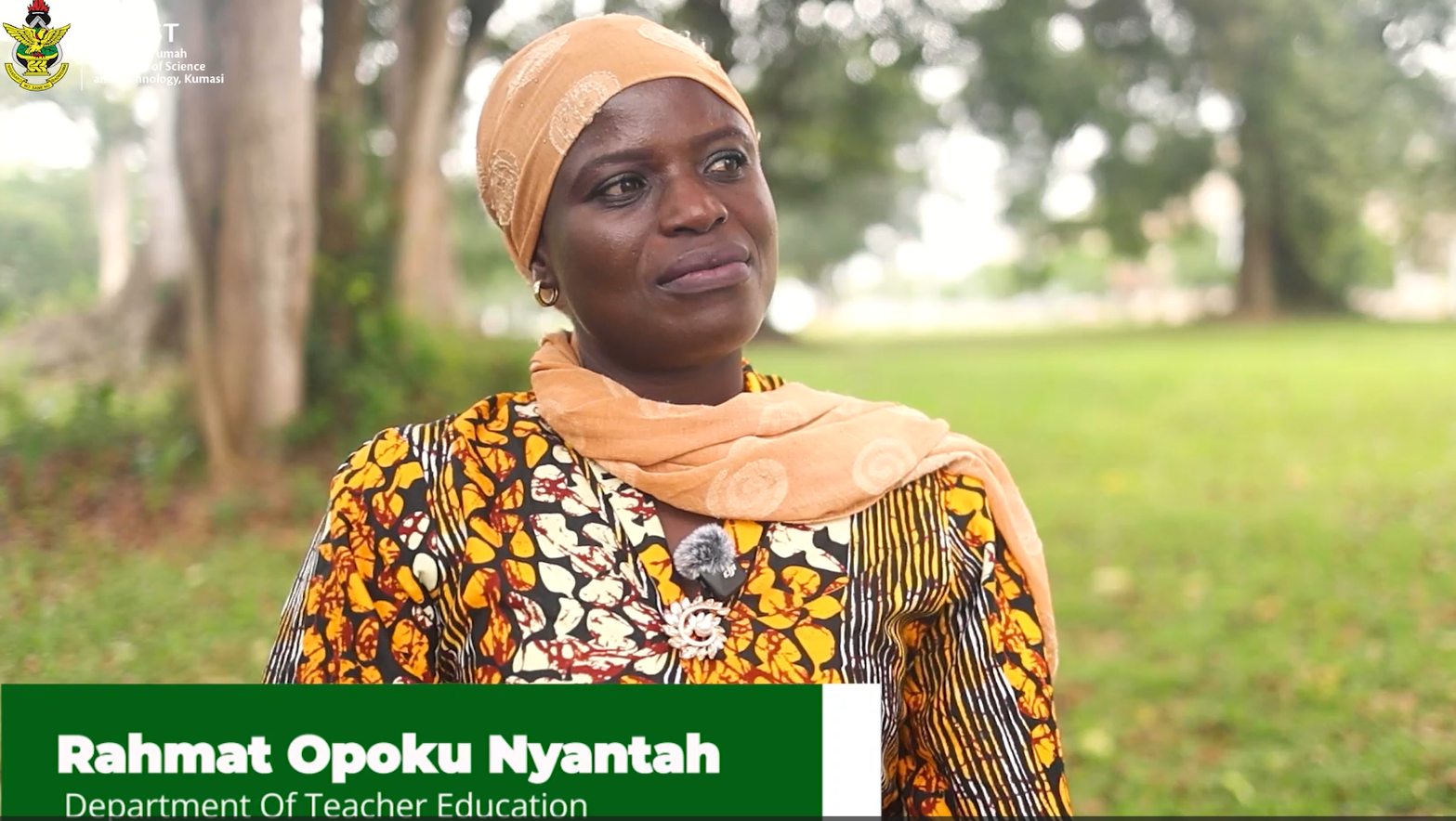
Senior high school students understood maths lessons about circles better and were more engaged when computer animations were combined with group learning, a doctoral study in Ghana has found.
The approach was more effective than traditional teaching methods, according to the research, which involved 291 students and nine teachers across three schools.
The study focused on circle theorems: mathematical rules that explain how lines and angles relate to one another in a circle. These rules help students calculate unknown angles in diagrams containing circles.
Doctoral researcher Dr. Rahmat Opoku Nyantah of the Department of Teacher Education examined what happened when computer animations were used alongside a group learning method known as jigsaw cooperative learning.
The approach brought together moving illustrations on a computer and students learning cooperatively in groups.
The findings showed that combining the two methods significantly improved students’ understanding and engagement. Teachers who participated also identified the combined approach as the most effective way to teach the abstract geometry concepts covered by the study.
The research suggests that computer animation and collaborative learning could help teachers make these maths lessons easier to understand.
Undertaken as part of a PhD in Mathematics Education, the study examined students’ achievement, motivation and understanding. It combined statistical analysis with feedback from participants to assess the teaching approach.
Prof. Nana Kena Frempong supervised the research, with Dr. Ernest Larbi as co-supervisor.


