
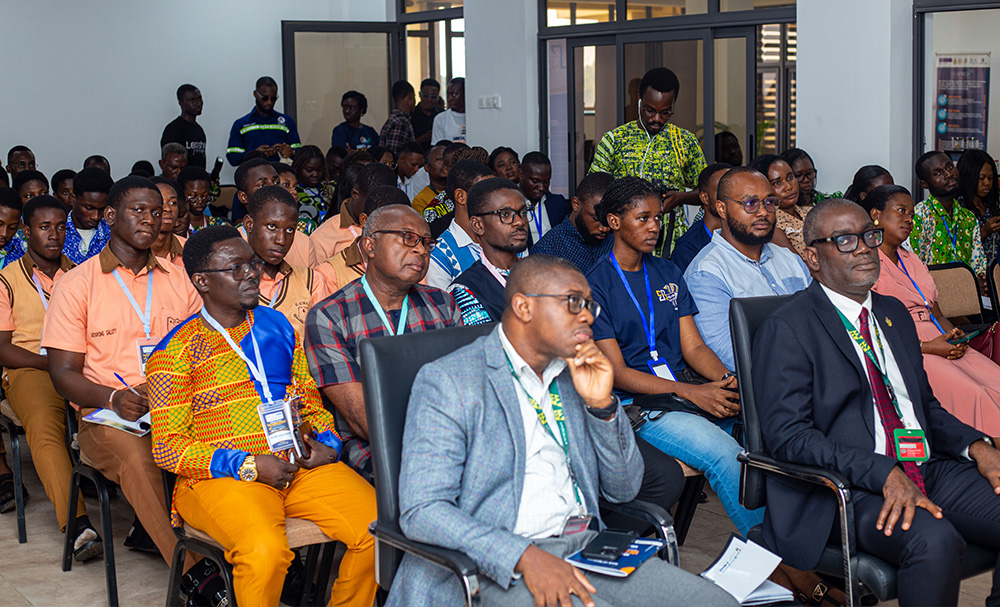
The Department of Materials and Metallurgical Engineering at the Kwame Nkrumah University of Science and Technology, Kumasi (KNUST), in partnership with the Organisation for Women in Science for the Developing World (OWSD), has hosted a Mineral Waste Valorisation Research Conference to explore innovative approaches to managing mineral and industrial waste in Ghana and beyond.
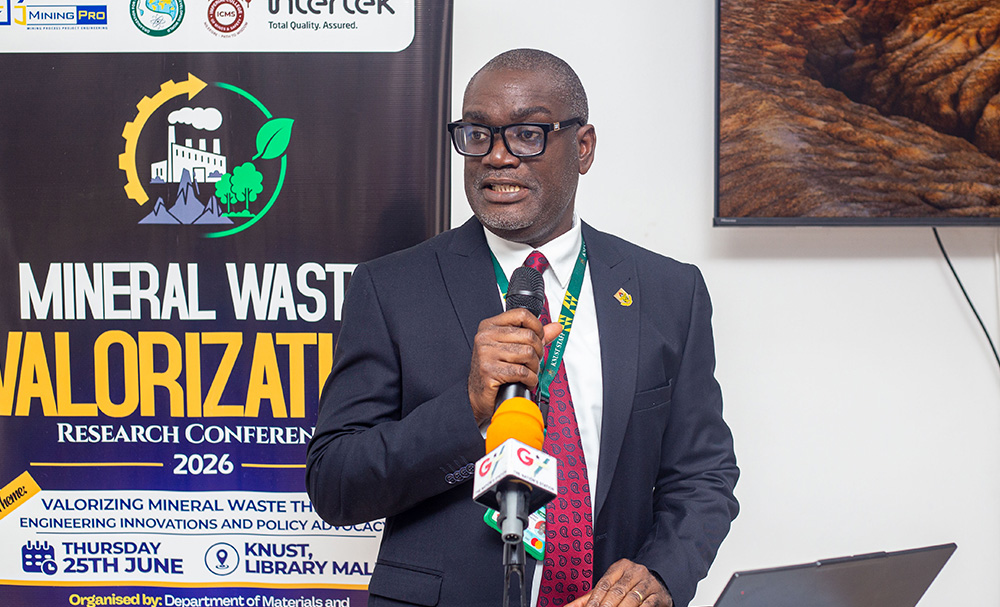
The Provost of the College of Engineering, Professor Kwabena Biritwum Nyarko, said mineral residues such as tailings, waste rock and slag should no longer be viewed as environmental burdens but as valuable resources.
“Mineral waste is no longer viewed merely as an environmental challenge; it is increasingly recognised as an economic opportunity,” he said.
Professor Nyarko reaffirmed KNUST's commitment to advancing research that addresses societal challenges and promotes sustainable development. He stressed that research should extend beyond theory and academic publications.
“Research should not end in laboratories or scholarly journals. It must generate knowledge that solves societal challenges, informs public policy, drives industrial innovation and improves lives,” he said.
He called for stronger collaboration among universities, government institutions, industry and international development partners. He urged participants to translate scientific discoveries into commercial applications, policy interventions and practical solutions that create lasting impact.
Delivering a keynote address on Urban Mining for Sustainable Metal Recovery, Dr. (Mrs.) Bennetta Koomson, a Senior Lecturer in the Department of Materials and Metallurgical Engineering and a 2023 OWSD Fellow, encouraged participants to rethink conventional approaches to resource extraction. She explained that urban mining focuses on recovering metals and other valuable materials from discarded products, industrial residues and waste streams rather than extracting them through conventional mining.
“Today’s waste can become tomorrow’s resource,” she said, stressing that the growing global demand for critical minerals requires innovative strategies to recover materials already in circulation.
Reflecting on her research journey, Dr. Koomson recounted how her work on mining residues and metallurgical waste inspired her to investigate innovative methods for recovering valuable materials from waste streams. She underscored the importance of waste characterisation as the foundation for effective resource recovery, recycling and valorisation, noting that a thorough understanding of waste composition is essential for developing sustainable recovery solutions.
She challenged researchers to move beyond characterisation studies and focus on developing practical, scalable technologies for extracting and recovering valuable resources from waste materials. She also called on universities to establish centres of excellence dedicated to urban mining and circular economy research to drive innovation and build capacity in the sector.
In addition, she urged policymakers to create enabling frameworks and incentives that would make secondary resource recovery more attractive, commercially viable and central to sustainable development.
Addressing students and young researchers, Dr. Koomson encouraged them to embrace emerging opportunities in sustainable resource management.
“The miner of the future may be wearing a laboratory coat rather than a hard hat,” she said.
The Ashanti Regional Director of the Environmental Protection Agency (EPA), Dr. Jackson Adiyiah Nyantakyi, commended KNUST for its contributions to research, innovation and industrial development in Ghana.
He described the university as a key driver of scientific advancement and highlighted the EPA's efforts to promote waste valorisation and sustainable environmental management.
Dr. Nyantakyi also raised concerns about rising carbon dioxide (CO₂) emissions and other environmental challenges associated with industrial activities.
He called for stronger collaboration among academia, industry and regulators to develop practical solutions for waste management and environmental protection. He encouraged participants to view waste as a resource capable of contributing to economic growth and environmental sustainability.
Representing Intertek Minerals Ghana, Ms. Edwina Quartey, Health, Safety, Security and Environment (HSSE) Officer, and Mr. Samuel Tawiah, Business Development Manager, shared insights into waste valorisation technologies and circular economy strategies being implemented by the company.
They highlighted initiatives including plastic recycling, wastewater recovery and the adoption of cleaner technologies to enhance sustainability across operations.
“Effective waste valorisation creates opportunities to recover valuable resources from waste streams while reducing environmental risks and supporting the transition towards more sustainable mining practices,” Ms. Quartey said.
They also highlighted ongoing efforts to recover valuable metals from used laboratory materials and the integration of solar energy to support greener operations.


