
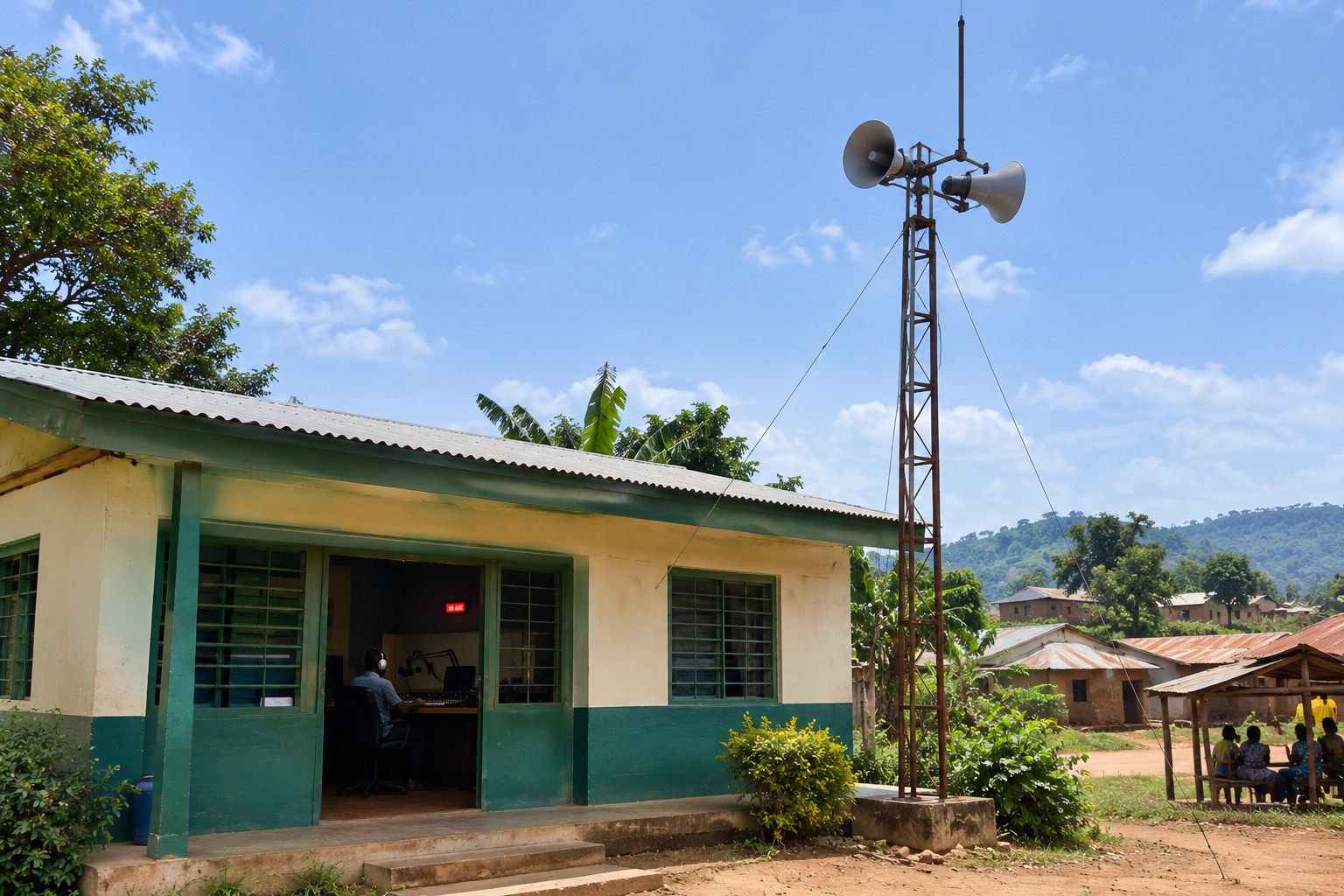
Community radio is helping smallholder farmers in northern Ghana adapt to drought by promoting knowledge sharing, collective learning and community dialogue, a study by the Kwame Nkrumah University of Science and Technology, Kumasi (KNUST) has found.
The study found a significant positive link between community radio listenership and farmers’ capacity to adapt to drought, highlighting the role of interactive communication in strengthening rural resilience.
Led by Dr. Enoch Kwame Tham-Agyekum, the researchers used a mixed-methods approach, collecting data from 1,200 smallholder farmers through household surveys and key informant interviews.
The findings showed that farmers do more than receive climate information from radio broadcasts. They interpret, adapt, validate and enrich it through discussions in churches, mosques, farmer groups and other community spaces.
This process allows farmers to contribute to the development of climate knowledge and helps them respond more effectively to climate-related risks, particularly drought.
Community radio provides agricultural and climate information in rural communities with limited access to formal agricultural extension services and digital information. Beyond broadcasting, stations serve as platforms for dialogue and collective problem-solving among farmers, extension officers and development organisations.
In Ghana, several community radio stations have introduced climate-focused agricultural programmes that bring together extension officers, meteorological experts and local farmers.
The researchers recommended that the Ministry of Food and Agriculture, community radio stations and development partners strengthen climate adaptation programmes that actively involve farmers.
They also called for regular interactive broadcasts featuring call-in sessions, farmer testimonies and expert discussions to encourage audience participation and knowledge sharing.
The study was published in Frontiers in Sustainable Food Systems.


