

Health professionals across Ghana are returning to their facilities with renewed confidence and a clear mandate to act, following a call by Prof. Kofi Akohene Mensah, Health Employment Pillar lead to “start something meaningful” regardless of their level within the health system.
The message, delivered at the close of a capacity-building training organised by the Africa Health Collaborative at the Kwame Nkrumah University of Science and Technology in partnership with the University of Toronto, underscored the programme’s focus on translating knowledge into practical change across Ghana’s healthcare facilities.
Participants drawn from across the country shared experiences from the Strategic Leadership for Health Systems Transformation and Palliative Care Module II programmes, implemented in the fourth year of the initiative. The training combined an intensive ten-day leadership course with a three-day advanced palliative care module, equipping professionals with practical tools, leadership frameworks, and applied knowledge.
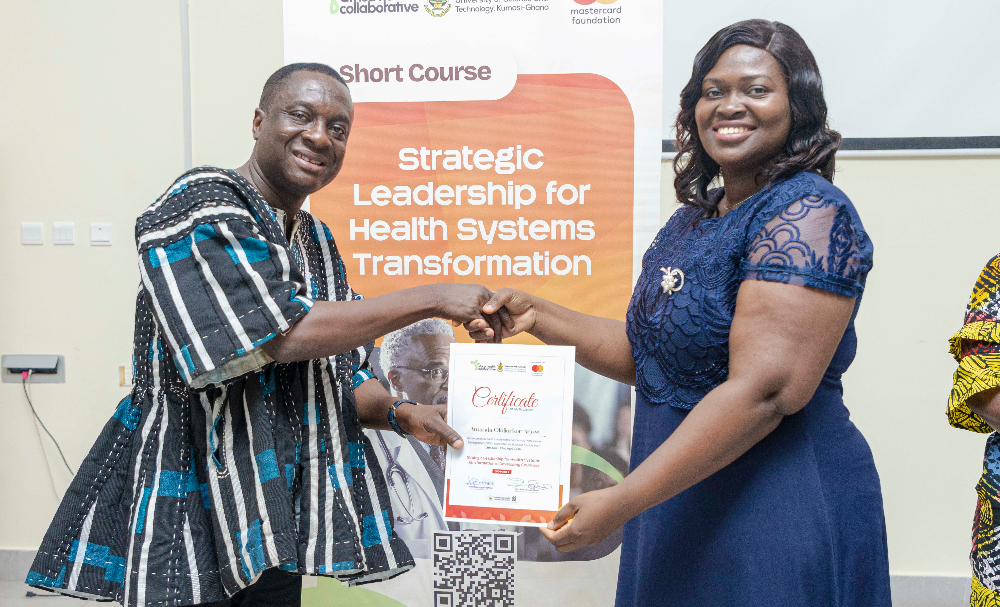
Ms. Amanda Aryee, a Pharmacist and CEO of Layata Hospital in the Savannah Region, described the Strategic Leadership programme as transformative.
“This course has been both inspiring and insightful. It has expanded my mindset and introduced me to concepts such as shared vision, mental models, and personal mastery,” she said.
She added that the experience had deepened her self-awareness and would shape how she supports her team.
“I now better understand myself and what I need to change to effectively support others. I anticipate that the impact will be reflected in the organizational climate I build at my facility.”
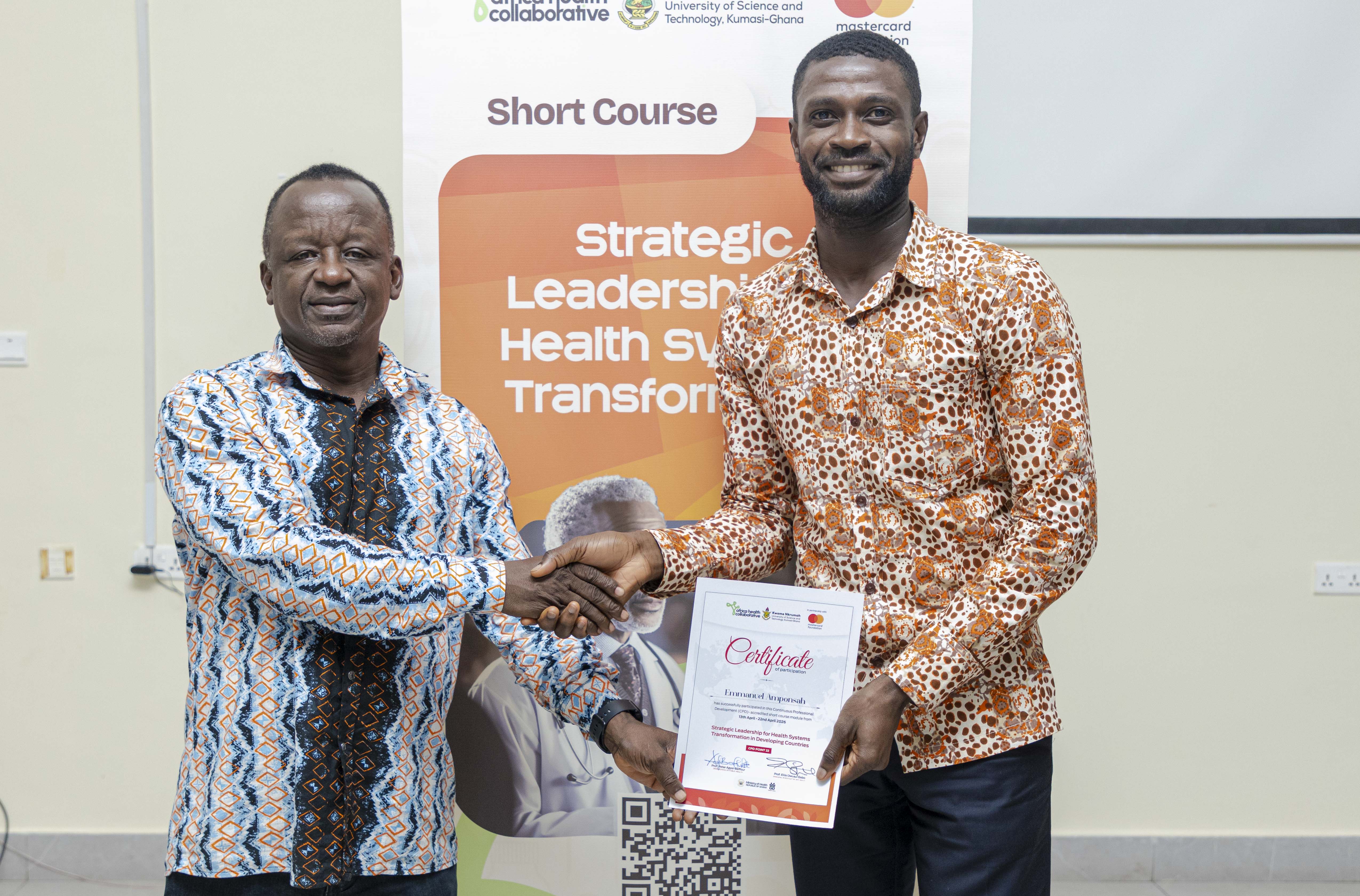
Dr. Emmanuel Amponsah, a Medical Officer at Holy Family Hospital, Nkawkaw, highlighted the programme’s strong practical orientation.
“Initially, I expected a purely theoretical programme, but it went far beyond that. The group work allowed me to take on leadership roles and understand team dynamics in a practical setting,” he noted.
For participants in the Palliative Care Module II programme, the training translated directly into improved clinical care. Ms. Hannah Adomako-Ansah of VRA Health Services Limited, Akosombo, said the course had enhanced both her technical and communication skills.
“This advanced palliative care course has greatly enhanced my practice. I am now better equipped to manage pain and other distressing symptoms, and my communication skills, especially in handling sensitive conversations, have improved,” she said.
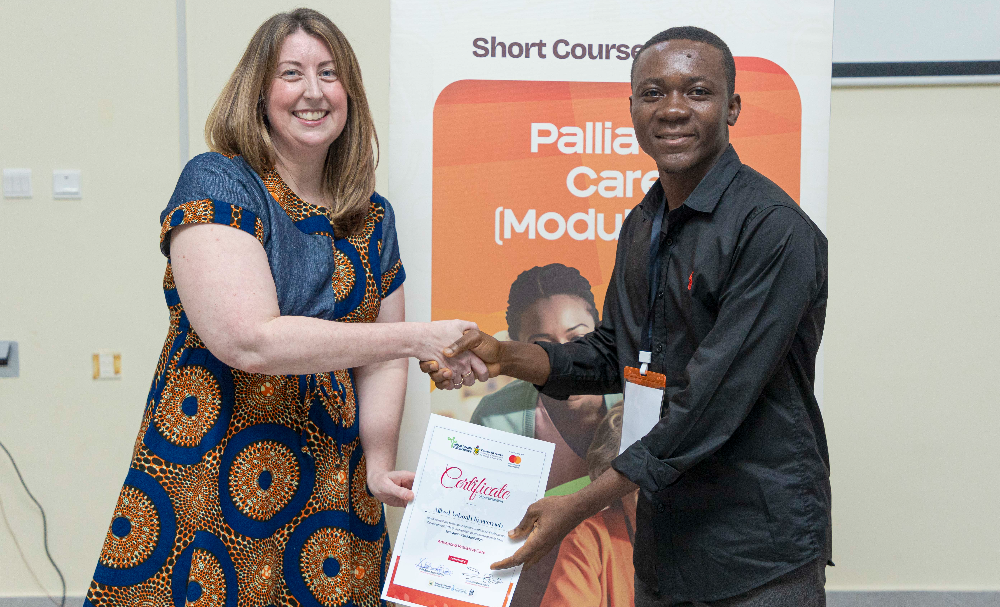
Mr. Alfred Yeboah of Asawinso SDA Hospital in the Western North Region pointed to immediate workplace impact.
“After completing Module I, I immediately applied several concepts in my workplace, which significantly improved my patient management. Now, I have a deeper understanding and practical skills that are going to make a difference,” he said.
Closing the programme, Prof. Mensah urged participants to extend the benefits of the training beyond individual practice.
“When you return to your facilities, engage your supervisors, your HR units, and your teams. Negotiate change and demonstrate what is possible. Regardless of your level community, health center, or district you can start something meaningful,” he said.
| Story: Emmanuel Offei |


