
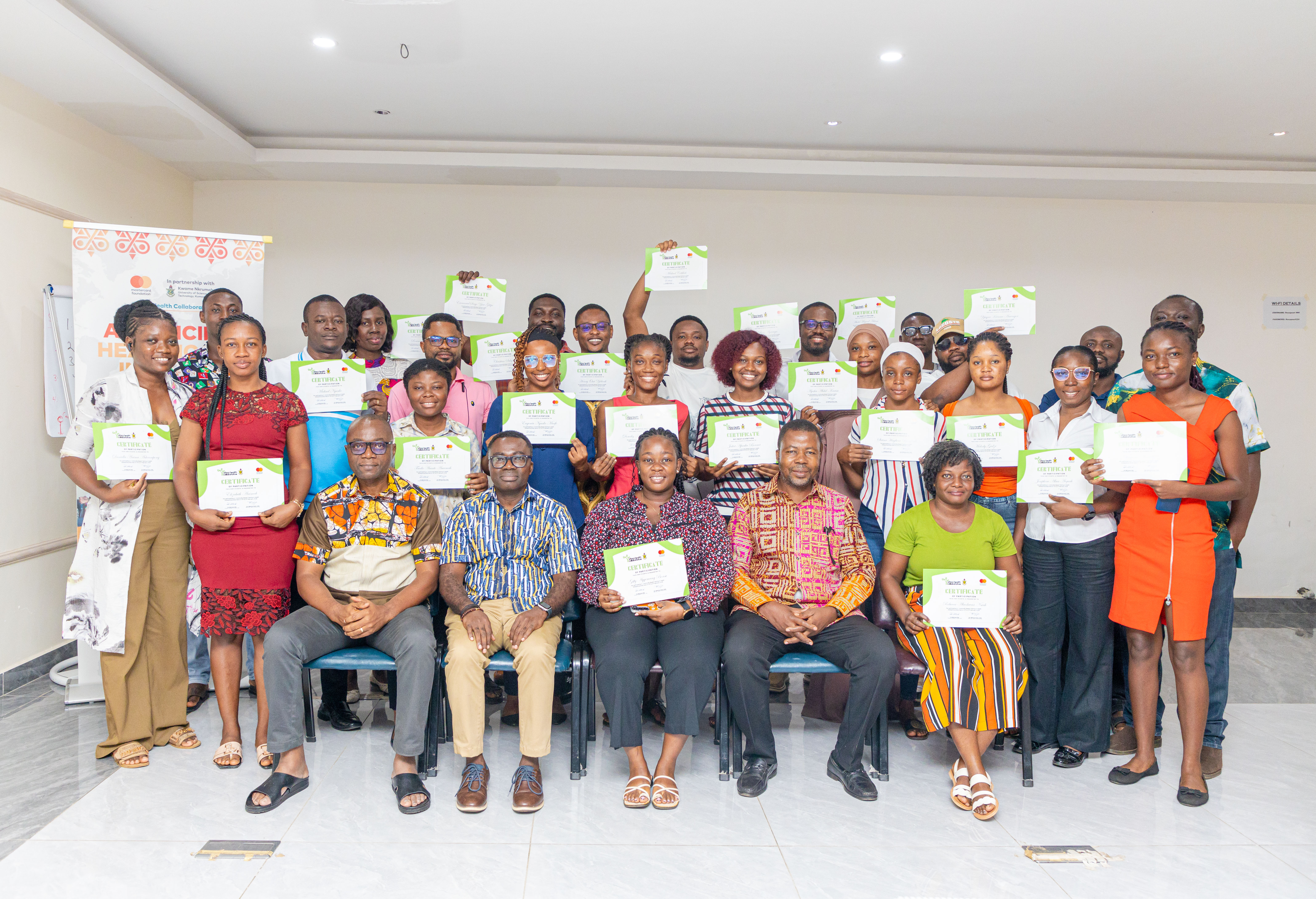
The KNUST Africa Health Collaborative, in partnership with the Mastercard Foundation, has concluded the fourth edition of its 10-day Community-Based Training (CBT) programme in Health Entrepreneurship, aimed at equipping frontline health workers with entrepreneurial skills to strengthen Ghana’s health delivery system.
The intensive programme brought together health professionals from across the country and focused on mindset transformation, problem-solving, innovation and community-driven health solutions.
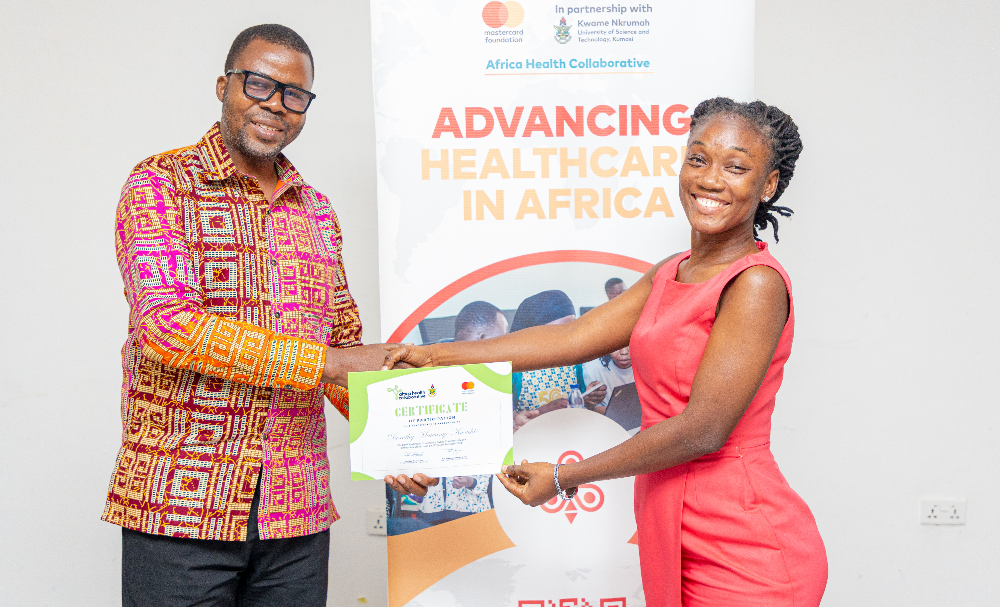
Participants from Cohort One said the training challenged traditional assumptions about responsibility within the health sector.
“I have learned that we should not depend entirely on authorities to bring change. As health workers on the ground, we can also take individual responsibility to improve healthcare delivery,” said Ms. Dorothy Kwashie Mawunyo, a Senior Community Health Nurse at Kukuokpanga CHPS in the Zabzugu District of the Northern Region.
Mawunyo noted the programme encouraged compassionate, patient-centred care, urging participants to treat patients as family.
“The mindset shift has been very impactful. I now see myself as a future entrepreneur because I have gained knowledge and skills in business management and healthcare delivery. This training has helped me understand that change can start with us,” she said.
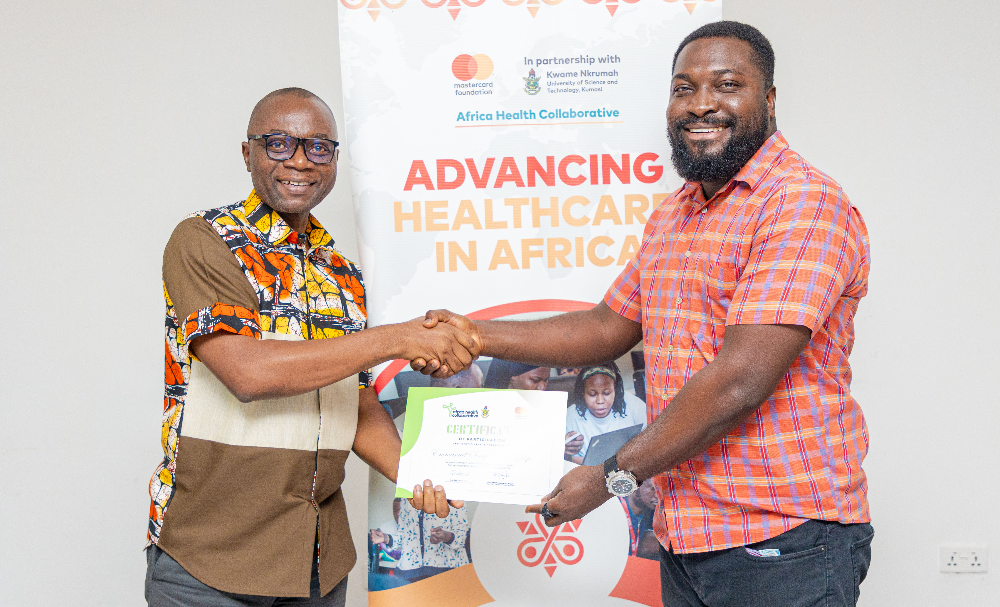
Another participant, Mr. Emmanuel Yaw Glikpo Senyo, a Public Health Nurse at Asakyiri Health Centre in the Bekwai Municipality, observed the programme aligned with his long-standing interest in entrepreneurship.
“Health entrepreneurship immediately caught my attention because it matched my personal goals,” he said. “The training has given me the opportunity to develop my entrepreneurial skills within the context of healthcare.”
Yaw said two tools introduced during the programme: image theatre and the problem tree, stood out.
“With image theatre, I can now identify problems by observing people and situations, even without verbal complaints,” he said. “The problem tree has also helped me analyse issues by identifying root causes, effects, and possible solutions. These tools will greatly improve how I approach challenges in my work environment.”
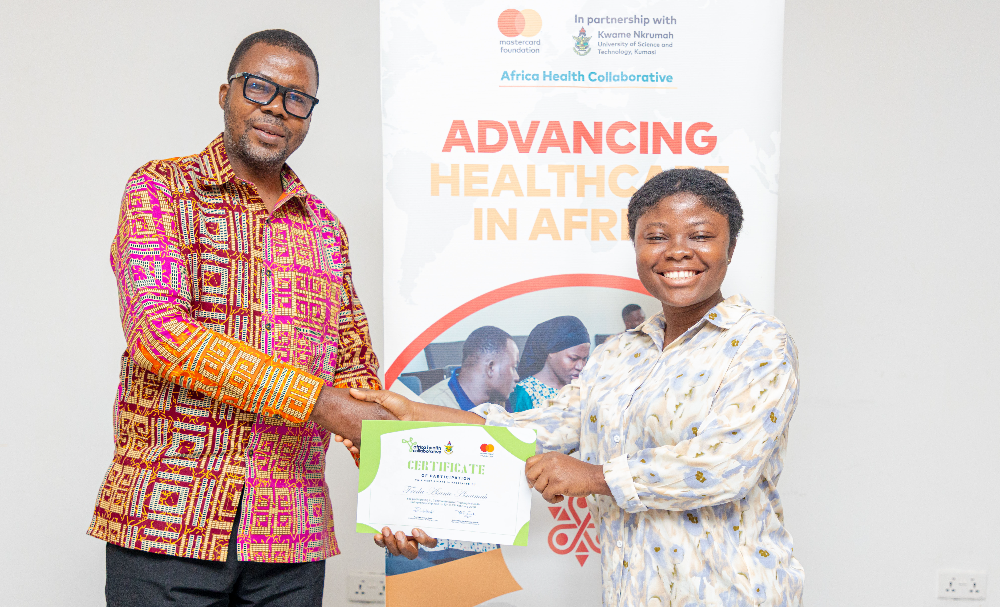
Ms. Freda Asante Asuamah, a Midwife at the Methodist Hospital in Wenchi in the Bono Region, was happy the programme fundamentally changed her perception of her professional role.
“Before this training, I believed problem-solving was the responsibility of management and hospital administrators. Our role was only to render services and go home,” she said. “Now, my mindset has changed completely.”
Asuamah who gained new skills in problem analysis, time management and innovative thinking and intends to share the knowledge with colleagues.
“What I am taking back is the desire to share this knowledge with my colleagues. This experience has been eye-opening, impactful, and has given me a new orientation towards healthcare practice,” she said.
By: Emmanuel Offei


