
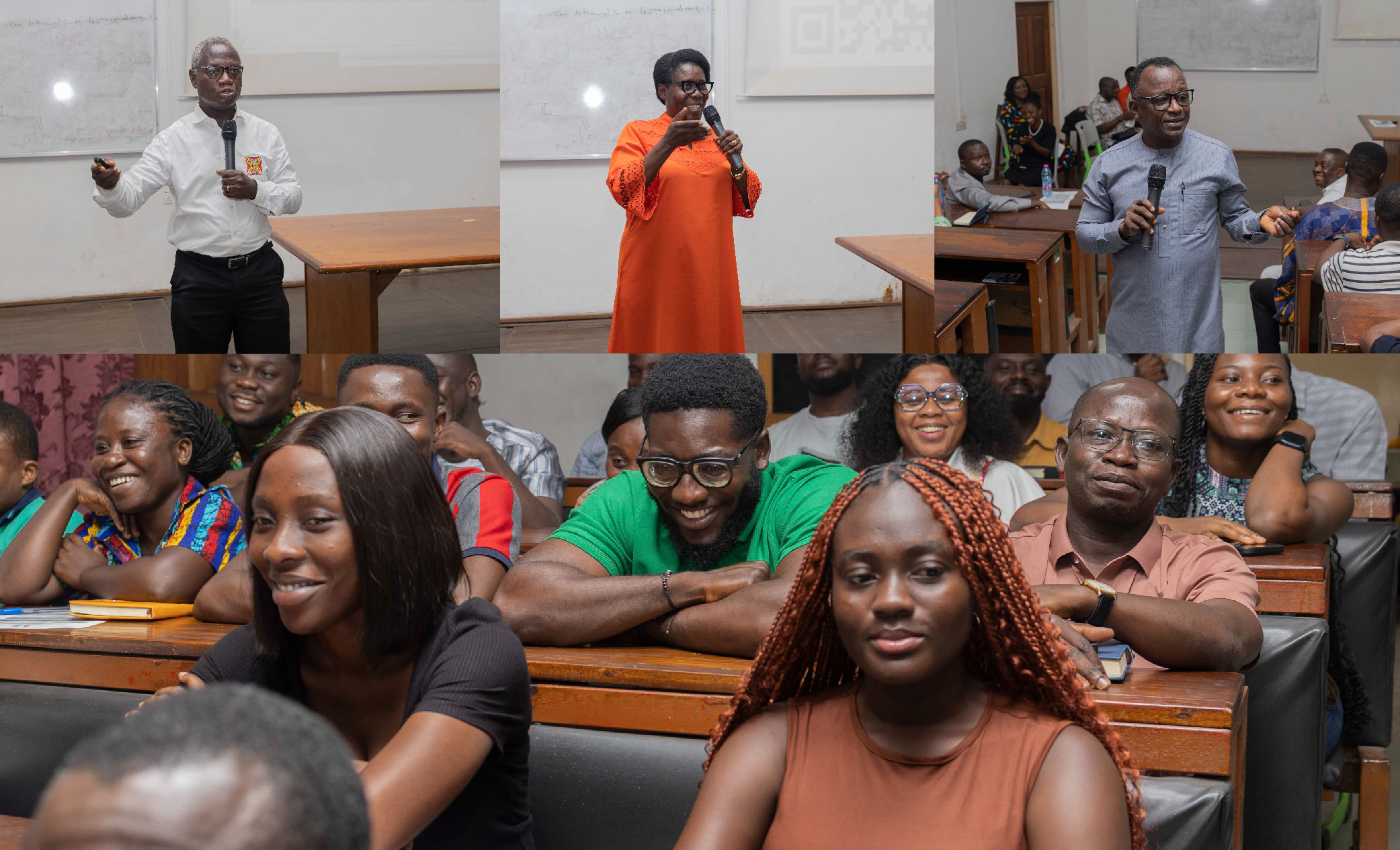
The School of Public Health (SPH) at the Kwame Nkrumah University of Science and Technology (KNUST), Kumasi has welcomed newly admitted MPhil, MSc and MPH weekend stream students at an orientation programme aimed at preparing them for academic life and professional growth.
The Dean of the School, Professor Peter Agyei Baffour, officially received the students and encouraged them to take full advantage of the opportunities available at the School. Heads of the six departments later introduced their units, giving students an overview of academic focus areas and departmental activities.
Students were taken through financial policies and fee payment procedures by the School’s Accountant, Mr Kwabena Agyei Junior, who stressed the importance of paying academic fees on time and using approved payment channels.
He urged students to keep all payment receipts until the completion of their programmes and outlined sanctions for defaulting. He also highlighted various scholarships and bursaries available to students and explained how to apply.
On administrative matters and communication, the Registrar of the School, Mrs Ernestina Quarshie, advised students to rely on official University communication channels when engaging staff and offices.
She reminded students that the Directorate of Student Affairs remains available to provide support and encouraged them to familiarise themselves with the Student Guide, which simplifies University rules and regulations. Students were also advised to stay informed through official social media platforms and notice boards. She further presented the organisational structure of the School.
Dr Enoch Acheampong, Examination Officer of the School, briefed students on academic regulations, including procedures for change or deferment of programmes, progression to thesis research, examination requirements, duration of study and extension applications.
Counsellor at the KNUST Counselling Center, Miss Joana Joseline Hackman, encouraged students to make use of counselling services available on campus. She described KNUST as a community that prioritises the welfare of students and staff, urging students not to “suffer in silence.”
According to her, seeking help is a sign of strength, not weakness, and the Centre exists to support students through challenges rather than to punish them.
Speaking on expectations of graduate students, Professor Emmanuel Appiah called for a shift in mindset from guided learning to independent, self-directed study. He urged students to pursue knowledge, skills and competence rather than certificates alone, while maintaining integrity and respect for diversity.
He cautioned against plagiarism and the irresponsible use of artificial intelligence, and encouraged students to develop leadership, communication, critical thinking and innovative skills to meet the evolving demands of public health practice.
Students were also introduced to academic and welfare resources by Dr Nadia Tagoe and Dr Barbara Gyapong-Korsah, Senior Lecturers at the School. They spoke on student wellbeing, teaching and learning processes, research policies, health and safety issues, and sexual harassment, highlighting the Gender Inclusion and Vulnerability Office as a key support unit.
The Head of the Department of Health Policy, Management and Economics, Professor Kofi Akohene Mensah, used the opportunity to brief students on new and emerging programmes expected to be introduced by the School.
The orientation further featured a career-focused presentation by Professor Samuel N. Fordjuoh, a Visiting Professor, who encouraged students to identify areas of genuine interest and acquire relevant skills.
He advised them to remain innovative, committed and adaptable in a fast-changing world, while improving their writing skills. He also shared practical job-hunting avenues, including professional meetings, journals, LinkedIn, peer interactions and mentorship.
The School’s longest-serving academic, Professor Anthony Adusei, spoke on the importance of networking and building strong professional relationships.
He encouraged students to participate in conferences, seminars and professional associations, noting that meaningful connections can lead to mentorship opportunities, career growth and long-term professional collaboration.
In a closing address, Professor Emmanuel Nakua urged weekend stream students to manage their time effectively and assured them of the School’s commitment to addressing academic concerns promptly. He noted that while the School holds its students in high regard, professional standards would not be compromised.


