
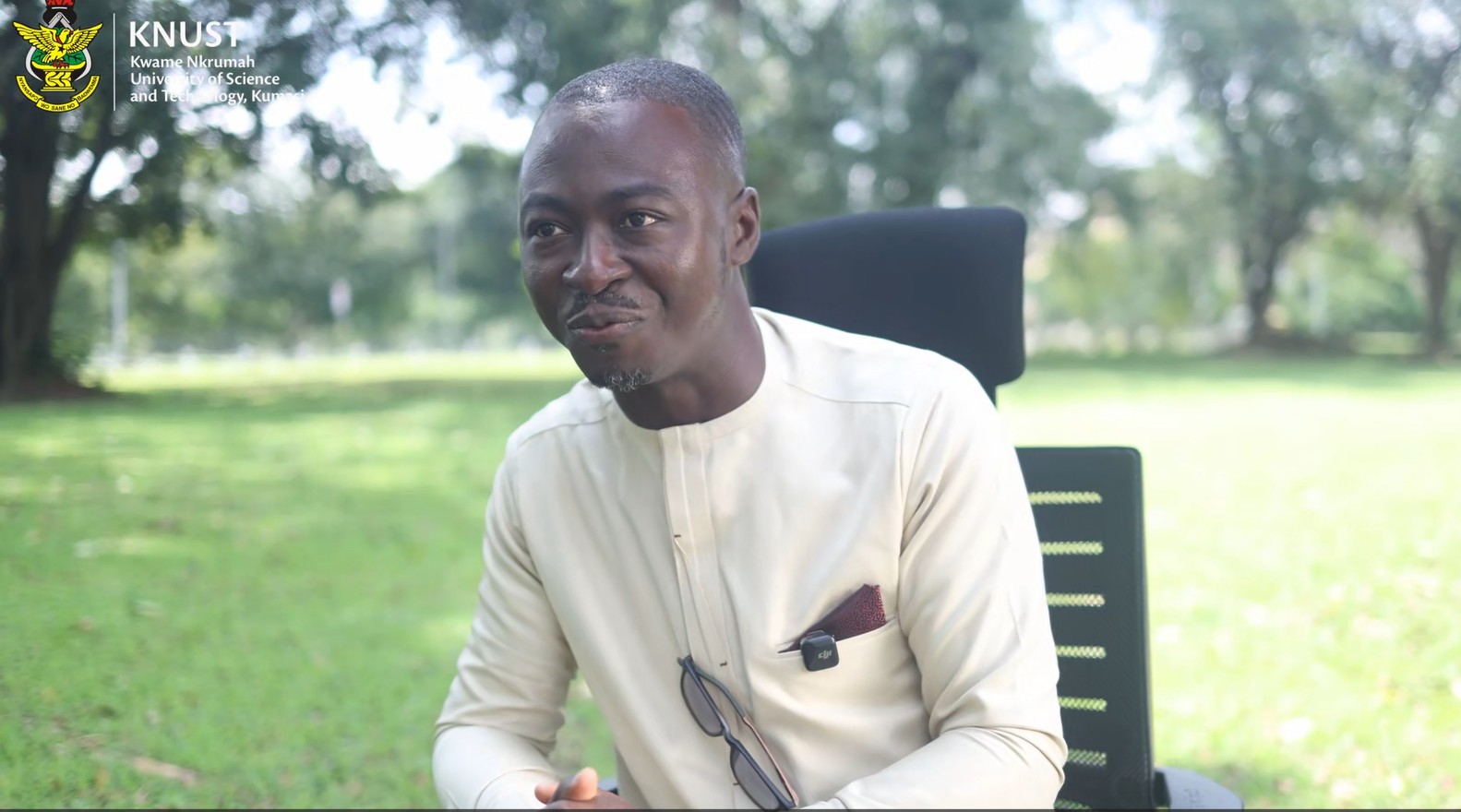
What began with shocking hair and nail tests in a galamsey settlement, where mercury seeped into bodies has led a chemistry PhD researcher Kwadwo Owusu Boakye to a disturbing discovery: the real danger may no longer be the mines themselves, but the rice on Ghanaian dinner tables.
Illegal mining, or galamsey, has long been blamed for poisoning Ghana’s soil and water. But for researcher Boakye, the real danger is not confined to mining pits, it may already be sitting silently in the Ghanaian rice bowl.
His concern began years ago during his Master’s research in the Talensi District of Northern Ghana. He witnessed a community where mining had merged with domestic life.
“People were mining inside their homes,” he recalled. Hair and nail samples collected from residents revealed striking mercury levels, a finding that unsettled him deeply. If people were absorbing metals that easily, he wondered, what about the food they ate every day? What about rice, a staple of Ghanaian households and his own personal favourite?
That question grew into a PhD journey that took him to rice fields across four municipalities in the Ashanti Region, where he examined the problem through the eyes of scientists, farmers, consumers and policymakers all at once.
Concern without understanding
Boakye began not in the laboratory, but among the people who grow and eat rice. He spoke to 275 consumers and 187 farmers.
Almost everyone expressed worry about food contamination, yet his analysis told a different story: actual awareness levels were low to moderate, shaped by education, age, rice-consumption habits, access to credit and participation in training programmes.
Farmers, just like consumers, feared the long-term health effects of heavy metals, even if they did not fully understand how contamination happens.
“People know something is wrong,” Boakye said, “but they don’t know how wrong it can become.”
Soil and rice: a dual reality
Back in the lab, the samples told a nuanced story.
Paddy soils contained a wide range of potentially toxic metals: arsenic, chromium, copper, lead and zinc, though cadmium, mercury and nickel were mostly below detection limits. Soil-pollution indices showed considerable contamination with arsenic, while the other metals remained within lower contamination ranges.
The contamination, notably, was not always caused by mining. Agrochemical use and irrigation with mine-impacted river water also played a major role.
Rice grains showed another layer of the puzzle. Average arsenic and lead concentrations were 5 and 10 folds higher than the WHO/FAO Codex Alimentarius permissible limit of 0.20 mg/kg, raising serious concern for public health. Yet, bioaccumulation factors revealed that the rice plant, aside from zinc, did not absorb these metals at very high rates.
A national health scare may not happen immediately, but the hazard index calculations hinted at a slow-burn threat: present risk is still minimal, but complacency could be dangerous in the long term.
Searching for Solutions
Rather than stopping at diagnosis, Boakye wanted answers. What could farmers do now realistically, affordably and sustainably?
He went to Nobewam, where he tested three agricultural waste products: sawdust biochar, rice husk biochar and cocoa pod ash as soil-amendment materials.
Applied fourteen days before planting and monitored across a full growing season, the treatments improved soil pH, boosted phosphorus and organic-carbon content, and reduced heavy-metal levels in both soil and rice plants.
The solutions worked and they worked with materials farmers could access.
“The results were fantastic,” he said.
Rainy days on paddy fields
The science was rigorous, but the fieldwork was personal. Boakye remembers days on the paddy fields when heavy rain immobilised him, drenched and trapped in waterlogged mud.
“I asked myself, why am I here? What am I looking for?” There were moments when his phone was off, the evening was falling, and the research did not feel worth the discomfort.
What kept him going was not just the quest for knowledge but the people. He learned that field science depends heavily on trust.
“If you build respect and humility, farmers open up. But if you go there with a high shoulder, the community will close the door.” To collect soil samples, he first had to collect goodwill.
“It has been a humbling experience,” he said.
Food security with safety
Boakye’s research holds a pointed message: Ghana’s food-security narrative must evolve beyond quantity. Producing enough food is not enough if the food slowly undermines public health.
For him, the scientific graphs, the risk-assessment tables and the pounding rain on the rice fields all led to one truth:
“Food security is not just about having food,” he said quietly. “It is about ensuring that what we eat keeps us alive. not slowly killing us.”


