
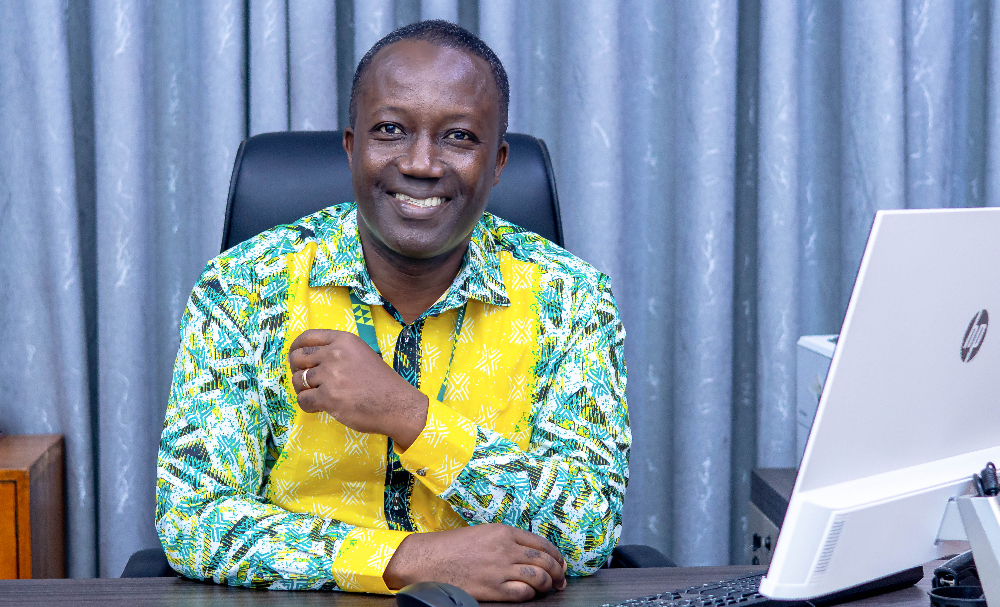
The appointment of Professor Daniel Y. A. Duah as the first Full Professor focusing on Sustainable and Inclusive Architecture at the Kwame Nkrumah University of Science and Technology (KNUST), Kumasi, marks a significant milestone in the University’s commitment to addressing global and local challenges through the built environment.
According to Prof. Duah, the world is currently confronted with two major and interrelated challenges: climate change and the rapid depletion of natural resources. These realities, he explained, make it impossible for architects to continue designing buildings that are not responsive.
“Our climate is changing and in Ghana, we now experience rains in months we did not expect, such as December and January. Flooding, rising temperatures and sea levels are clear evidences that climate change is no longer a distant concern,’’ he said.
He added that the unsustainable exploitation of natural resources, particularly timber, poses a serious threat to future construction. “At the rate at which our resources are being depleted, we may not have timber for basic building components in the next 50 years,” he warned.
Against this backdrop, Prof. Duah explained that Sustainable Architecture is about designing buildings that minimize the negative environmental impact of buildings, resource, such as energy, water and materials-efficient and mindful of impact on both present and future generations. He referenced the United Nations Sustainable Development Goals (SDGs), adopted by world leaders in 2015, which call for development that meets current needs without compromising the ability of future generations to meet theirs.
“Sustainable architecture requires us to think about the ecological materials we use, how buildings respond to climate, and how design decisions today affect tomorrow,” he said, ‘‘Extensive research is ongoing in these areas at KNUST.’’
Closely linked to sustainability, Prof. Duah highlighted the growing importance of Inclusive Architecture, which seeks to ensure that spaces, buildings and communities are functional, safe and usable accessible and usable by everyone, regardless of physical or sensory ability, age or health condition.
“For me, inclusion is also personal,” he shared, recounting his experience growing up with an elder brother who lived with a disability. “That experience shaped my conviction that persons with disabilities must be able to fully enjoy the built environment.”
Under his leadership at the Department of Architecture, he has supervised several doctoral studies with colleagues focused on inclusion and sustainability, including research on smart and accessible university campuses, barrier-free hospital environments, homes for persons living with dementia, appropriate materials for accessible university classrooms, uptake of indigenous buildings materials in Ghana, sustainable and inclusive hotel designs among others.
All the halls of residence and academic areas have been assessed with respect to its accessibility using a tool that he co-developed. Co-Authoring the first Ghanaian book on Inclusive design using Ghana TVET Institutions is one of the many contributions.
As Head of the Department of Architecture, Prof. Duah disclosed that KNUST is expanding its postgraduate offerings to include new specialisations in Inclusive Architecture, Green Building and Performance, among others, at both the MPhil and PhD levels. He also stressed the importance of climate-responsive design education, particularly in Ghana’s tropical context
Prof. Duah’s expertise in sustainability spans both academia and practice. He obtained his PhD from Michigan State University in the United States, where he contributed to research on green buildings and sustainability extensively.
Upon returning to Ghana, he taught the first Sustainable Construction course on the Master of Construction Management programme at KNUST, then under the Department of Building Technology, now Construction Technology and Management.
Reflecting on KNUST’s broader sustainability agenda, Prof. Duah expressed optimism about the University’s progress, citing initiatives such as the SDG-focused Summer School and the rise in sustainability-related research. He also referenced KNUST’s international recognition for its contribution to SDG 4 (Quality Education) as evidence of the University’s growing global impact.
While acknowledging the University’s achievements, he noted that more work remains, particularly in aligning institutional policies and regulations to fully support sustainable and inclusive built environments.
Looking to the future, Prof. Duah emphasised that emerging technologies such as artificial intelligence and 3D printing must be applied within a sustainability and inclusion framework. “Innovation must always be grounded in ensuring that buildings are green, sustainable and accessible to all,” he said.
Prof. Duah believes KNUST is well-positioned to lead the next generation of architects and construction professionals in shaping a more sustainable and inclusive future for Ghana and beyond.
By: Abigail Ofori


