
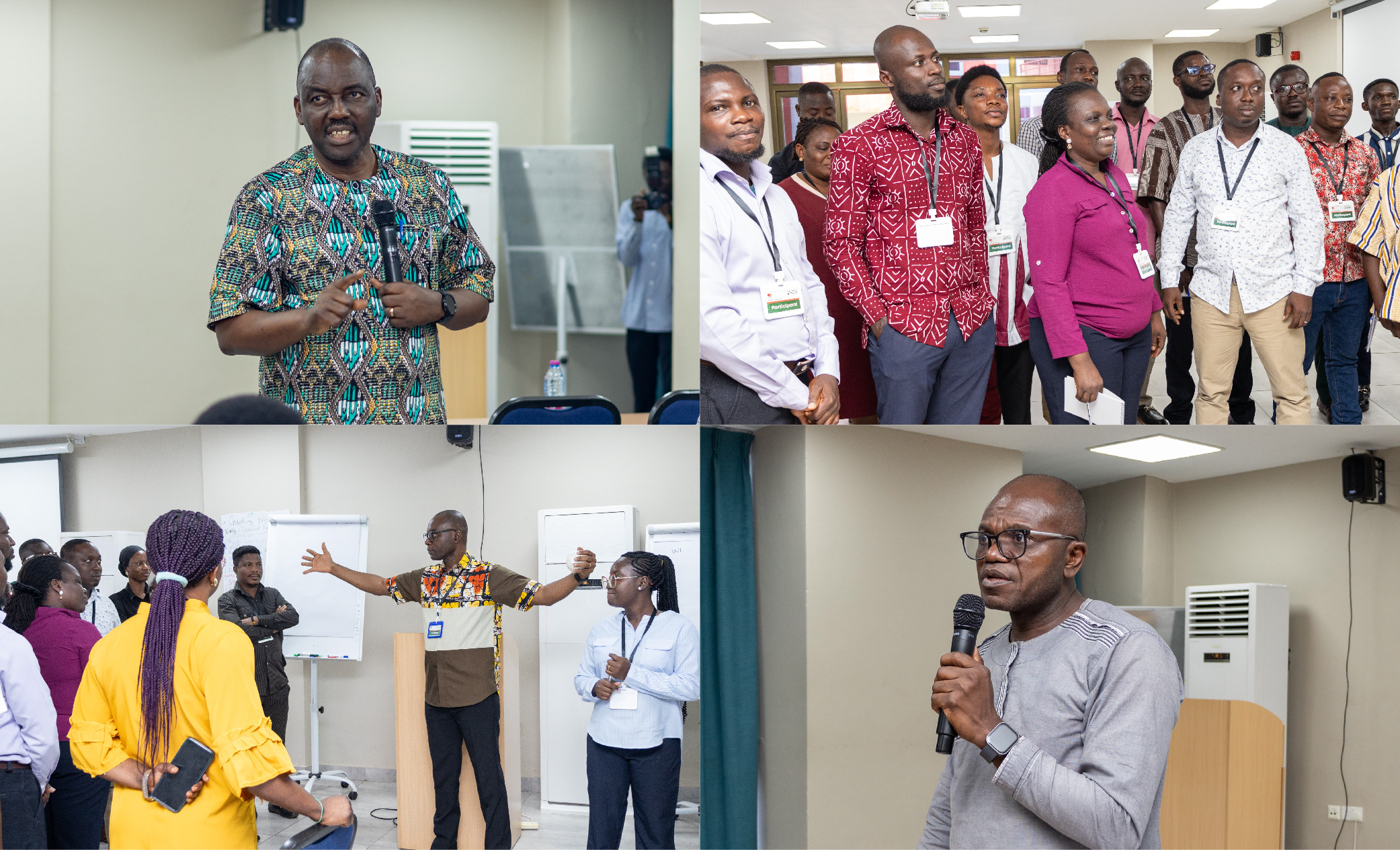
The Nutrition and Sustainable Agri-food Collaborative at Kwame Nkrumah University of Science and Technology, Kumasi (KNUST), in partnership with the Mastercard Foundation (Nkabom Collaborative), has begun training the second cohort of facilitators under its Entrepreneurship Empowerment (A2Es) Training of Tutors (ToT) programme.
The intensive 10-day programme has brought together 30 facilitators from agricultural colleges across Ghana to equip them with practical skills in agribusiness, business plan development and pitching techniques.
Participants are expected to cascade the training to students in their respective institutions, with the aim of equipping young people with agribusiness skills to help reduce unemployment and underemployment.
Speaking at the opening ceremony, the Principal Investigator of the programme, Prof. William Otoo Ellis, urged participants to rethink traditional perceptions of agriculture and recognise its economic potential.
“One of the areas of immense wealth is the agri-food value-chain, but many people fail to see opportunities in agriculture because of long-held mindsets,” he said.
Prof. Ellis said meaningful transformation in the sector would require leadership, innovation and creativity.
“We just need a few people to effect change, and those few people are sitting here. I believe this will not be just a paperwork exercise after 10 days, but a transformative experience that will equip you to go back and change the students that God has given to you,” he said.
The Entrepreneurship Pillar Lead, Prof. Wilberforce Owusu-Ansah, said the programme was designed as a practical response to Ghana’s growing youth unemployment challenge.
“The major reason we’re having this programme is to address unemployment and underemployment, and we [are] confident that it can be very transformational if we embrace agribusiness as a gamechanger,” he said.
He assured participants of continued support beyond the training, including funding for viable business ideas.
“We will support you to step down the training, and there are funds to support people who come up with good business ideas to start,” he said.
Prof. Owusu-Ansah warned that persistent youth unemployment and underemployment posed risks to social stability, underscoring the need to empower young people with employable skills.
The Lead Facilitator, Dr. Isaac Tweneboah-Koduah, outlined the structure of the training, which adopts a practice-based learning approach rather than traditional lectures.
“The training adopts active learning methodology where we get you involved in doing the work,” he said.
He said the programme is organised into five modules covering the foundations of agripreneurship, business modelling and planning, financial management and marketing strategies.
Participants will be guided to design a business model canvas and a full business plan during the training, he said, adding that they are expected to leave equipped to drive change across the agricultural value chain.


