
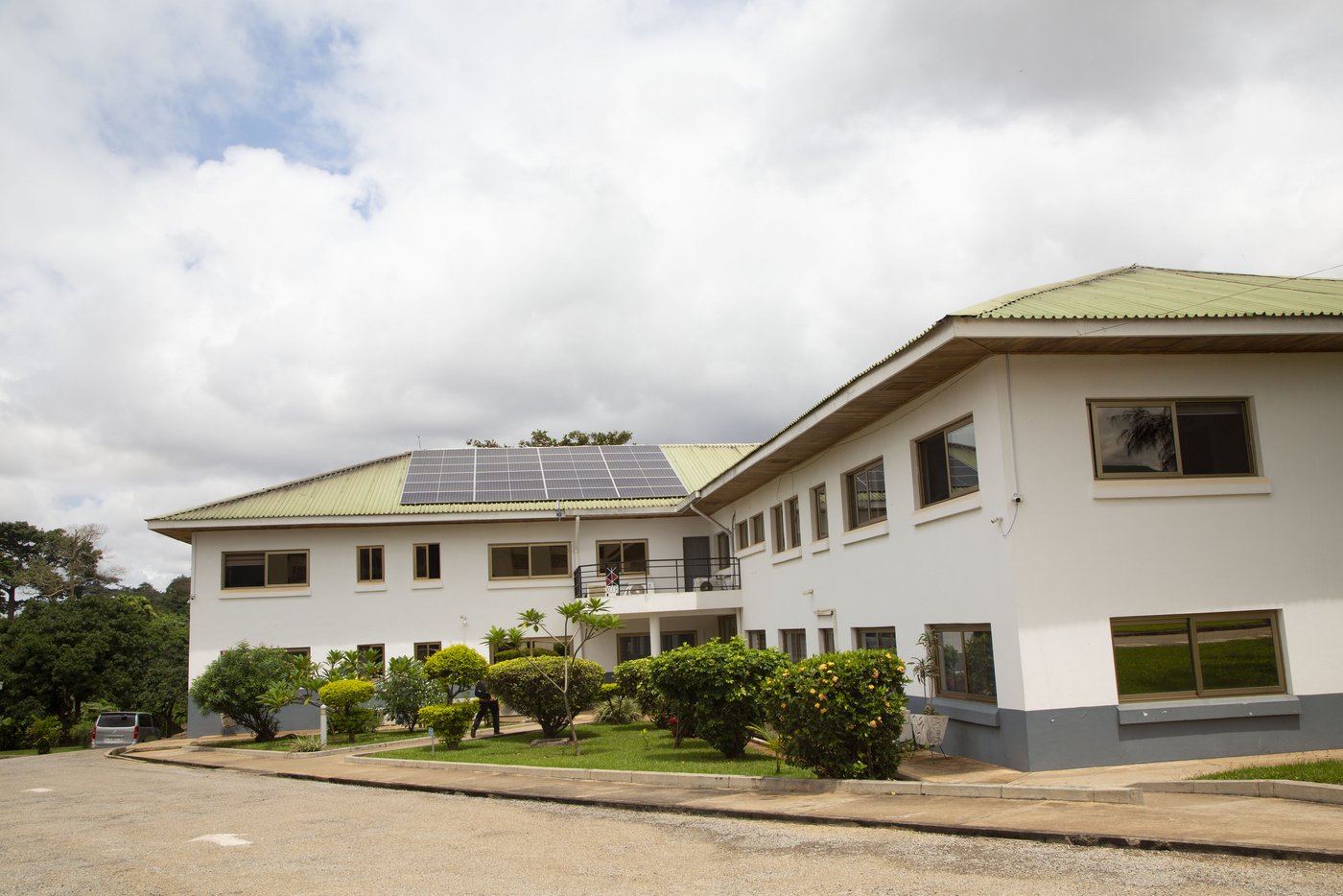
The Global Health and Infectious Diseases Research Group (GHID-KCCR) at the Kumasi Centre for Collaborative Research in Tropical Medicine (KCCR) hosted researchers from Cameroon, Guinea, and Uganda for an intensive training under the SeroMARV Africa project - a multi-country effort to uncover what might be the hidden footprint of Marburg virus.
Three scientists lean over a machine no larger than a desktop printer in a quiet laboratory complex in Kumasi. Sample plates slide into place. Data emerges on a screen. Within hours, answers will emerge. What they are learning here would help Africa become better at detecting and stopping future outbreaks.
In 2022, Ghana confirmed its first cases of Marburg virus disease, a rare but often fatal haemorrhagic fever in the same family as Ebola. Drawing on lessons learned during COVID-19, the outbreak was contained swiftly. But deeper questions remained.
Had the virus been circulating silently before it was eventually detected?
Were mild cases not reporting to the hospital or getting diagnosed as something else?
Could transmission be occurring silently in other parts of Africa?
These uncertainties motivated efforts that have led to a multi-country scientific investigation.
One Machine Answers Multiple Questions
At the centre of the training is a multiplex assay system. Using a single blood sample, the system can detect antibodies, signs of past infection, against multiple dangerous viruses at once, including Marburg and Ebola.
Traditional testing methods require separate assays for each pathogen, consuming scarce resources and precious time.
The system being used changes that equation.
With one run, researchers can obtain results on up to sixteen different pathogens from a single sample, generating rapid, high-quality data that can be compared across countries.
Partnerships Strengthening the Science
Beyond providing reagents and training, the project has also drawn on the expertise of several international partners.
Researchers at the Bernhard Nocht Institute for Tropical Medicine (BNITM) in Germany contributed to shaping the study’s design. Working with maps provided by the Ghana team, they generated GPS sampling points and helped calculate which households should be included in the survey. This ensured that the study collected data in a way that accurately represents the communities being studied.
Diagnostic partner Panadea Diagnostics based in Hamburg, Germany, also contributed both laboratory tools and technical expertise. The company supplied specialised test kits used to screen blood samples for antibodies against Marburg virus. These tests are used alongside other laboratory methods to confirm whether someone may have been exposed to the virus in the past.
Partnership with Tetracore in the USA, facilitated through the Taskforce for Global Health, has been instrumental to this effort. Through the collaboration, Tetracore supplied customized, high-quality multiplex kits targeting the project’s selected multi-pathogen panel, including WHO priority pathogens.
Donald Buri, the project coordinator for SeroMARV in Cameroon, said the significance goes beyond mastering the machine.
“Training here has been excellent, not just the lab work, but seeing the facilities and understanding what is happening across departments,” he said.
“With the skills I have acquired, we will no longer need to send samples abroad. We can analyze them back home and get results on time.”
For decades, many African countries have relied on overseas laboratories for advanced diagnostics, a process that delays results, is often costly, and does not exactly strengthen outbreak response. Building local capacity is widely seen as one of the most critical steps toward health security.
Multiplying Expertise Across Borders
Matthew Odongo, an immunology PhD student from the Uganda Virus Research Institute, arrived with research questions that depended on the technology and was eager to be trained.
He will return home as a trainer himself.
“The team here is extremely supportive; it has been a smooth experience,” he said.
“Now I feel equipped not only to run these assays but to train others in Uganda.”
This ripple effect of training one scientist to strengthen an institution is central to the project’s design.
Molecular biologist Niouma Pascal Kamano from Guinea’s Centre National de Formation et de Recherche en Santé Rurale expressed that the experience reinforced another truth about modern science: no country can face emerging pathogens alone.
“We truly benefited from a wonderful training and an excellent team who guided us from the first day. It was conducted in a highly professional manner. We are deeply grateful for what the local team has done,” he said.
His home region is historically significant, as it has been at the epicentre of multiple haemorrhagic fever outbreaks, including Ebola. Strengthening surveillance there could provide early warning signals for the entire region.
SeroMARV Africa
With each participating country having recruited about 1,000 participants, roughly 3,000 samples are now undergoing analysis.
The goal is to detect antibodies, evidence that a person caught the bug in the past, even if they never became seriously ill.
Such data can reveal whether Marburg virus has circulated silently in communities, hidden behind symptoms that mimic common illnesses like malaria or typhoid.
By investing in advanced laboratory skills and shared data systems, Africa is attempting to move from reactive crisis management to proactive preparedness, where disease threats are detected before they escalate.
Ghana’s role in this training reflects the growing scientific leadership emerging from the continent itself.
“Outbreaks may begin in one country, but borders rarely contain them. By training African scientists to generate high-quality data in their own laboratories, we are building a continental shield. One that allows us to detect threats earlier, respond faster, and protect our populations with evidence,” said Dr. Anthony Afum Adjei Awuah, Site Principal Investigator in Ghana and lead trainer.
As the researchers process thousands of samples, we look forward to what story the results would bring us. Whatever it be, it is clear that Africa is no longer waiting passively for the next outbreak.
It is building the tools, skills, and networks to confront it head-on.
By: Dr. Neta Parsram


