
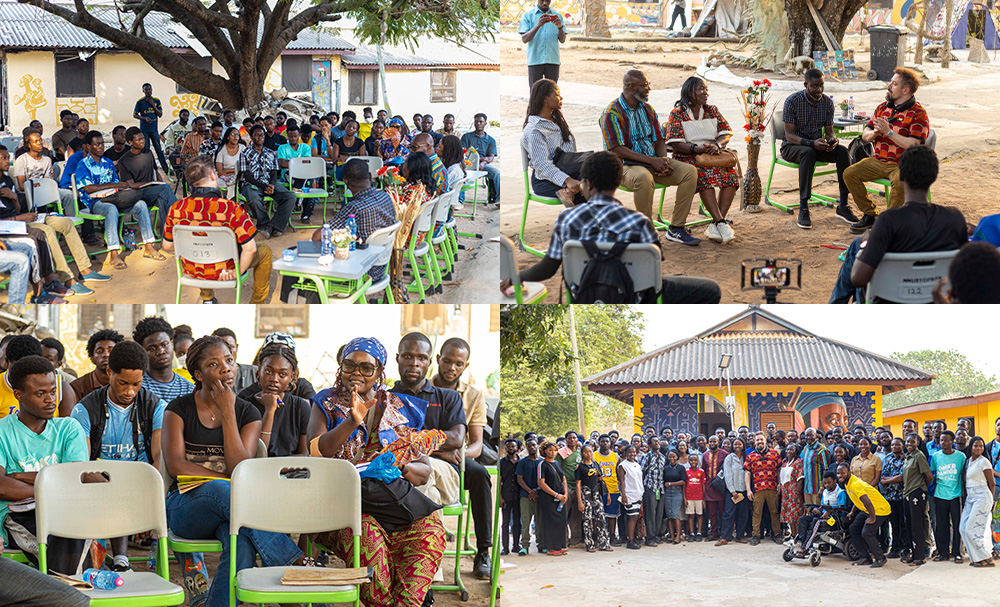
The second edition of Kumasi Conversations challenged participants to confront difficult questions of cultural loss, identity, authority and reinvention, as scholars, students and creatives gathered to discuss the theme “Lost My Culture, Can I Borrow Yours?”
One of the central threads of the discussion examined how cultural loss is often accompanied not by absence alone, but by silence. Professor Marius Storvik, the host of Kumasi Conversations, reflected on growing up without access to ancestral language or stories, describing silence as both a wound and a form of protection.
“When my people lost the language, what was left was silence,” he said. “I’ve been trying for decades to listen to that silence, but the voices never came.”
The idea that silence signals emptiness was countered, suggesting instead that it often points to stories of violence, disposal, and survival. Rather than attempting to recover what may no longer speak, Dr Dorothy Amenuke, a senior lecturer at the department of Painting and Sculpture and a panelist, urged a shift towards accounting for erased lives, recognizing presence even when full narratives are unavailable.
“Maybe somebody's answer will come up or something. Start searching for yours, like, digging into this meanwhile, you are moving on, but you are still digging,” she said.
Giving reflections on authority, Dr. George Buma Ampratwum, a senior lecturer at the department of Painting and Sculpture, also highlighted how trust, communal accountability and moral authority often carry more weight than formal power.
“My teaching is not from authority. It is from knowledge, care and love,” he stated.
Drawing on the Akan concept of Sankofa, Dr. Ampratwum, stressed that returning to the past does not mean preserving it unchanged. Instead, the past offers fragments, traces and lessons that can inform new futures.
“We don’t go back to stay there. We go back to take what we need to build something new,” he said.
Using examples such as African wax prints, Pidgin English and indigenous governance systems, Dr Buma emphasized that culture is not borrowed, it is shared, reworked and reinvented. What matters is not origin, but meaning, use and responsibility.
“In our culture, we don’t borrow, we share,” he said. “And sharing is not temporary. It is for eternity.”
The discussion sparked intense debate, particularly around clothing, language and identity. A personal story about rejecting Western professional dress, and later being gifted traditional Ghanaian attire, opened broader reflections on authenticity and ownership.
Dr Adjo Daiki Apodey Kisser, another lecturer at the department, disagreed with the idea of pure culture, arguing that all cultures are layered, hybrid and constantly evolving.
“If you are thinking of returning to a certain unstained past, it is never going to happen. It was never unstained to begin with,” Dr Adjo said.
By: Abigail Ofori Photos: Isaac Kwaku Duah


