
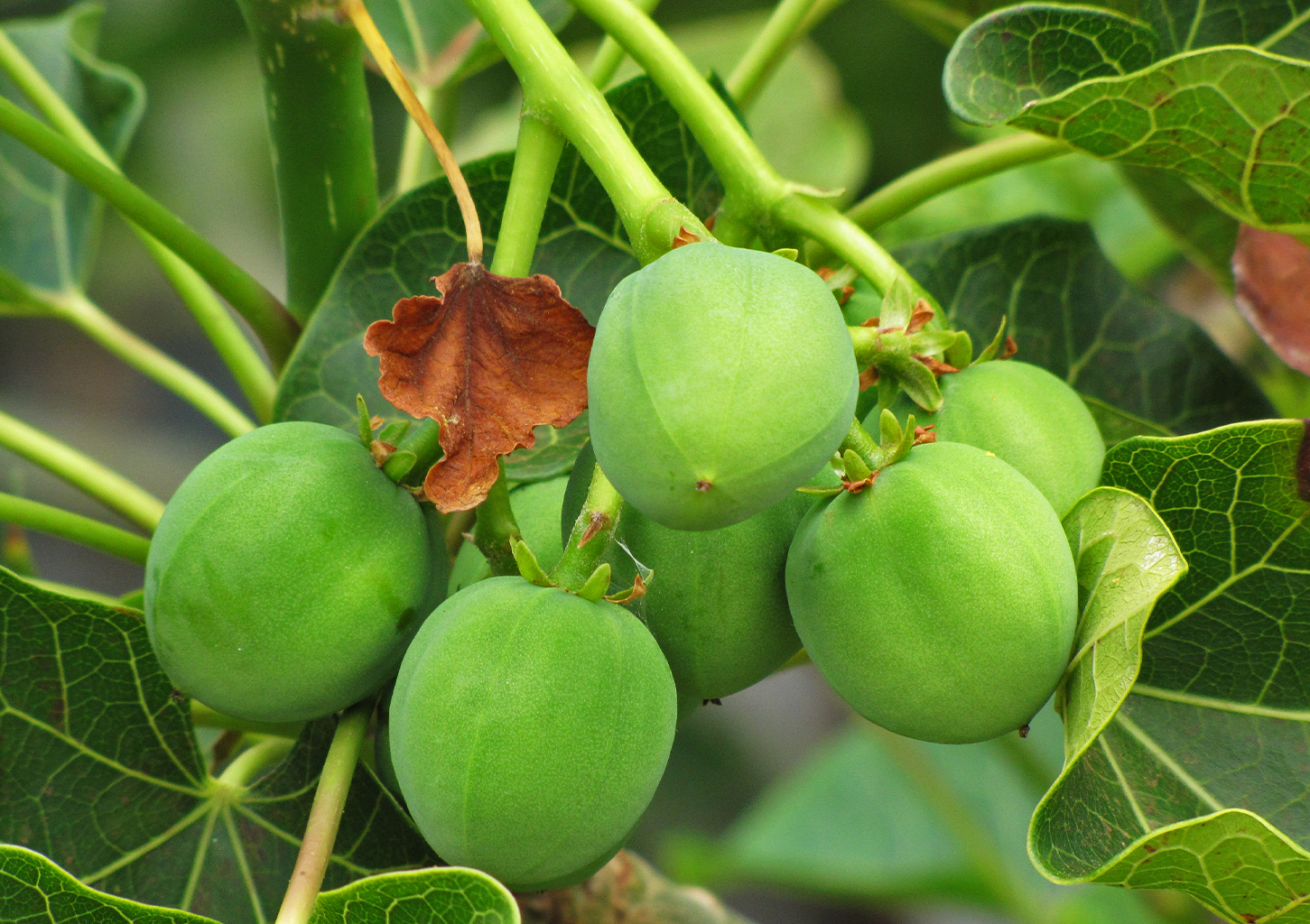
In 2004, three scientists at the Kwame Nkrumah University of Science and Technology (KNUST), Kumasi set out to test a simple but unconventional idea: whether oil derived from Jatropha curcas, a non-edible tropical plant, could improve the performance of a diesel engine.
At a time when biofuel research was still emerging globally, the researchers: Profs. Francis Kofi Forson, E. K. Oduro and E. Hammond-Donkoh, conducted controlled engine tests in Kumasi to assess whether small quantities of Jatropha oil could be blended with conventional diesel without compromising engine operation.
Their findings were later published in the peer-reviewed journal Renewable Energy, making the study one of the earliest documented African contributions to modern biofuel research.
The experiment
Using a single-cylinder, direct-injection diesel engine, the team tested several blends of Jatropha oil and petroleum diesel under varying engine loads.
The objective was to measure performance indicators including brake power, thermal efficiency and specific fuel consumption.
The study found that a blend containing 2.6 percent Jatropha oil and 97.4 percent diesel produced the highest brake power and thermal efficiency among the tested mixtures, while also recording the lowest fuel consumption. These results were achieved without any modification to the engine.
The researchers further observed that the low-percentage Jatropha blend exhibited improved ignition characteristics compared with pure diesel.
This was attributed to the fuel’s effective cetane behaviour, which supported more efficient combustion. Emissions of carbon monoxide and carbon dioxide were found to be broadly comparable to those of standard diesel fuel under similar operating conditions.
Significance
The KNUST experiment demonstrated that very small quantities of Jatropha oil could function as a combustion-enhancing additive rather than a full diesel substitute.
Crucially, the study showed that locally sourced, non-edible plant oils could improve diesel engine performance without redesigning existing engines or fuel systems.
Beyond its technical conclusions, the research reflected a broader policy implication: that countries like Ghana could explore indigenous biological resources as part of efforts to reduce reliance on imported fossil fuels.
While the study did not advocate large-scale fuel replacement, it provided early scientific evidence that bio-additives derived from local crops could play a role in cleaner and more efficient energy use.
More than two decades later, the 2004 KNUST study remains a reference point in biofuel literature, illustrating how African-based research anticipated questions that would later gain global prominence. It stands as an example of how modest laboratory experiments, grounded in local conditions, can contribute lasting insights to the global search for sustainable energy solutions.
By: Emmanuel Kwasi Debrah


