
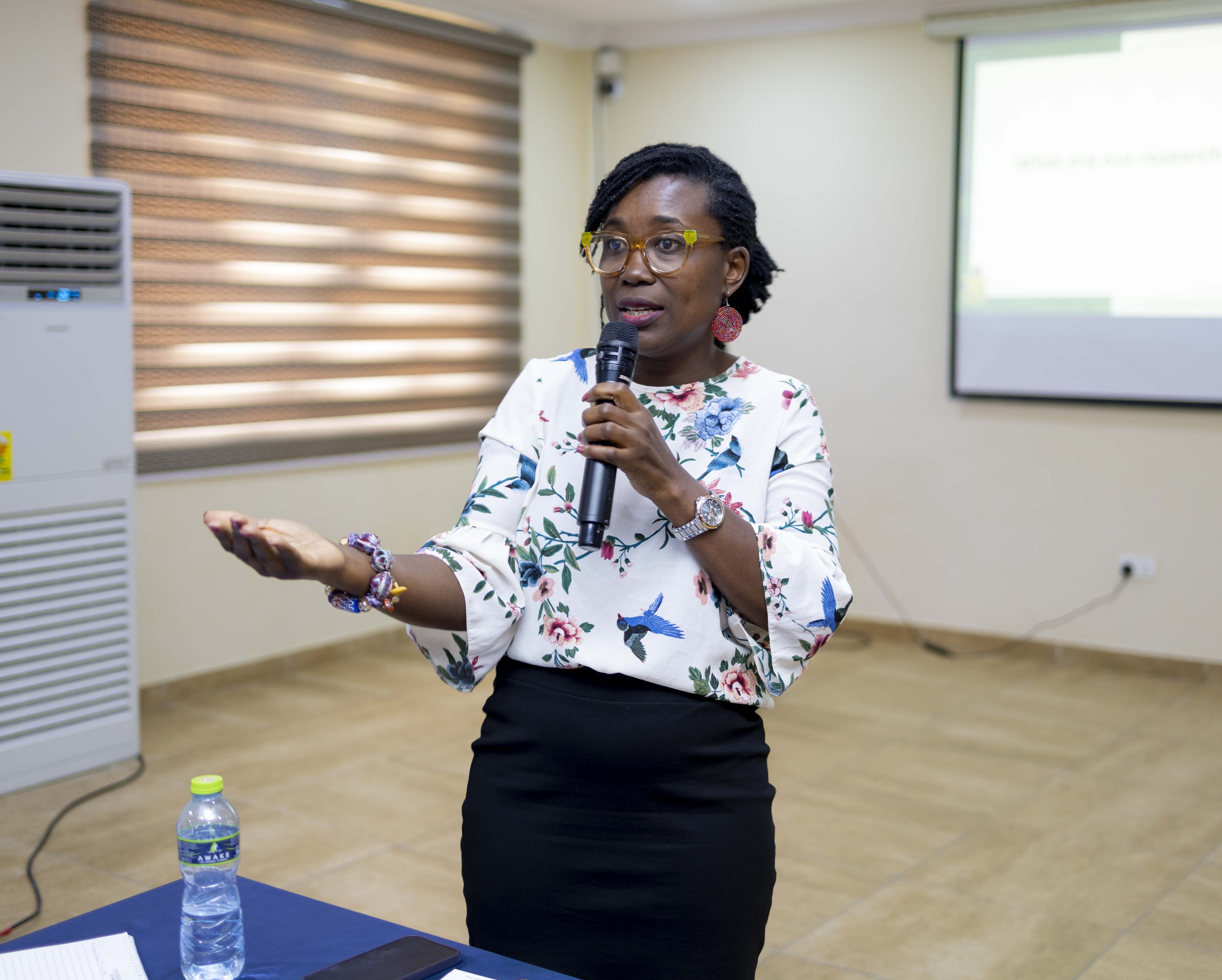
Dr. Nadia Tagoe, a Senior Lecturer in the Department of Global Health at the KNUST School of Public Health (SPH), has underscored the need for researchers to make full use of the university’s institutional support systems to boost research output and strengthen processes from proposal development to grant close-out.
Speaking at the School’s Staff Training and Retreat at Nyansapo, she said the Office of Grants and Research provides guidance across the entire funding cycle, beginning with the pre-award stage, which includes sourcing funding, developing proposals, submitting applications and securing institutional and individual registrations.
She said the university plays a critical role during the award stage, supporting researchers through due diligence, governance requirements, financial management procedures, interpretation of award terms and conditions, and negotiations.
These processes often require coordination with the Legal Office and the Intellectual Property and Knowledge Transfer Office (IPUK), she added. The university also manages the negotiation and issuance of sub-awards and serves as the primary liaison with funders for signing award documents.
Although grant implementation takes place within the colleges, Dr. Tagoe said the university’s support infrastructure remains essential for registering grants, aiding implementation, overseeing financial management and ensuring compliance through to the final close-out.
She also noted that the university strengthens the wider research environment by providing access to institutional data, managing research facilities and resources, supporting ethics approval processes and supplying templates and tools to guide researchers.
Within the School of Public Health, Dr. Tagoe acknowledged that limited institutional support staff, often shared across several colleges creates pressure on existing systems.
She said the SPH is therefore seeking to expand internal structures through stronger inter- and intra-school collaborations, and through committees dedicated to grantsmanship, research response, training and mentorship.
She proposed several measures to build research capacity, including establishing research internships and a pool of trained support staff, engaging postdoctoral fellows and research assistants, creating a pilot catalogue of research questions, and dedicating resources to grant-writing retreats, bootcamps and regular research seminars to foster a sustained culture of research excellence.


