
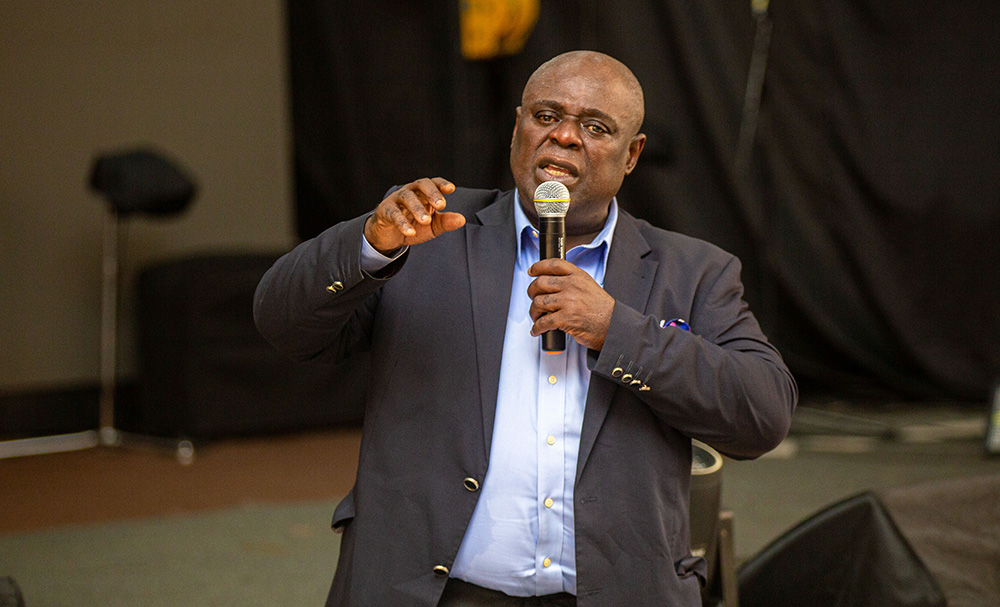
Former Head of Communications and Spokesperson to late President John Evans Atta Mills, Mr. Samuel Koku Anyidoho, has urged journalists and communication professionals to uphold ethical standards, warning that press freedom without responsibility risks undermining public trust and Ghana's democratic development.
Speaking at a public lecture organised by the Department of Language and Communication Sciences at the Kwame Nkrumah University of Science and Technology (KNUST), in collaboration with the Media and Communications Students Association (MECSA), Mr. Anyidoho said Ghana's democratic gains must be protected by a media that balances freedom with truth, fairness and accountability.
"Freedom is the right to investigate, to publish and to dissent without fear of arbitrary punishment. Justice is the corresponding duty to be fair, accurate, proportionate and answerable to the very public whose trust makes press freedom meaningful in the first place," he said.
He warned that media freedom without ethical responsibility could weaken democratic governance.
"A press that claims freedom while abandoning justice, publishing unverified allegations, destroying reputations without evidence, and fueling divisions does not honor the motto. It converts a shield against tyranny into a new instrument of harm," he said.
Addressing students on the theme, "The Evolution and Role of Media in Ghana's Democratic Development," Mr. Anyidoho described the subject as one closely tied to his more than three decades of experience in broadcasting, public communication and governance.
"This subject of our discussion today sits firmly within the belly of my professional existence. I am engaging in this conversation not as a passive theorist, but as an active participant in the whole equation of this discussion," he said.
He recounted his involvement in student activism at the University of Ghana, where he participated in campaigns advocating the restoration of democratic governance in the early 1990s.
"Between 1990 and 1992, I was part of the leadership of student movements and agitations to restore democracy back to Ghana's growth narrative. We led fights, universities were closed, and I was personally beaten," he recalled.
He said those experiences shaped his understanding of Ghana's democratic transition.
"When it comes to 1992, in all humility, we were midwives of the new democratic dispensation, and we are committed to making it work. So, when we speak, we speak because of what we know and where we've come from," he said.
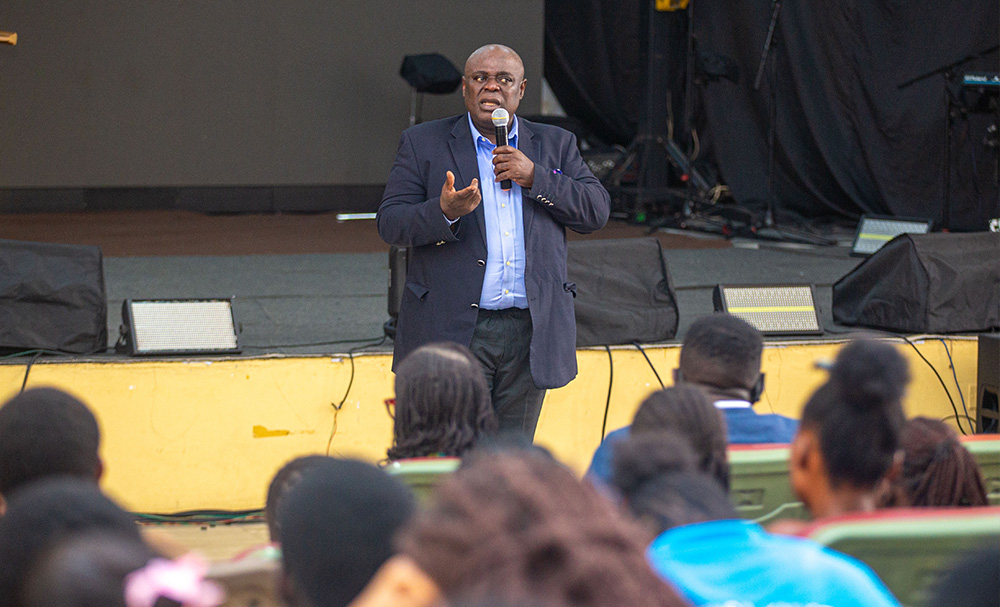
Drawing on his experience at the Ghana Broadcasting Corporation, the Office of the President and other communication institutions, Mr. Anyidoho argued that Ghana's media evolution should be viewed through the nation's enduring values of Freedom and Justice, as enshrined in the national coat of arms, and the civic ideals expressed in the national anthem.
"I have chosen to organize this conversation around three anchors that are not academic abstractions, but words we have inherited as a nation: the motto 'Freedom and Justice,' the covenant words of our national anthem, and the critical examination of what I consistently refer to as media tyranny," he said.
Tracing the history of communication in Ghana, he argued that public accountability predates colonial journalism, citing traditional institutions such as linguists, town criers, public forums and talking drums as early forms of media that informed citizens and held leaders accountable.
He outlined the evolution of Ghana's media from colonial-era newspapers through state control after independence to the constitutional protections introduced under the 1992 Constitution, describing the Constitution as a watershed in safeguarding press freedom.
According to Mr. Anyidoho, the repeal of the Criminal and Seditious Libel Laws in 2001 and the enactment of the Right to Information Act in 2019 further strengthened Ghana's democratic media environment by expanding journalists' ability to investigate and hold public institutions accountable.
Earlier, Acting Head of the Department of Language and Communication Sciences, Dr. (Mrs.) Victoria Ogunnike Faleke, described the lecture topic as one of national importance, noting that the media has remained a critical pillar of Ghana's democratic development since the inauguration of the Fourth Republic in 1992.
"As a university committed to excellence in teaching, research and service, KNUST continues to provide platforms that encourage informed dialogue on issues of national development," she said.
Deputy Registrar and Head of the University Relations Office, Dr. Daniel Norris Bekoe, said the lecture complemented discussions under the Media and Politics course by examining the evolution of traditional and digital media, constitutional reforms and their implications for democratic governance.
"This topic is particularly relevant because democracy cannot thrive without an informed citizen, and an informed citizen depends largely on a media system that is independent, responsible, ethical and responsive to the public interest," he said.
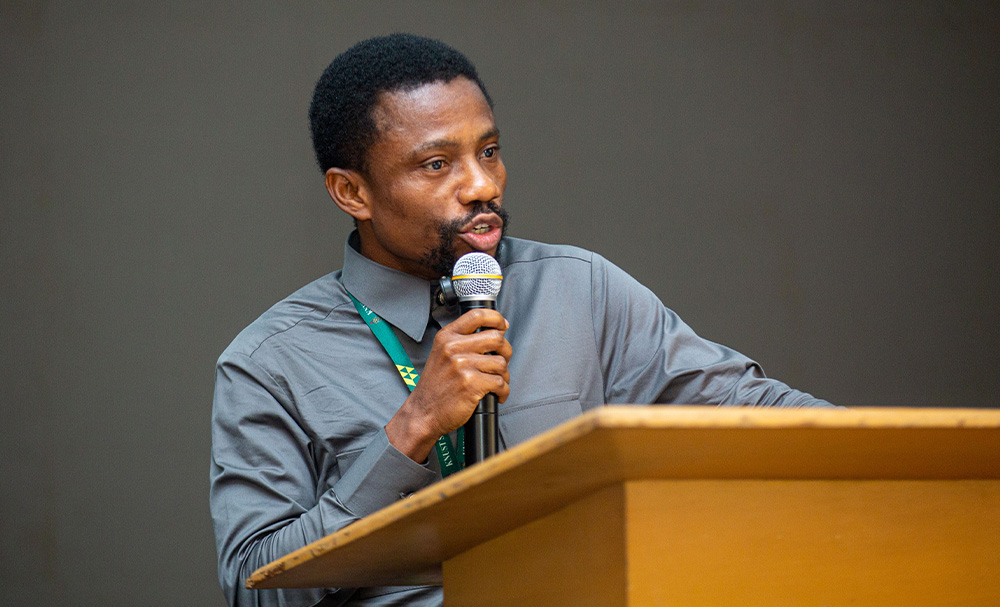
Representing the Provost of the College of Humanities and Social Sciences, Vice Dean of the Faculty of Social Sciences, Professor Samuel Adu-Gyamfi, said Ghana's democratic journey has been shaped by both its independence struggle and periods of political instability.
"Our forebears laid a great foundation for us. They built a culture that brought us independence, but post-independence Ghana went through a lot of reflection points because the question of coup d'états and counter-coup d'états led to a lot of challenges with our democratic culture and our media space," he said.
Professor Adu-Gyamfi expressed hope that continued scholarly engagement would deepen understanding of Ghana's democratic evolution.
"I hope that we are able to reflect on the period from 1992 up to 2026 with a certain sense of understanding that will help us move forward," he said.
Mr. Anyidoho encouraged students to embrace ethical journalism, critical thinking and responsible communication, saying the future of Ghana's democracy depends on media practitioners who balance press freedom with truth, fairness and accountability.
Story: Alice Laura Kyerewaah Prempeh
Photos: Isaac Kwaku Duah


