
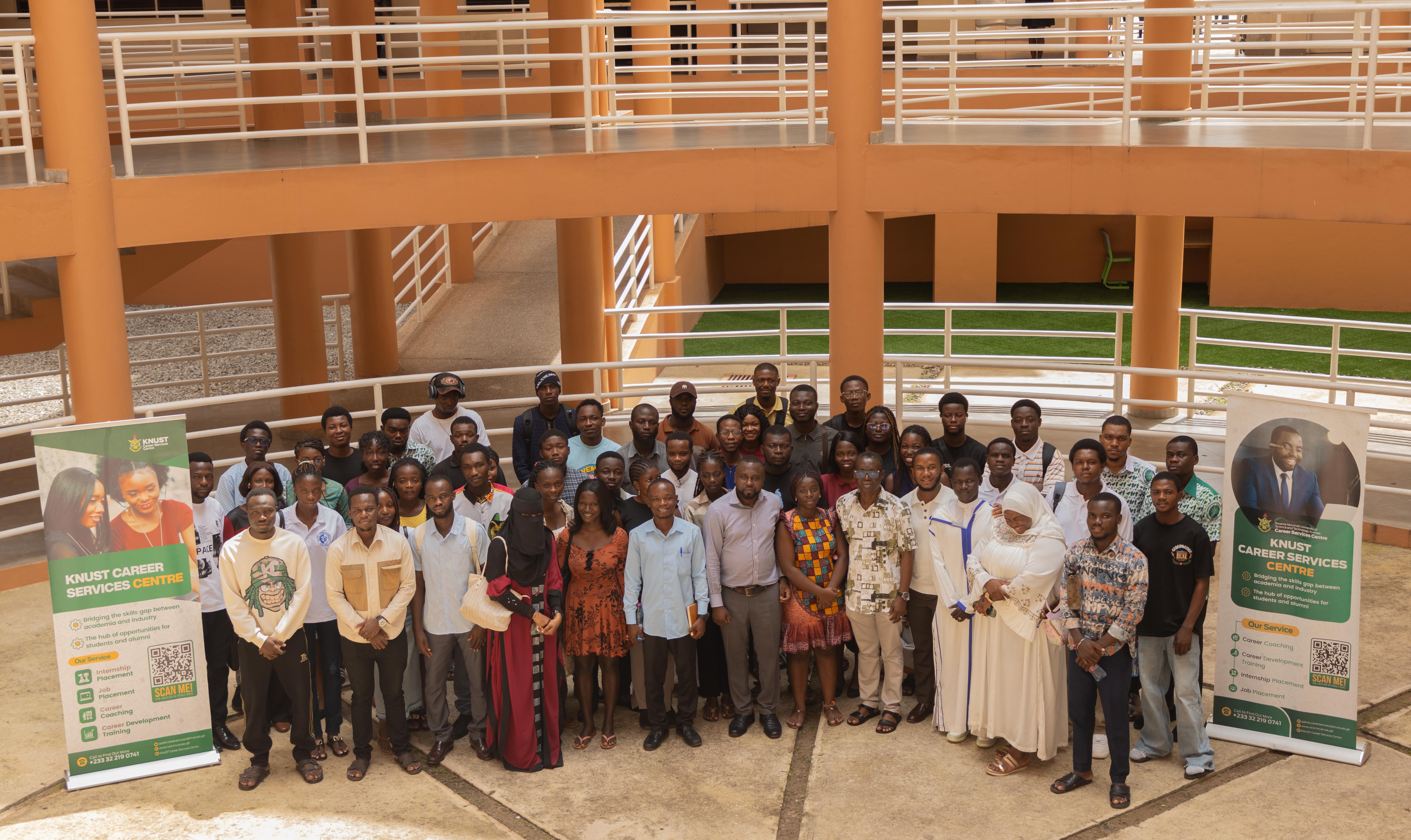
The KNUST Career Services Centre has organized a comprehensive career development training for students of the Department of Geography and Rural Development to equip them with the practical skills needed to prepare curriculum vitae (CVs) and improve their employability in today's job market.
The workshop encouraged students to view their curriculum vitae (CV) as more than just a document for job applications, but as a strategic tool that communicates their professional identity and opens doors to career opportunities.
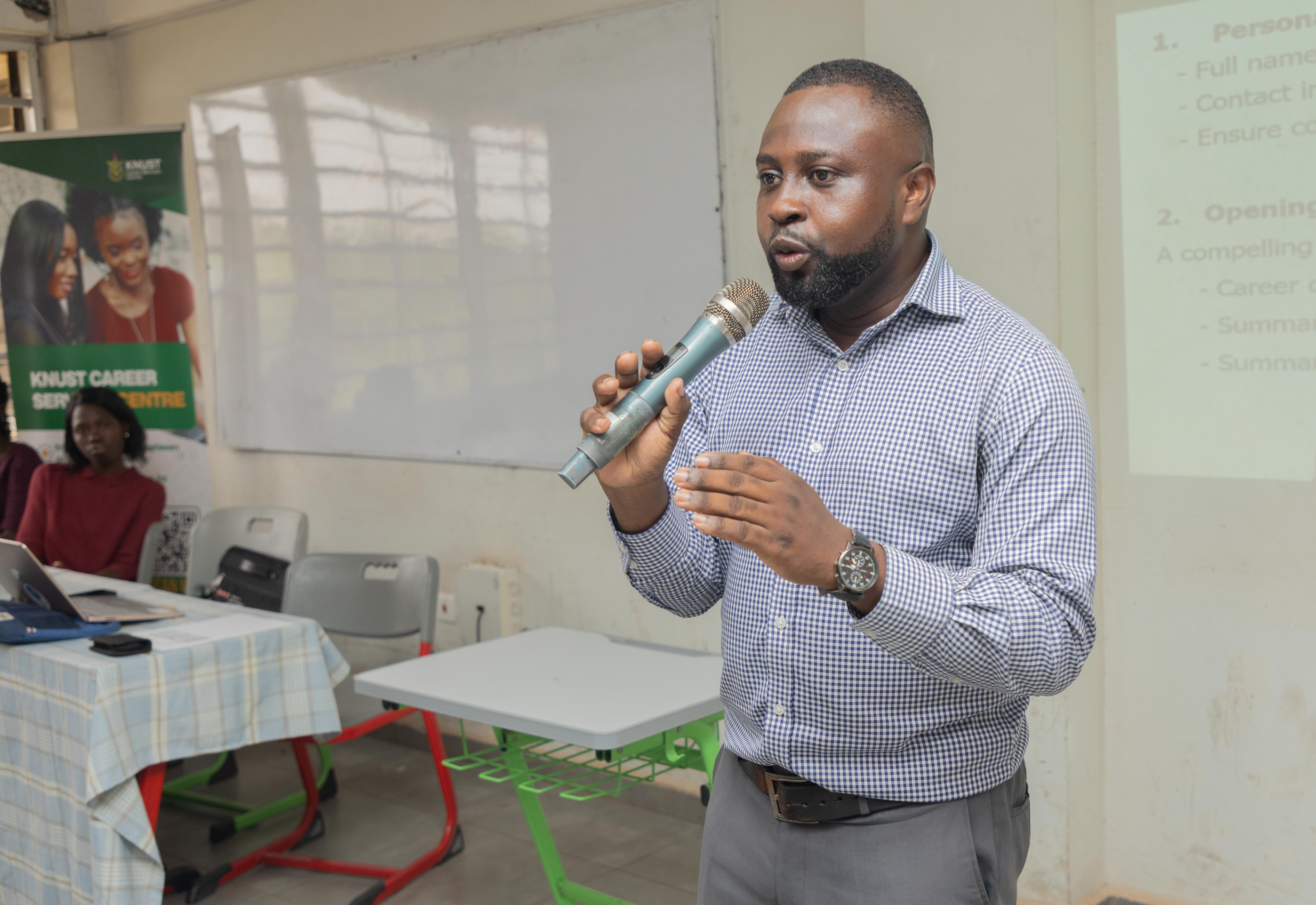
Speaking at the event, Senior Administrative Assistant at the KNUST Career Services Centre, Mr. Lord Abeeku Nkansah, emphasized the importance of developing well-crafted, tailored CVs that accurately reflect an individual's skills, experiences and achievements while meeting the specific requirements of prospective employers.
He explained that the Career Services Centre supports students through a range of services, including CV reviews, career coaching, employability training and career fairs designed to bridge the gap between academia and the world of work.
"Our role is to help students discover their strengths, understand their career interests and position themselves for opportunities beyond the university," he said.
According to him, career coaching enables students to make informed academic and professional decisions by helping them identify their strengths, interests and long-term aspirations instead of choosing careers based solely on family expectations.
"We help students answer important questions about who they are, what their strengths and limitations are, and how they can leverage their interests to build meaningful careers," he noted.
Highlighting the significance of a CV, Mr. Nkansah described it as a comprehensive record of an individual's educational background, qualifications, work experience, leadership roles, research, achievements and skills. He explained that a good CV should tell the story of a person's professional journey while creating a strong first impression before an employer meets the applicant.
"A CV goes ahead of you. It speaks on your behalf in your absence. If you don't take your time in crafting it, you may lose opportunities before you even get to the interview stage," he stated.

Head of Recruitment and Career Development Officer, Ms. Emmanuella Alorsor, led a practical session on interview preparation and performance.
She explained that interviews go beyond answering questions, serving as an opportunity for employers to assess candidates' competencies, communication skills, professionalism and overall suitability for a role.
"An interview is a formal conversation, but you have to bear in mind that you are being assessed based on your responses, the things you say and even your body language," she said.
She noted that being shortlisted for an interview indicates that an applicant's CV has already met the employer's initial requirements. The interview, she explained, is the stage where recruiters determine whether the individual is the right fit for the organization.
"The only reason you are invited for an interview is because your CV aligns with what the company is looking for. Now it is time to test whether you, as the individual, also align with the organization's expectations," she stated.
She explained that every job seeker should begin by carefully studying the job description, which outlines the position, duties, responsibilities, required qualifications, reporting structure and expectations for the role.
Ms. Alorsor urged students to prepare adequately for interviews by understanding the job requirements, researching prospective employers and anticipating common interview questions.


