
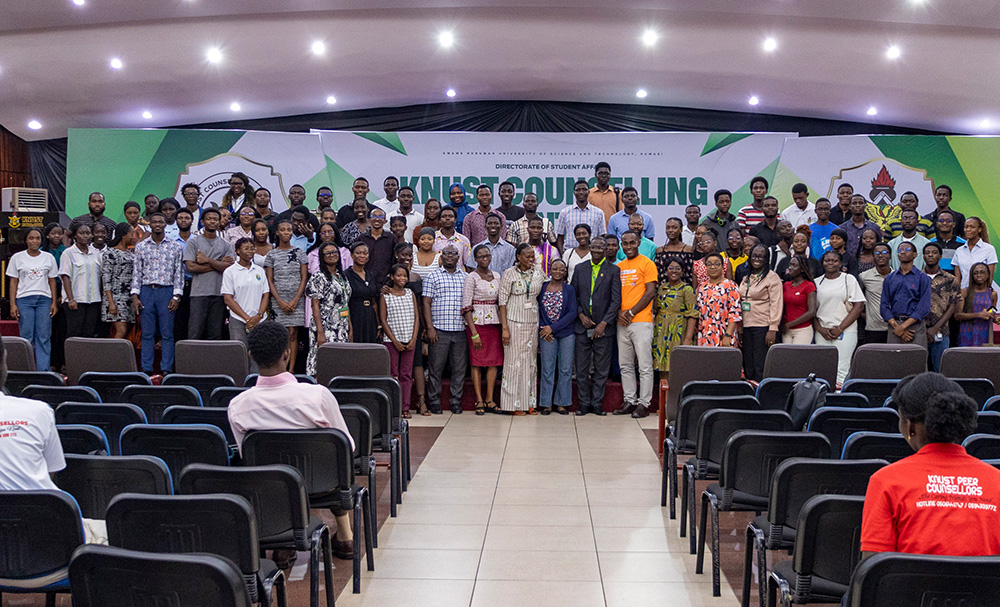
The Counselling Centre of the Kwame Nkrumah University of Science and Technology, Kumasi (KNUST), has encouraged students to make informed decisions about their relationships and reproductive health while taking advantage of available psychosocial support services on campus.

Speaking on behalf of the Head of the Counselling Centre, Mrs. Bernice Serwaah Ofosuhene Peasah, Senior Counsellor, said increasing academic, social and personal pressures make it necessary to create safe spaces for education, dialogue and support.
The call was made during a seminar organised as part of the Centre’s Counselling and Emotional Health Awareness and Promotion (CEHAP) Week, aimed at promoting the emotional wellbeing of students and staff.
“Today’s discussions are timely and relevant as they address issues that directly influence academic success, personal development and the overall welfare of members of our university community,” Mrs. Peasah said.

Mrs. Cara Aidoo, a public health researcher and reproductive health expert, delivered a presentation on the topic, “Impact of Students’ Relationships on Reproductive Health in Universities.”
She explained that university life often presents young people with greater freedom, increased peer influence and opportunities to form romantic relationships, all of which shape their attitudes, behaviours and decision-making regarding reproductive health.
According to her, reproductive health extends beyond pregnancy and childbirth to include physical, mental and social wellbeing, informed decision-making, prevention of sexually transmitted infections, and access to quality healthcare services.
Mrs. Aidoo emphasised the importance of healthy relationships characterised by trust, mutual respect, open communication and consent.
“Consent should be the foundation of every relationship, no matter how much you trust the person. Silence does not mean consent,” she said, explaining that consent must be freely given, informed, specific and reversible.
She cautioned students against unhealthy relationship behaviours such as manipulation, coercion, abuse and excessive jealousy, noting that such behaviours can negatively affect emotional and mental wellbeing.
Mrs. Aidoo also highlighted the risks associated with misinformation, transactional relationships, unprotected sexual activity and delayed health-seeking behaviour.
She urged students to seek information from credible sources and make informed decisions regarding their reproductive health.
“Your relationships influence your reproductive health outcomes. The decisions you make today about your body and your relationships can affect both your present and future wellbeing,” she said.

The seminar also featured a panel discussion on “The Role of Psychosocial Support in Improving the Wellbeing of Tertiary Students.”
The discussion examined challenges commonly faced by students, including academic stress, financial difficulties, accommodation challenges, family issues and relationship-related concerns.
Panellists underscored the importance of social support systems in helping students navigate these challenges successfully. They highlighted the role of professional counsellors, peer counsellors, healthcare providers and university support structures in promoting students’ mental health and academic success.
Participants were encouraged to overcome the stigma associated with seeking counselling and to take advantage of the confidential support services available through the KNUST Counselling Centre and other university units.
The panellists further assured students that counselling services at KNUST are guided by strict professional ethics and confidentiality, making them safe spaces for discussing personal challenges and receiving appropriate support.
Students were also introduced to the Centre’s peer counselling programme, which provides an accessible support system through trained student volunteers who offer initial guidance and referrals where necessary.


