
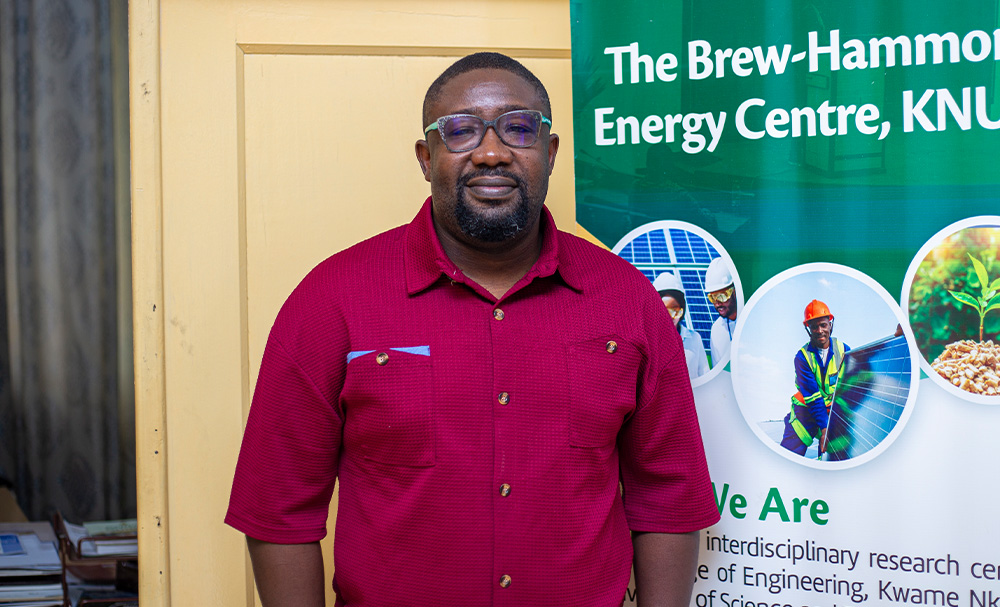
Dr. Godwin K. Ayetor, Lead for the Electric Vehicles and Sustainable Mobility Research Group at the Brew-Hammond Energy Centre (TBHEC) and member of the Technical Working Committee of the National Road Safety Authority (NRSA), has raised serious safety concerns about converted vehicles, particularly the widely used Toyota Voxy.
Speaking in an interview on Joy TV, Dr. Ayetor explained that the committee’s investigation was triggered by multiple petitions received by the NRSA regarding the safety of these vehicles.
According to him, the committee’s mandate was to assess whether the vehicles were being converted, the safety of such conversions, and their suitability for long-distance commercial travel.
“Our findings show that these conversions are not endorsed by the manufacturer and raise significant safety risks,” he stated.
Dr. Ayetor disclosed that official communication from Toyota Tsusho Manufacturing Company confirmed that the company does not approve of such conversions and considers them unsafe.
“They do not even support training for such conversions or undertake them in Japan. Additionally, they do not produce left-hand drive versions of these vehicles. So, every Toyota Voxy you see in Ghana has been converted,” he explained.
Safety Risks from Conversion Processes
He revealed that their report highlights that the conversion process involves major structural and electrical alterations, including dismantling dashboards, rewiring systems, and relocating steering components.
“These processes require high-level engineering expertise. If not properly done, they increase the risk of electrical faults, fires, and instability during accidents,” Dr. Ayetor noted.
He further explained that altering critical components such as the chassis fundamentally changes the vehicle’s design.
“In automotive engineering, once the chassis is modified, it is no longer the same model. The manufacturer will not take responsibility for it,” he added.
The committee also found that the industry lacks regulation and standardization, with converters often using non-approved parts from other vehicle models.
“Converters rely on parts from vehicles like older Corolla or Camry models, which were not designed for the Voxy. The process is largely driven by importers seeking to minimize costs, sometimes at the expense of safety,” he said.
Not Designed for Commercial or Long-Distance Use
Dr. Ayetor emphasized that beyond conversion issues, the Toyota Voxy is inherently unsuitable for commercial transport.
“The manufacturer designed it as a family minivan, not for intensive commercial use or long-distance travel,” he explained.
He added that using the vehicle beyond its intended purpose places excessive strain on it, increasing the likelihood of accidents.
Data from the committee’s findings revealed that in some regions, such as Bono, Toyota Voxy vehicles accounted for 14.6% of road crashes, with particularly high fatality rates.
“These crashes often occur on high-speed routes, and the severity suggests the vehicles were traveling at top speeds before impact,” he noted.
Regulatory Gaps and Industry Concerns
He noted that the investigation also uncovered a broader, largely unregulated conversion industry involving mechanics, auto electricians, welders, and spare parts dealers.
“This is not limited to Voxy vehicles. Even heavy-duty vehicles are being converted, but our study focused specifically on Voxy due to the petitions received,” Dr. Ayetor clarified.
While acknowledging that vehicle conversion is not inherently wrong, he stressed the need for strict regulation.
“It must be standardized, properly regulated, and done with approved components,” he said.
Call for Action and Public Awareness
Dr. Ayetor noted that although existing laws already prohibit the importation of right-hand drive vehicles for conversion, enforcement remains a challenge.
He called for accountability across the value chain, including importers and regulators.
To mitigate risks, he noted that the NRSA has issued a public advisory to educate commuters and drivers on the dangers associated with these vehicles.


